Cement Types Explained: Reading the Bag
One chemistry, many personalities
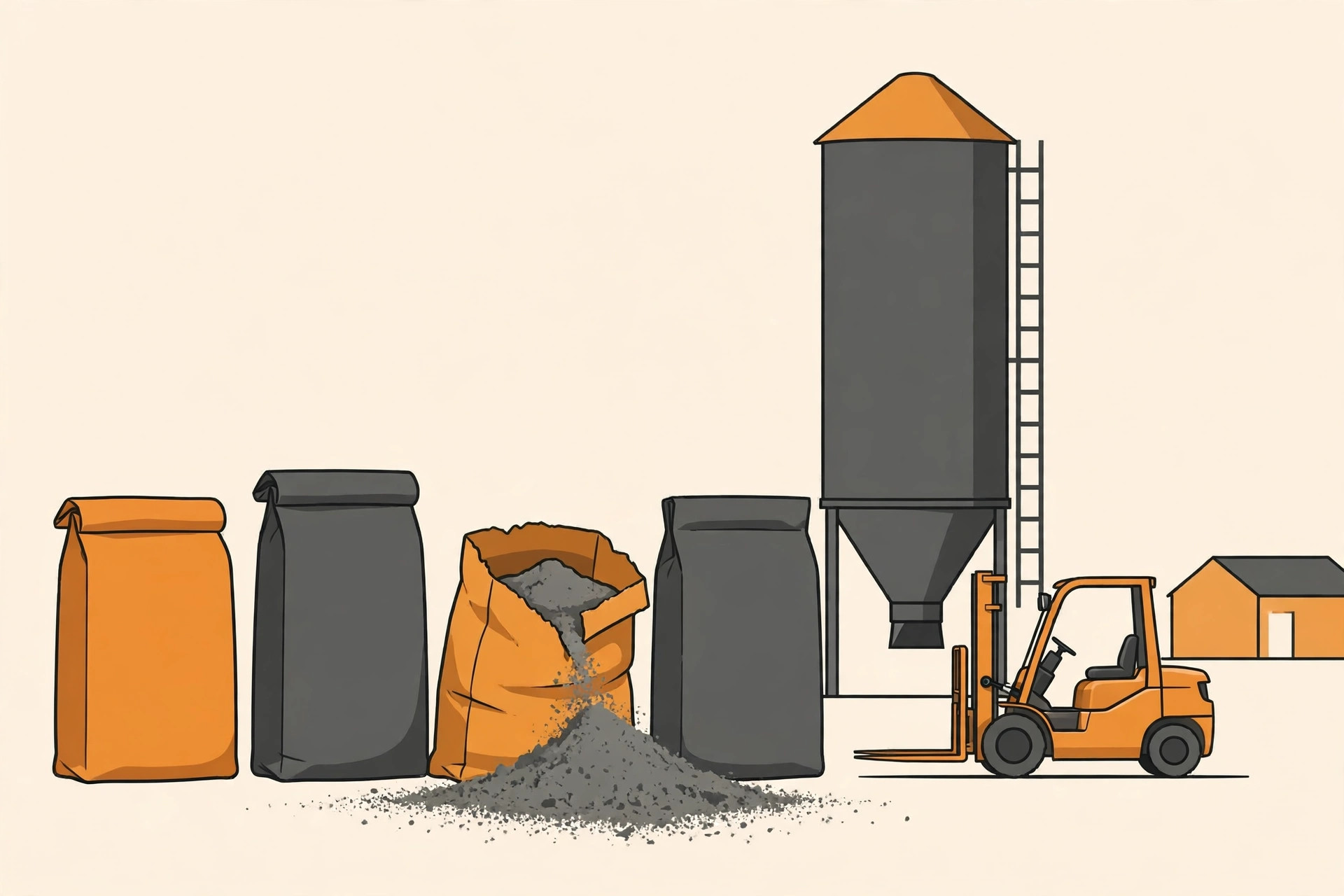
All Portland cements are ground from clinker, but the recipe and the grind tune the personality. Ordinary Portland cement is the general purpose standard for concrete, mortar, render and screeds. Rapid hardening cement is ground finer and gains strength early, buying programme time in winter and in precast yards, at a small premium and with more heat in the pour. Low heat cement suits massive pours where internal heat would crack the work. Sulfate resisting cement defends concrete buried in sulfate bearing soils and groundwater, where ordinary cement is slowly converted and expanded. White cement is a colour decision, made from pure raw materials for architectural finishes, priced like the luxury it is.
Blends, bags and the alphabet on the stamp
Modern bags are often blends: Portland cement combined with fly ash, slag or limestone filler, sold under designations like CEM II and its cousins. Blends are not adulteration; they trade a slower early strength for durability, lower heat and a smaller carbon footprint, and they dominate ordinary construction in many countries. Read the bag for its class: the number, 32.5, 42.5 or 52.5, is the strength grade in megapascals, and the letter after it marks early strength, N for normal and R for rapid. Mortar cements and masonry cements include air entrainers and fillers for workability in bricklaying and should never be substituted into structural concrete. The bag is a specification; read it like one.
Storage and substitution discipline
Cement is perishable in a quiet way: it drinks atmospheric moisture, loses strength month by month, and goes lumpy in protest. Store bags off the ground, under cover, stacked no more than about ten high, and rotate stock so the oldest is used first; a bag that has gone to stone in the corners is telling you its date. Never substitute cement types casually on specified work: rapid for ordinary changes the heat and the cracking pattern, sulfate resisting specified for a soil must not become whatever was on the truck, and white work stained by a grey splash stays stained. When in doubt, ask the specifier, because cement is the one ingredient in concrete that cannot be inspected back out of the finished pour. Keep one empty bag from each delivery pinned up in the site cabin until the pour has cured and passed; if questions arrive later, that bag is the first and most honest witness.