Construction guides
Plain guides on how building work is measured, mixed and priced, each with its own original illustration. 52 guides are published, and more are added in batches.
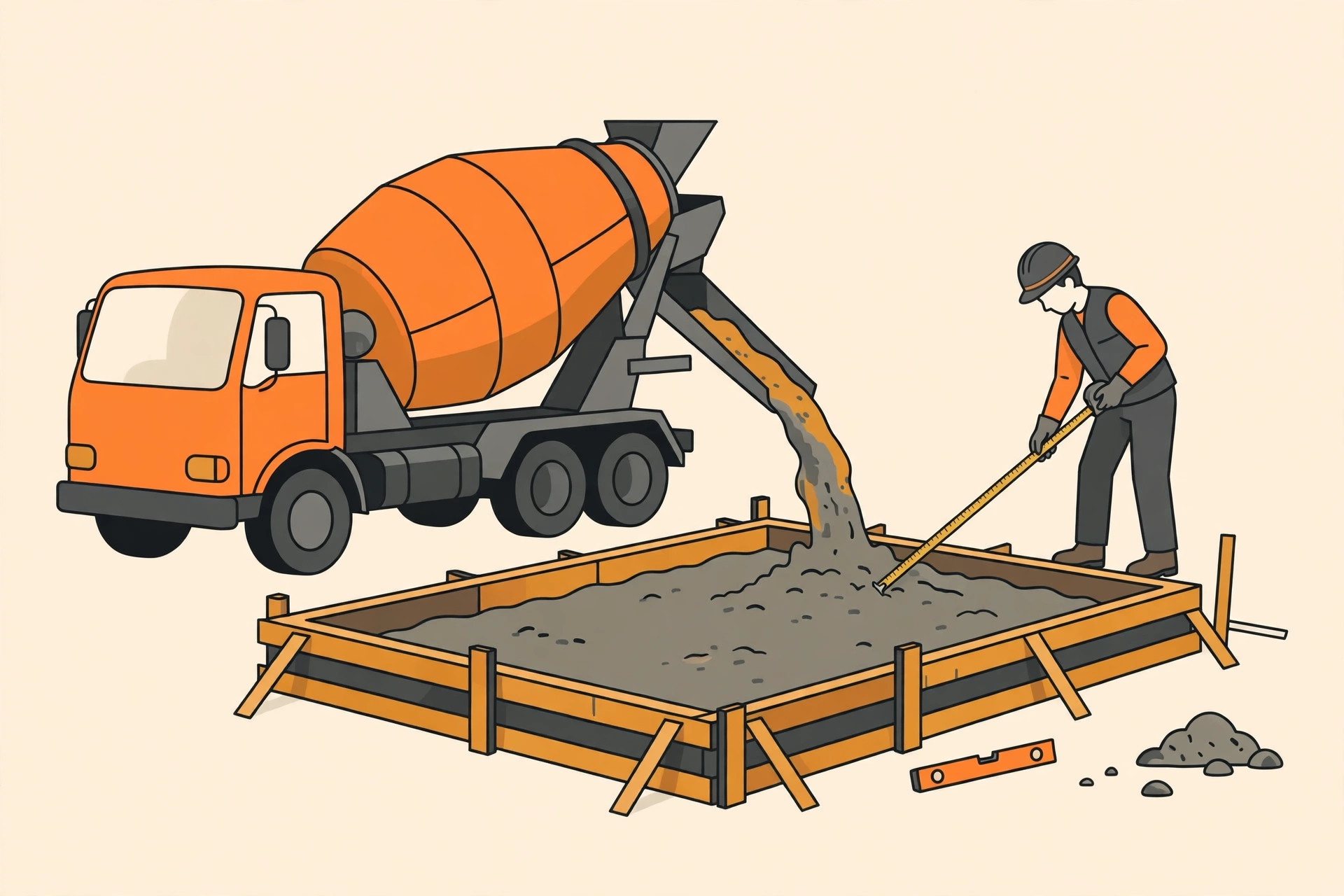
How to Calculate Concrete Volume for Any Pour
Length times width times depth sounds simple, but shapes, steps and wastage catch people out. Here is the reliable way to size a pour.
Read the guide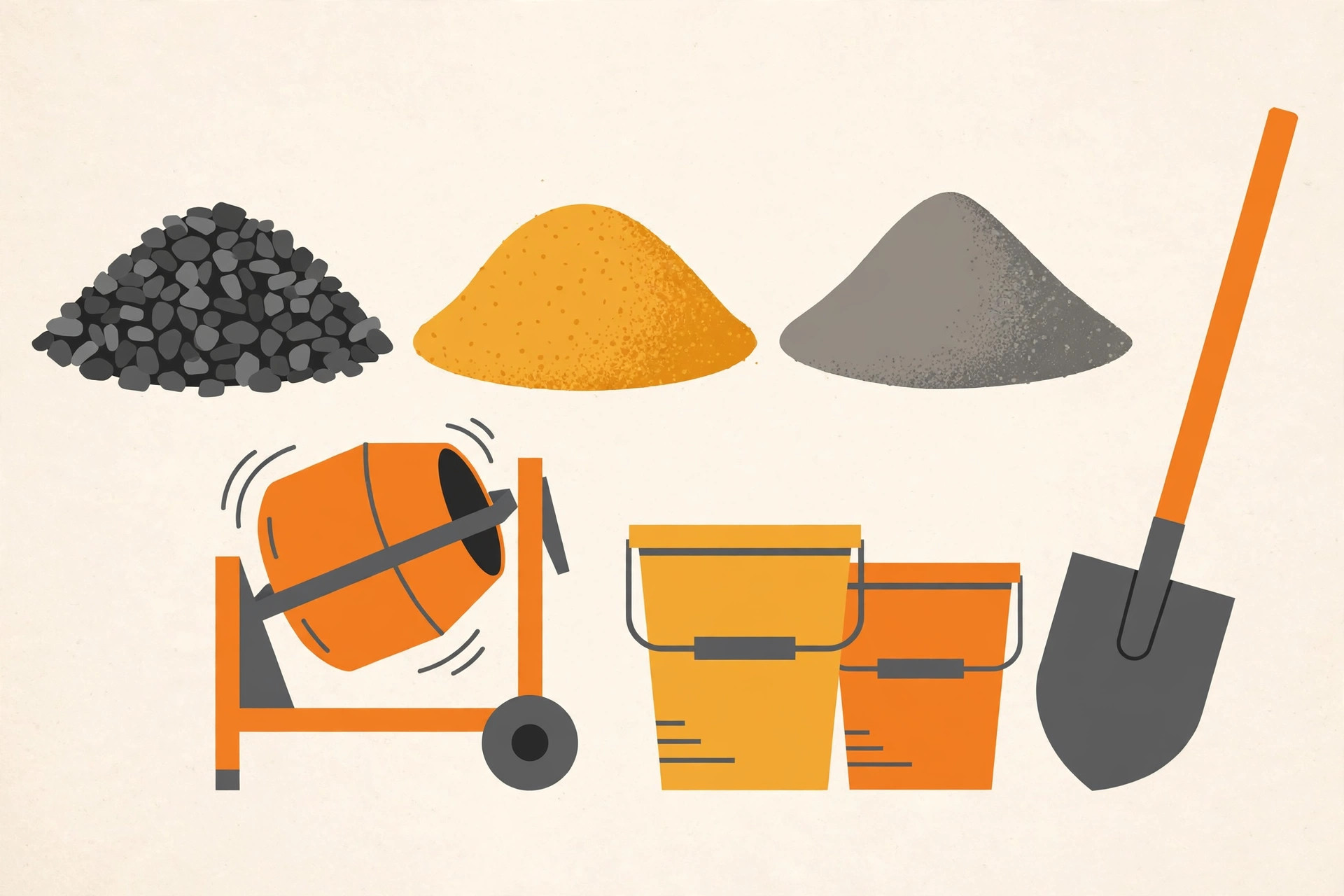
Concrete Mix Ratios Explained: 1:2:4, 1:3:6 and the Rest
What the numbers in a concrete ratio mean, which mix suits which job, and how the parts turn into bags, sand and stone.
Read the guide
How Many Bags of Concrete Do You Need?
Bagged ready mix suits small pours, but the count surprises everyone. Here is the yield maths and how to size an order.
Read the guide
Curing Concrete Properly: The Week That Decides Strength
Concrete does not dry to strength, it cures to it. Keeping a pour damp and protected for days is the cheapest strength you will ever buy.
Read the guide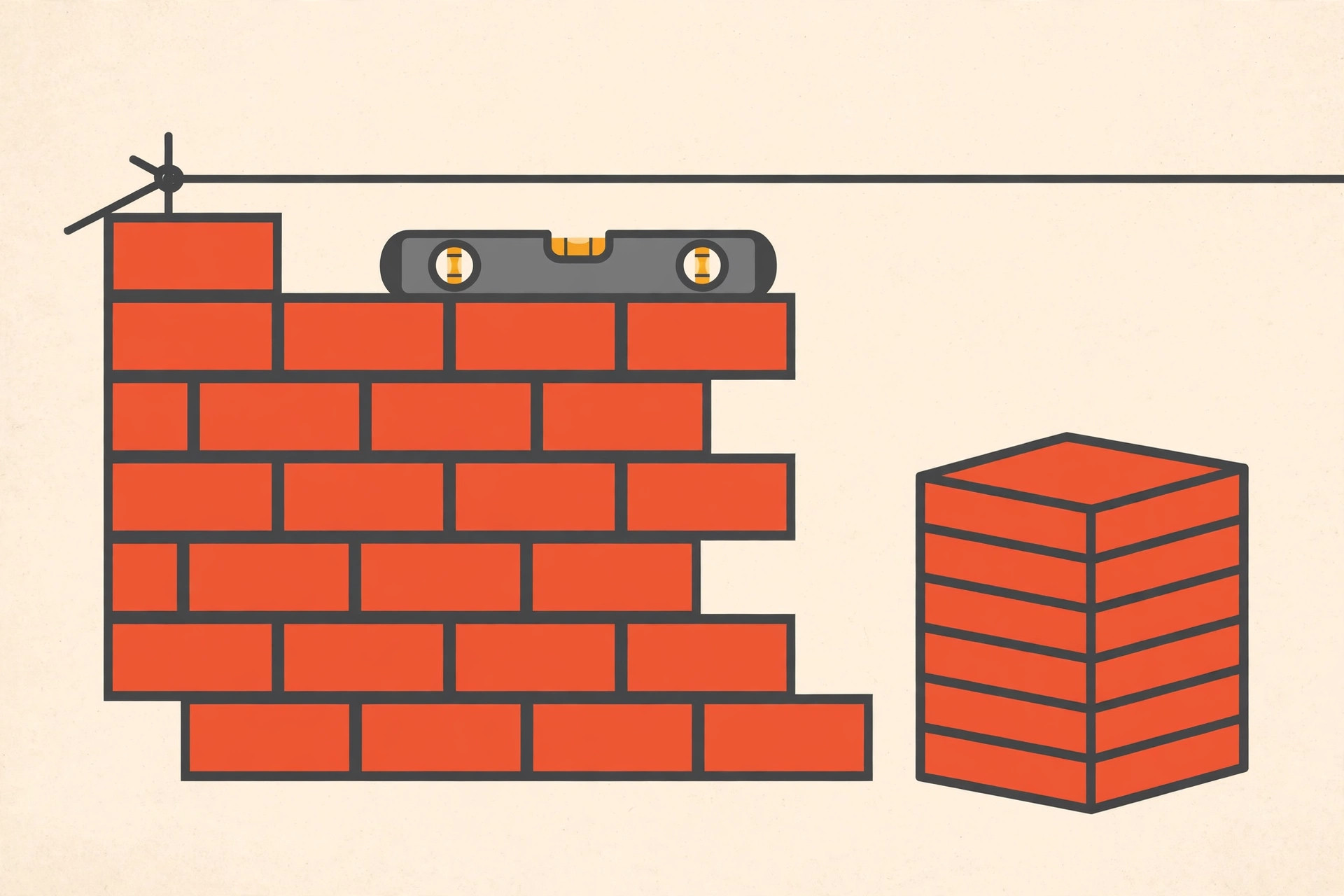
How to Calculate Bricks for a Wall
Count bricks the way merchants and bricklayers do: by face area, joints included, with mortar and wastage handled honestly.
Read the guide
Mortar Mix Ratios: A Plain Guide for Bricklayers
Mortar ratios look like alphabet soup until someone explains the parts. Here is what 1:3, 1:4 and 1:6 mean and where each belongs.
Read the guide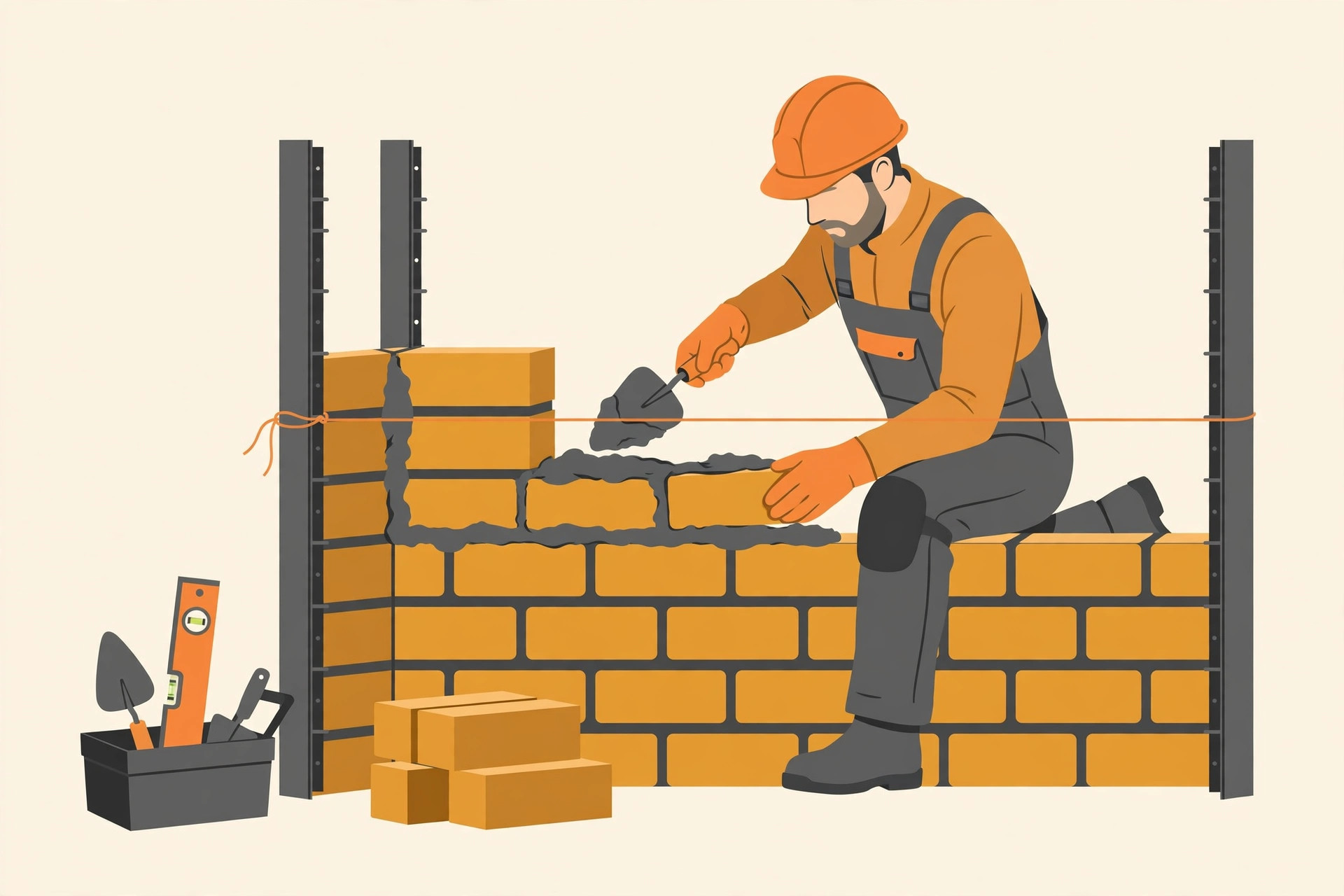
Laying Bricks for Beginners: Lines, Levels and Joints
Your first wall teaches more than any video. Lines, levels, joints and rhythm, the beginner habits that make brickwork look professional.
Read the guide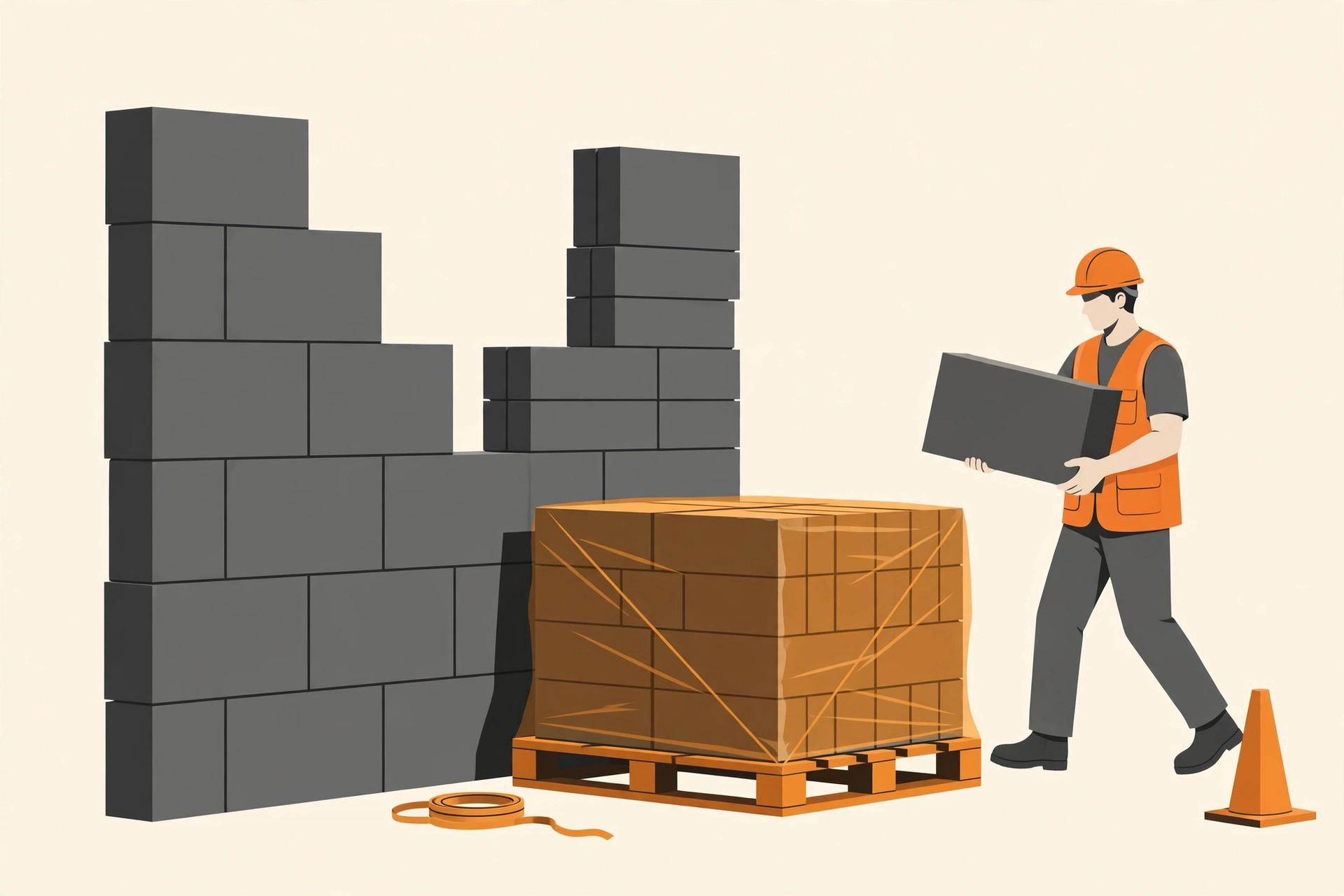
Concrete Block Walls Explained: Sizes, Strengths and Uses
Concrete blocks build fast, insulate better than you expect and hide behind most modern walls. Sizes, strengths and how to count them.
Read the guide
Laser Levels and Surveying Basics for Builders
Rotary lasers, line lasers, optical levels and the humble water level: what each does best, and the checks that keep a level honest.
Read the guide
Cement Types Explained: Reading the Bag
Ordinary Portland is only the beginning: rapid, sulfate resisting, white and blended cements, and what the letters on the bag are telling you.
Read the guide
Sand Types for Construction: Sharp, Soft and Grit
Sharp, soft, grit and plastering sands are different materials sharing a surname. How to tell them apart and what each is for.
Read the guide
Waterproofing Bathrooms: Tanking That Actually Works
Showers fail at corners, penetrations and thresholds, never in the middle of a tile. Tanking systems, tapes and falls that keep bathrooms dry.
Read the guide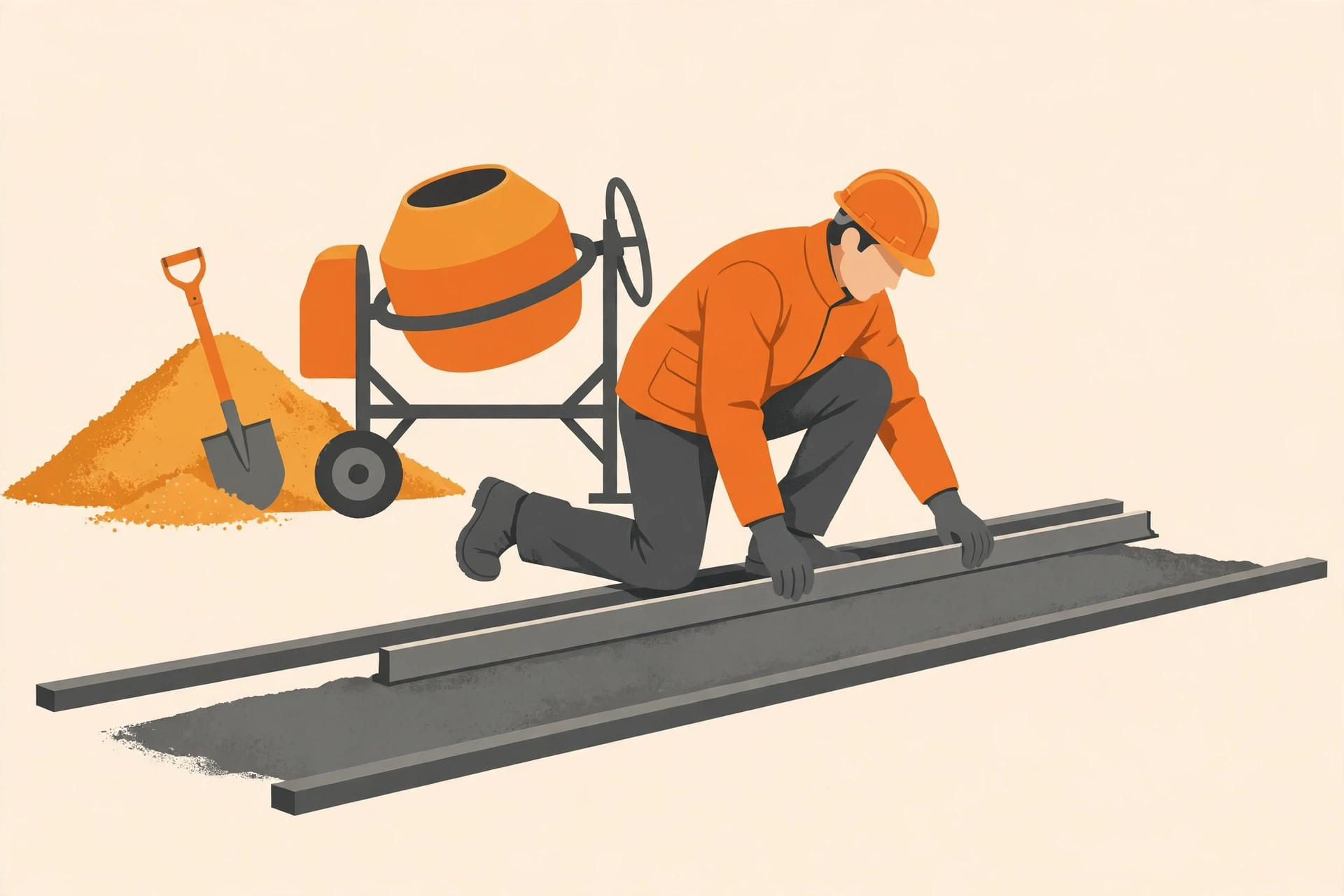
Screeding a Floor: Flat, Bonded and Built to Last
A screed is the flat truth under every finished floor. Mixes, thicknesses, bays and curing, and how to lay one that stays flat and bonded.
Read the guide
Rendering Exterior Walls: Coats, Mixes and Finishes
Render is the building's raincoat and its face. Backgrounds, coats, mixes and finishes, and the detailing that keeps it on the wall.
Read the guide
Building Costs Per Square Metre: Using the Rate Wisely
The rate per square metre is construction's favourite shorthand and its favourite argument. What drives it, and how to use it without being used by it.
Read the guide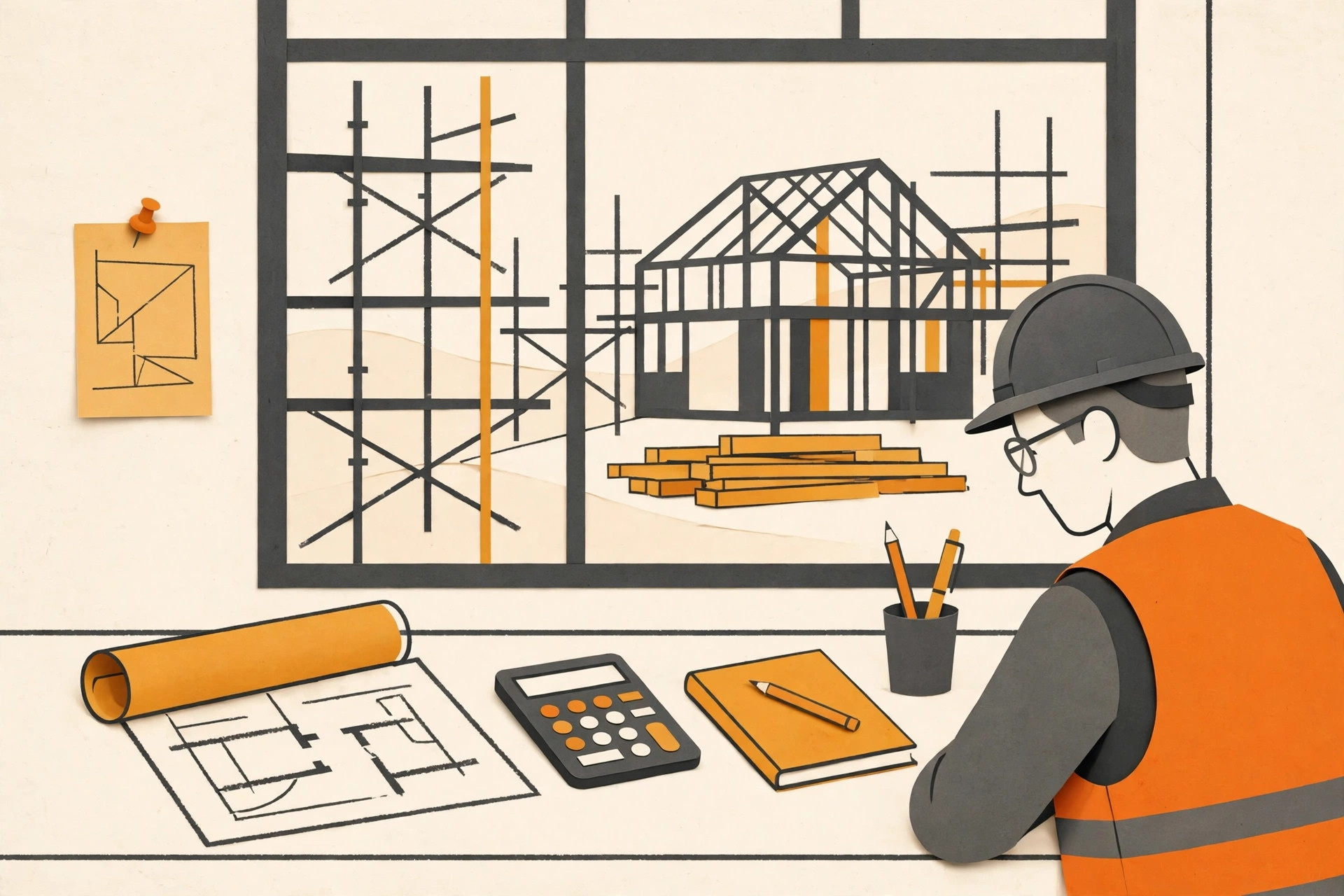
How to Estimate a Building Job Without Guessing
Materials, labour, plant, overheads and profit, assembled in that order. A calm method for pricing building work you can defend and repeat.
Read the guide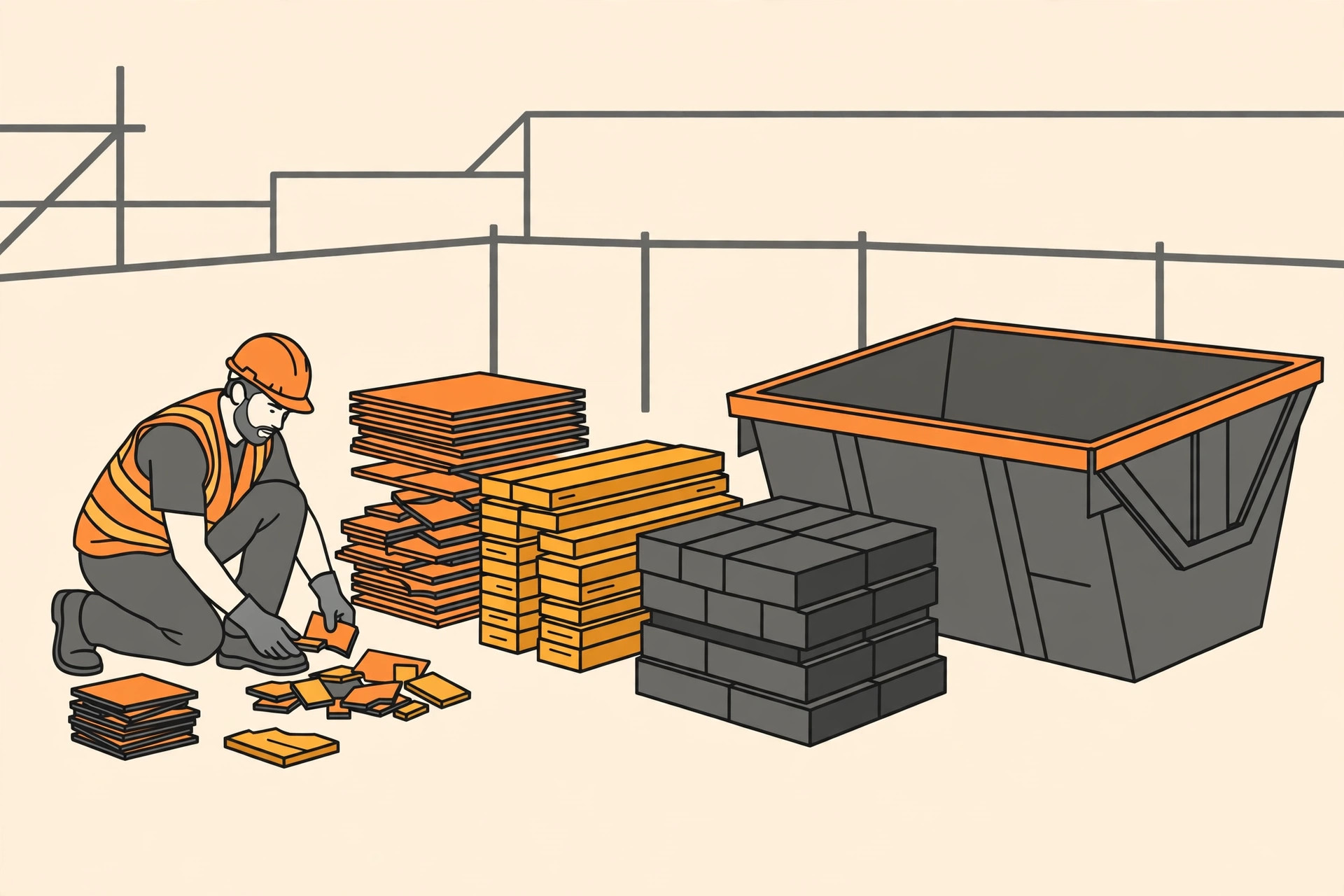
Wastage Allowances Explained: How Much Extra to Order
Five percent or fifteen? Wastage is not one number; it is a judgement per material, per pattern and per pair of hands. Here is how to judge it.
Read the guide
Metric and Imperial on Site: A Bilingual Survival Guide
Sites speak both languages, often in the same sentence. The conversions that matter, the traps that bite, and how to stay bilingual without errors.
Read the guide
Concrete Slab Thickness: What Each Job Really Needs
Thickness is a structural decision priced by the cubic metre. What governs slab depth for paths, drives, floors and yards, and what thicker really buys.
Read the guide
Retaining Walls Basics: Forces, Drainage and Types
A retaining wall is a dam that holds back earth instead of water. Forces, drainage and construction types, and why the drain matters more than the face.
Read the guide
Plastering a Wall Step by Step
Plastering rewards preparation and punishes haste. Backgrounds, coats, timing and the trowel habits behind a flat, sound wall.
Read the guide
How to Calculate Tiles for a Floor or Wall
Tile counts, box counts and the wastage judgement that separates a smooth job from a Saturday afternoon emergency run.
Read the guide
Tile Adhesive and Grout: Getting the Bed Right
The layers under the tile decide whether it stays down. Adhesive choice, notch sizes, coverage and grout that lasts.
Read the guide
How Much Paint Do You Need? Coverage, Coats and Tins
Coverage rates, coats and tins: how to buy the paint the walls actually need, and no more, with openings properly deducted.
Read the guide
Painting Preparation: The Work Behind the Finish
Paint shows everything underneath it. Washing, filling, sanding and priming, the unglamorous hours that make a finish look sprayed on.
Read the guide
Wallpaper Calculations Explained: Drops, Repeats and Rolls
Drops, repeats and rolls: how wallpaper quantities really work, and why patterned papers always need more than the room suggests.
Read the guide
Drywall Installation Basics: Boards, Fixings and Finishes
Sheets, studs, screws and tape: how plasterboard walls and ceilings go together, and how to count everything before you start.
Read the guide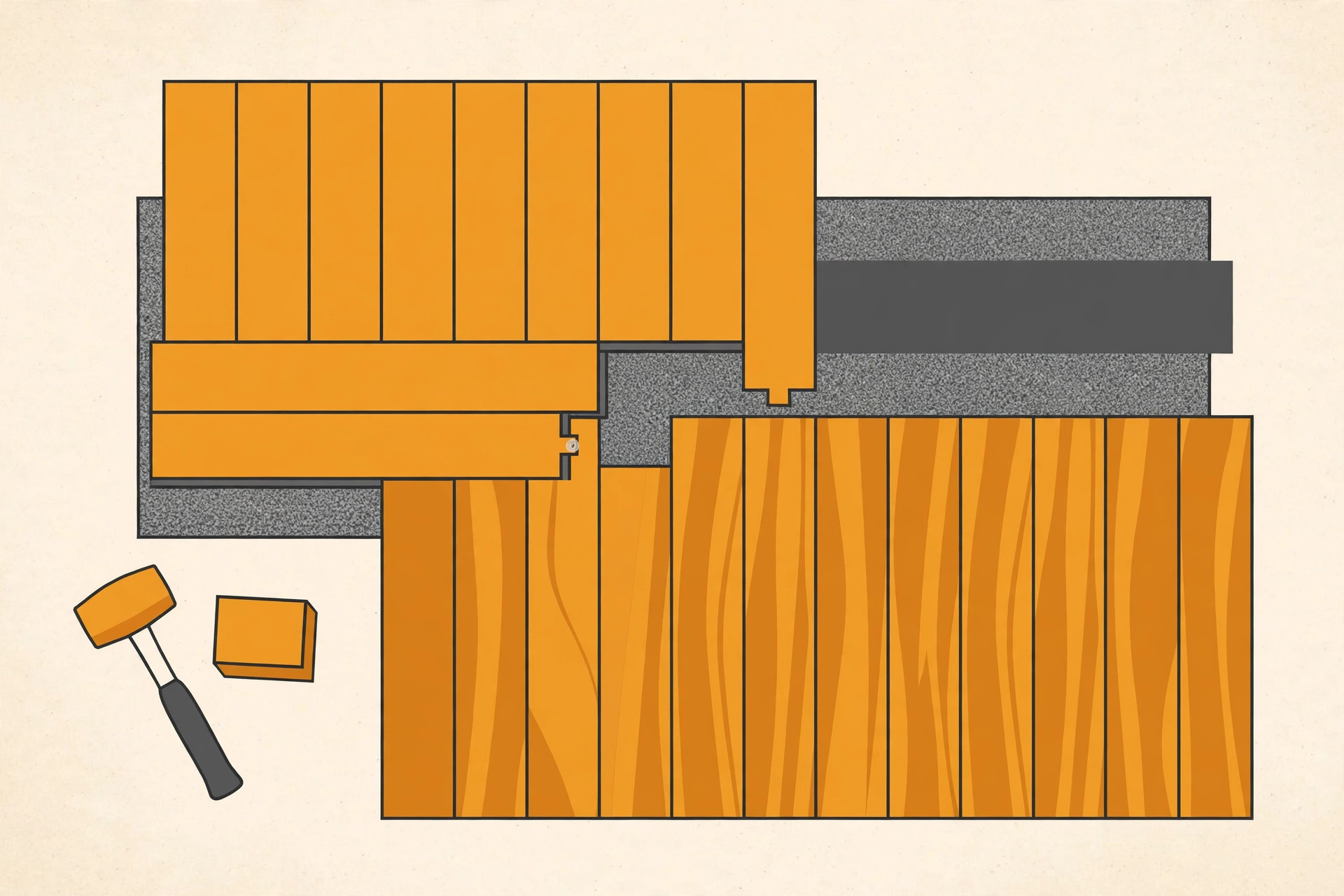
Laminate and Wood Flooring: A Laying Guide
Floating floors live or die on the subfloor, the underlay and the expansion gap. A practical guide to packs, acclimatisation and laying.
Read the guide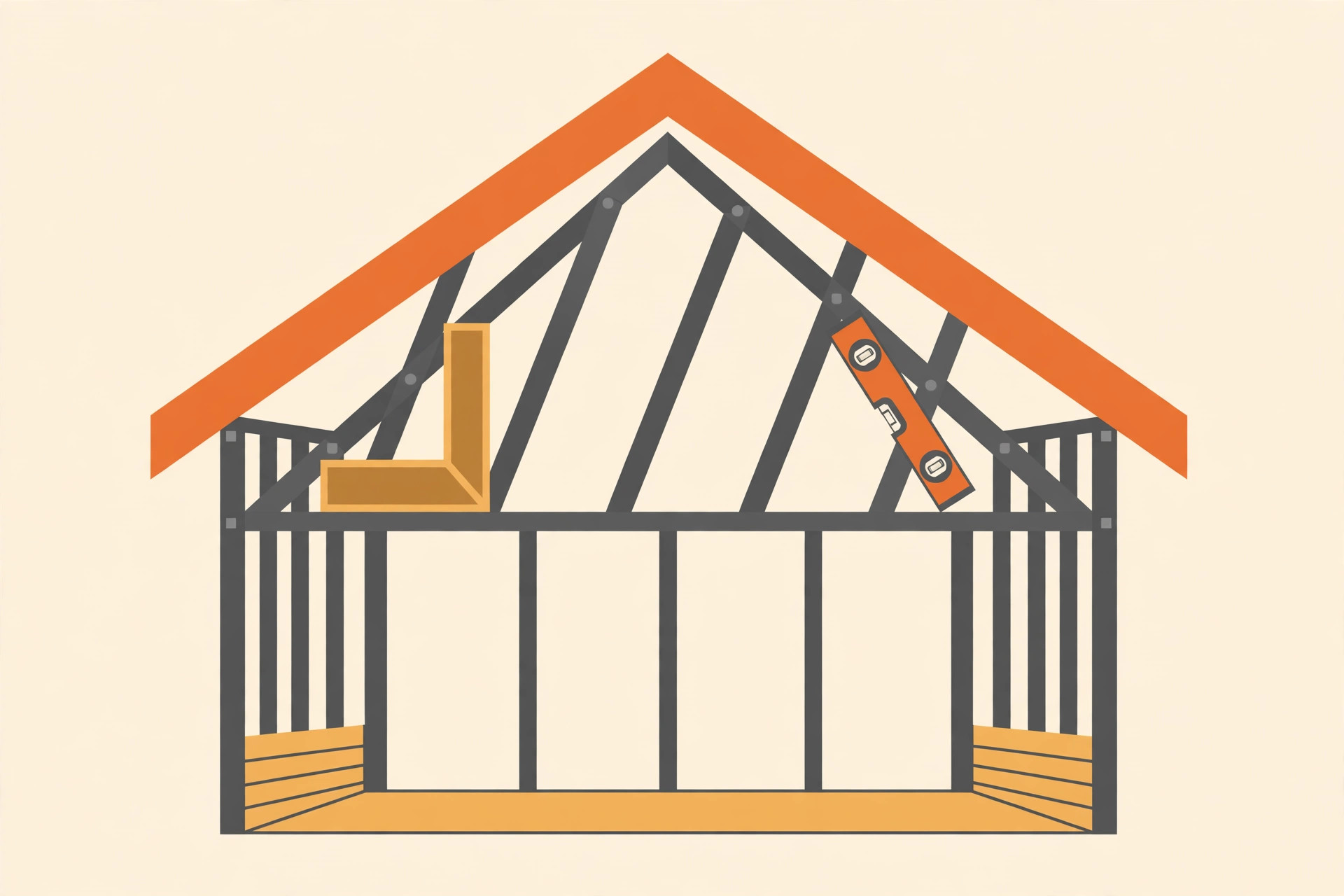
Roof Pitch Explained: Degrees, Ratios and Rise Over Run
One slope, four languages: degrees, ratio, rise over twelve and percentage grade. How to move between them and why each trade prefers its own.
Read the guide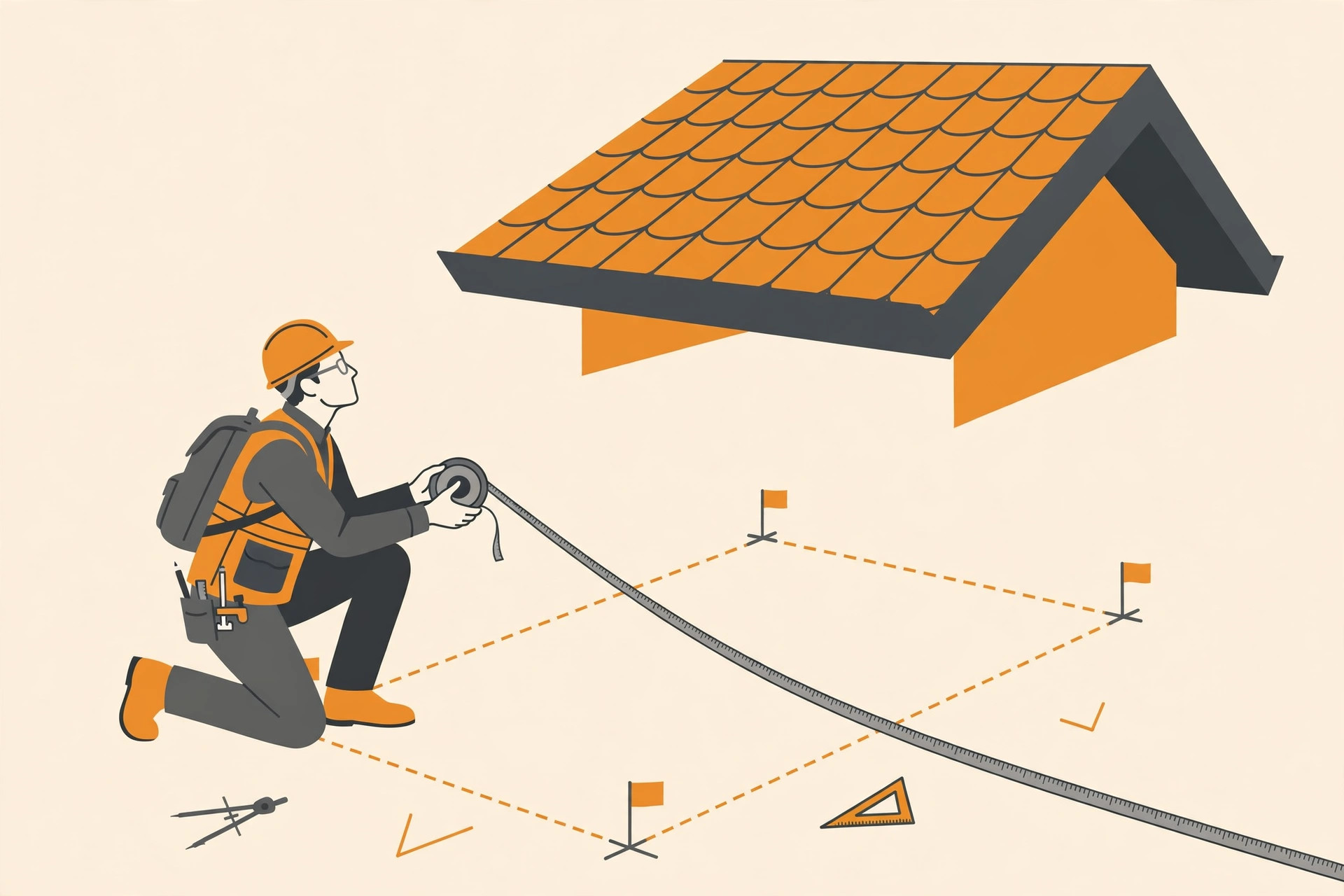
How to Measure a Roof Without Climbing It
Roofing is bought on the slope. Measure the footprint, project it up the pitch, and handle hips, valleys and waste like a roofer.
Read the guide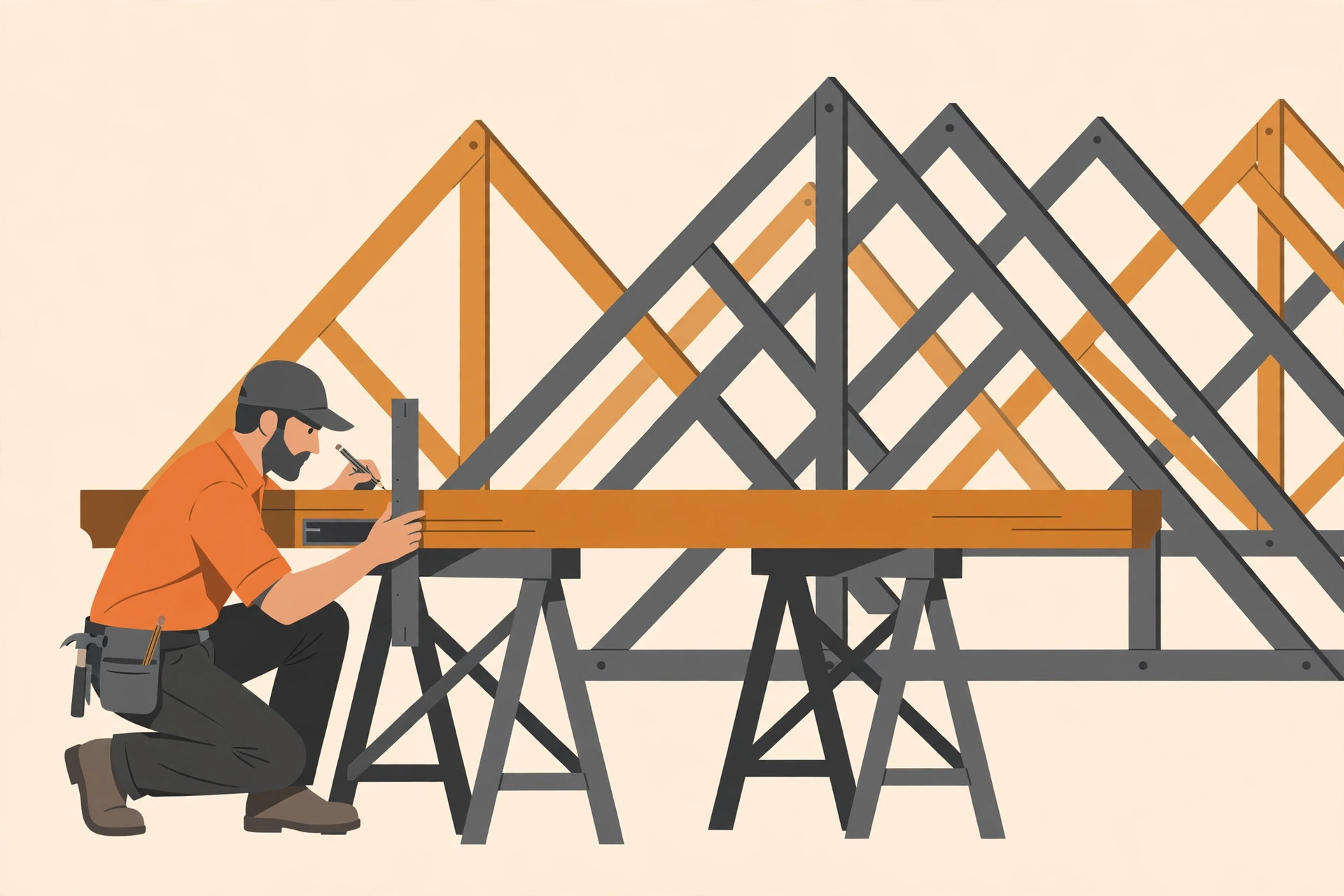
Rafter Lengths Explained: Common, Hip and Jack Rafters
A rafter is a hypotenuse with a job. Common, hip and jack rafters explained, with the birdsmouth and ridge deductions that make them fit.
Read the guide
Building Stairs Safely: Risers, Goings and Stringers
Stairs fail on paper before they fail in timber. Equal risers, honest goings, stringer lengths and the checks that keep a flight legal and kind.
Read the guide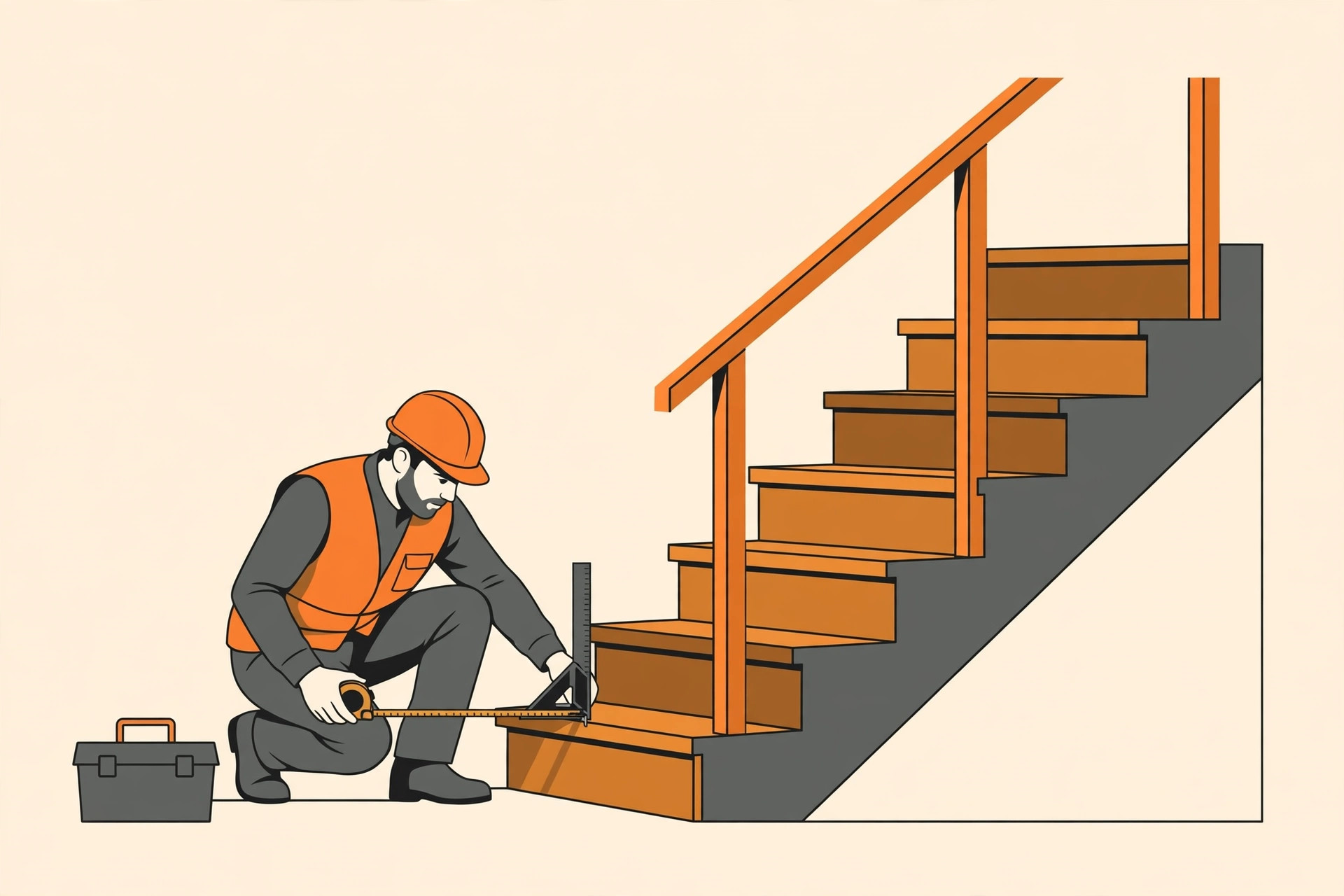
Stair Rules: Rise, Going and Headroom in Plain Words
Maximum risers, minimum goings, headroom and handrails: the rule framework stairs are judged by, and why the numbers are what they are.
Read the guide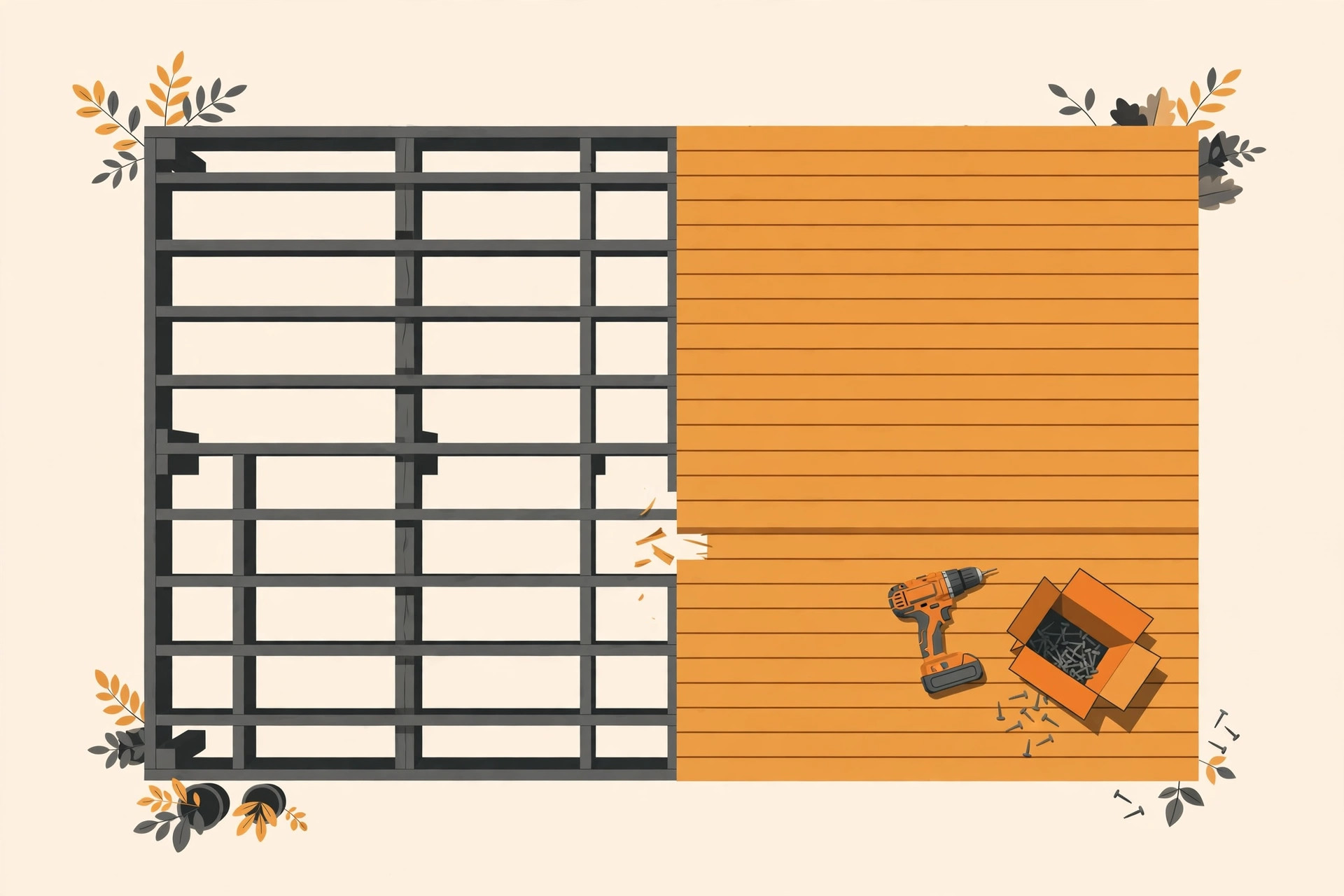
Decking Materials: Timber, Hardwood or Composite
Timber, composite or hardwood: board sizes, gaps, fixings and the frame beneath. How to choose decking and count it without tears.
Read the guide
Building a Fence Step by Step
From marking the line to the last bag of post mix: setting posts true, hanging panels level and keeping the fence standing in the first storm.
Read the guide
Gravel and Aggregates: A Buyer's Guide
Gravel, crushed stone, sand and ballast: what each aggregate is, what the densities mean for ordering, and how depth drives tonnage.
Read the guide
Topsoil: Depths, Weights and Buying Well
Depths for lawns and beds, the weight hiding inside a cubic metre, and how to order topsoil that arrives as soil, not rubble with ambitions.
Read the guide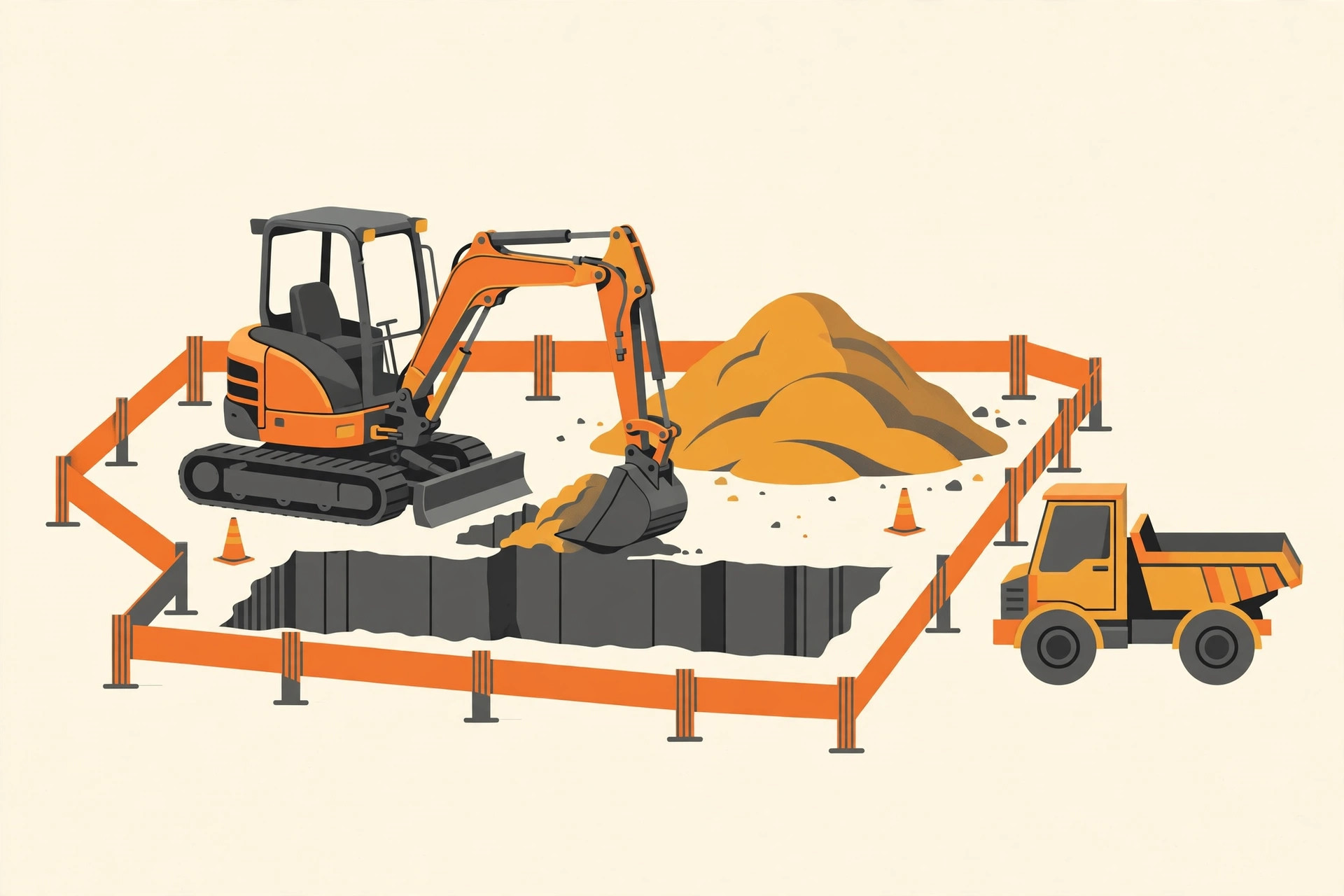
Excavation and Earthworks: Digging With Your Eyes Open
Bulking factors, safe digging, spoil management and truck maths: the groundwork skills every other trade quietly depends on.
Read the guide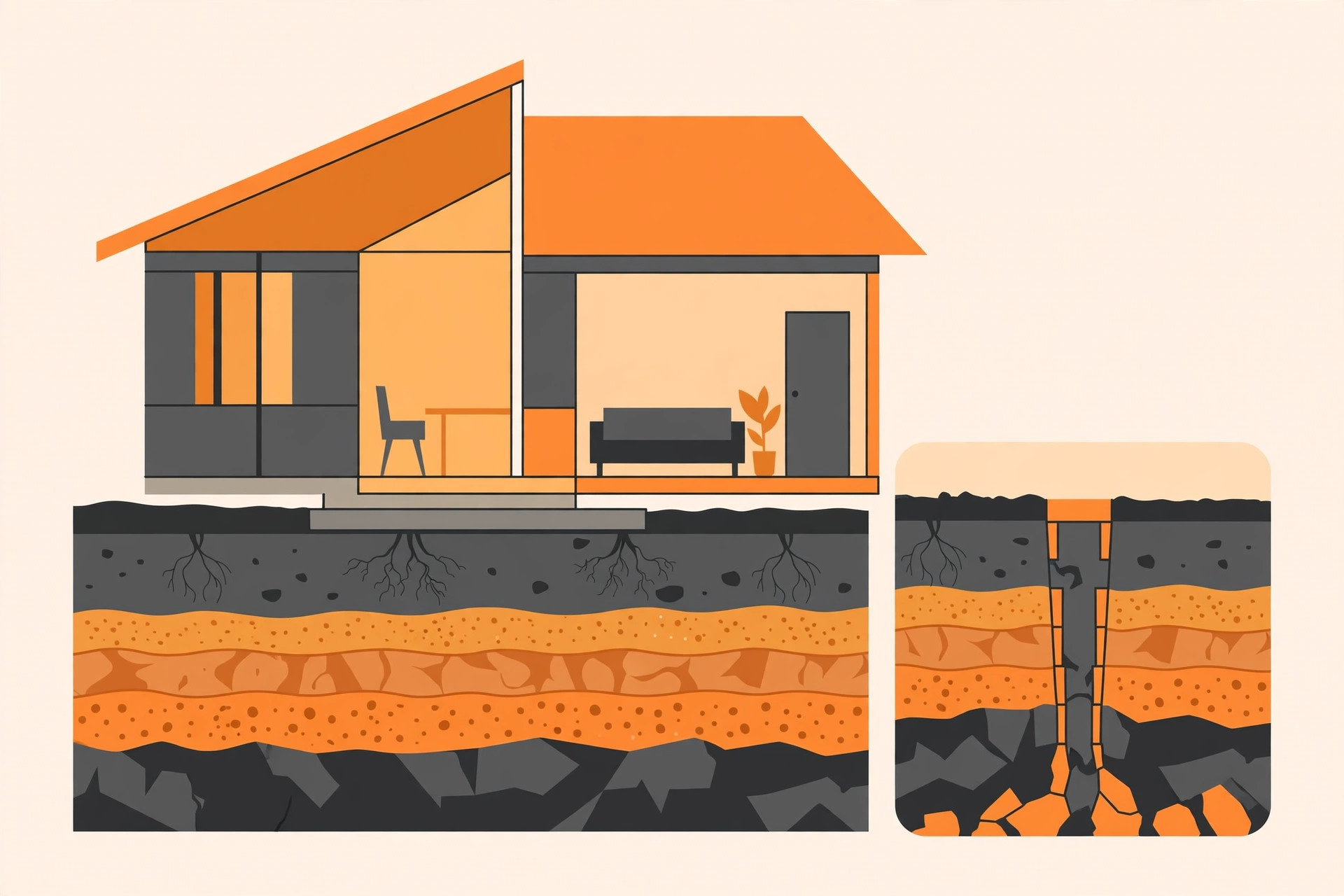
Foundations Explained: Strip, Raft, Pad and Pile
Strip, pad, raft, piles and piers: what each foundation type does, where each belongs, and why the ground always has the casting vote.
Read the guide
Footings: Depth, Width and the Frost Line
How wide, how deep and how much concrete: the footing decisions under every wall, fence and deck, and the frost line that governs them.
Read the guide
Rebar in Concrete Explained: Cover, Laps and Weight
Cover, laps, spacings and the diameter squared rule: how reinforcement actually works inside concrete, and how to count it without a schedule.
Read the guide
Steel Sections and Weights: Bars, Plates and Tubes
Bars, plates, tubes and angles: how steel sections are sized, how their weights are worked out, and what the numbers on a mill sheet mean.
Read the guide
Timber Sizes and Board Feet Without the Headache
The board foot confuses everyone once. What it is, how the 144 cubic inches work, and how to move between board feet, metres and money.
Read the guide
Plywood Grades Explained: Faces, Cores and Uses
Faces, cores and grades decoded: what separates cabinet plywood from shuttering ply, and how to buy the sheet your job actually needs.
Read the guide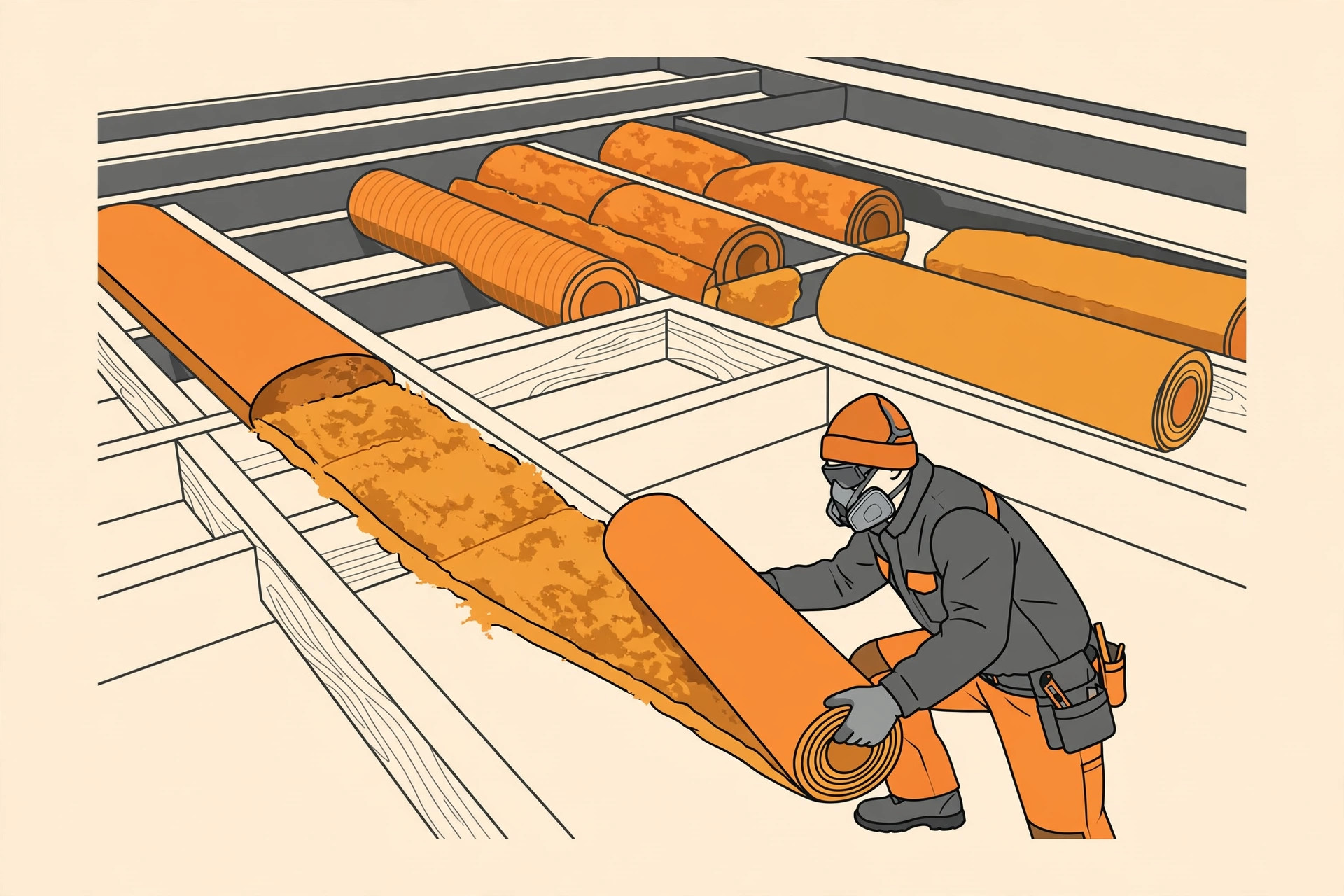
Insulation Types and R Values, Without the Jargon
R values, U values and honest depths: what insulation numbers mean, where each material belongs, and why the gaps matter more than the brand.
Read the guide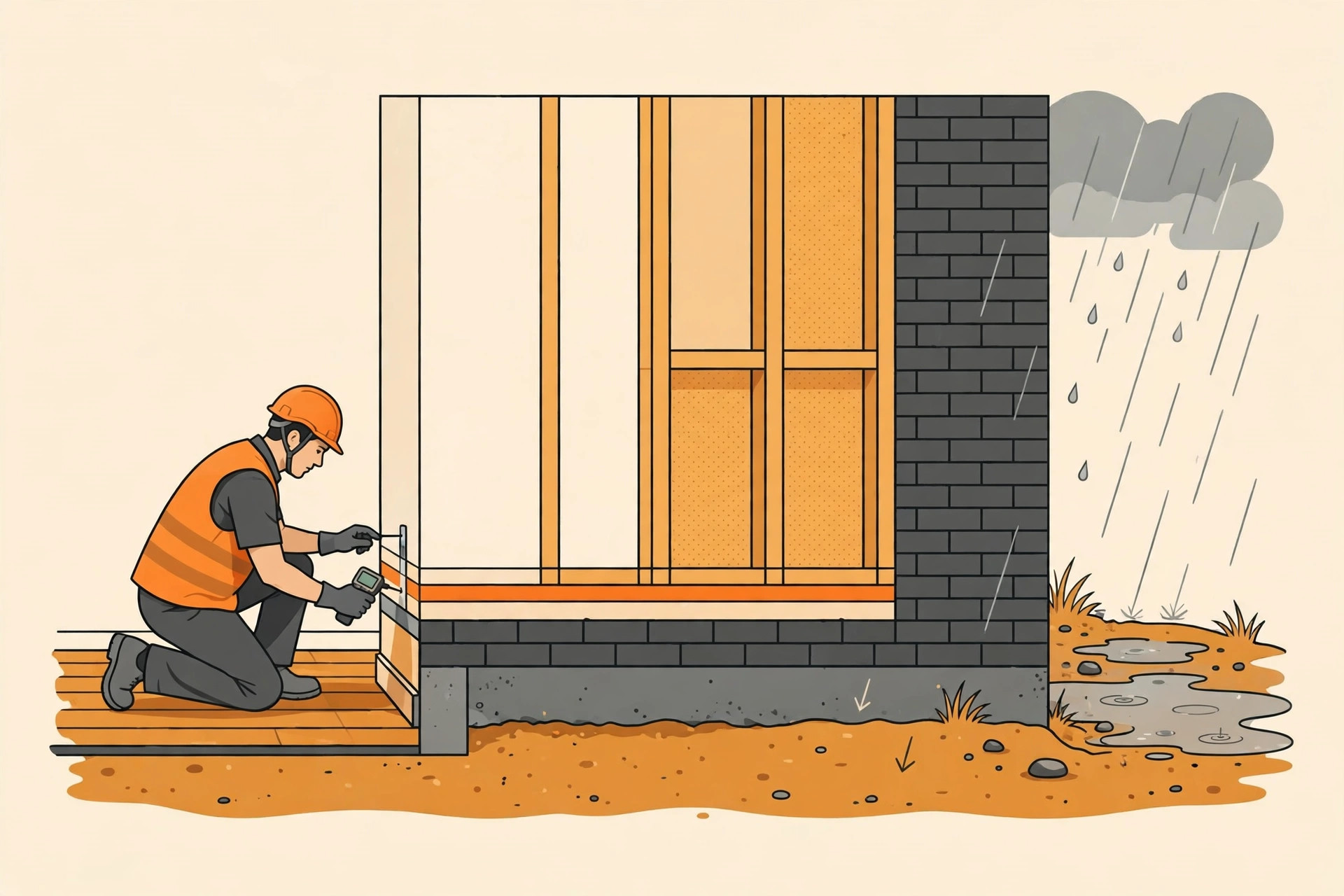
Damp Proofing Basics: Three Damps, Three Cures
Rising damp, penetrating damp and condensation are three different diseases with three different cures. Diagnose first, spend second.
Read the guide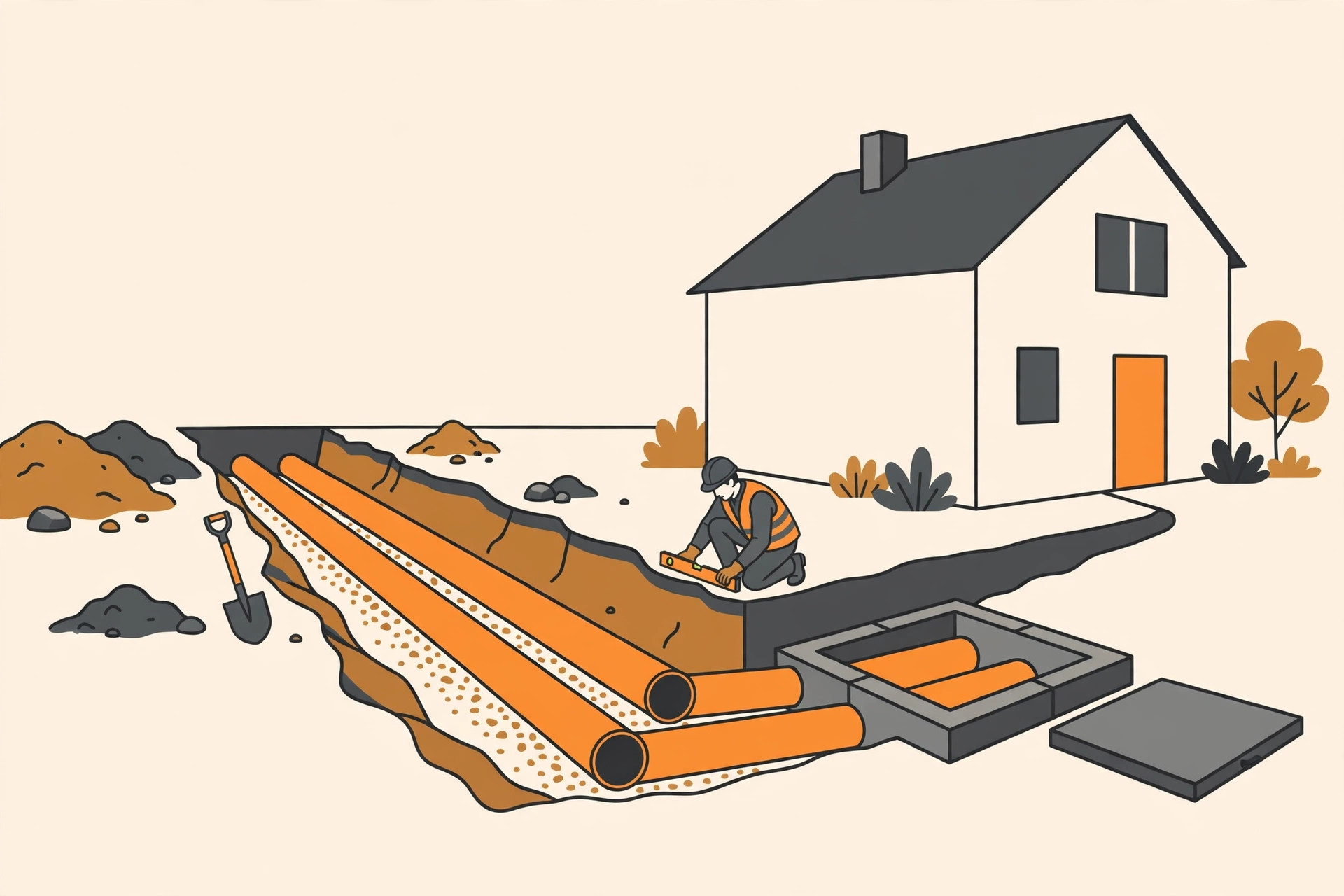
Drainage for Buildings: Falls, Pipes and Soakaways
Rain and foul water both need somewhere planned to go. Falls, pipe sizes, soakaways and the rules that keep drainage invisible for decades.
Read the guide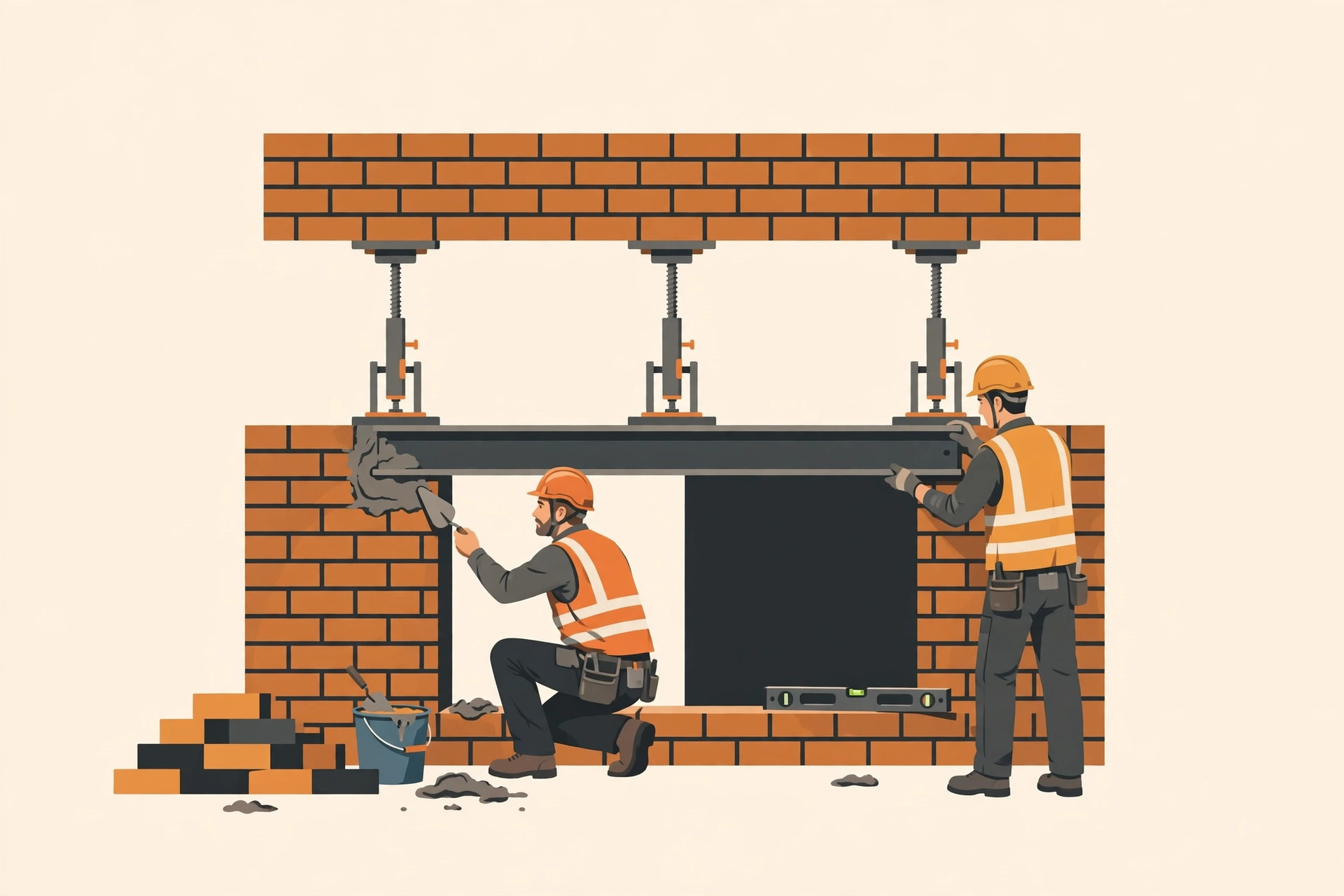
Lintels and Openings: Carrying the Wall Over the Hole
Every hole in a wall needs a beam over it. Lintel types, bearings, loads and the net area maths that openings create.
Read the guide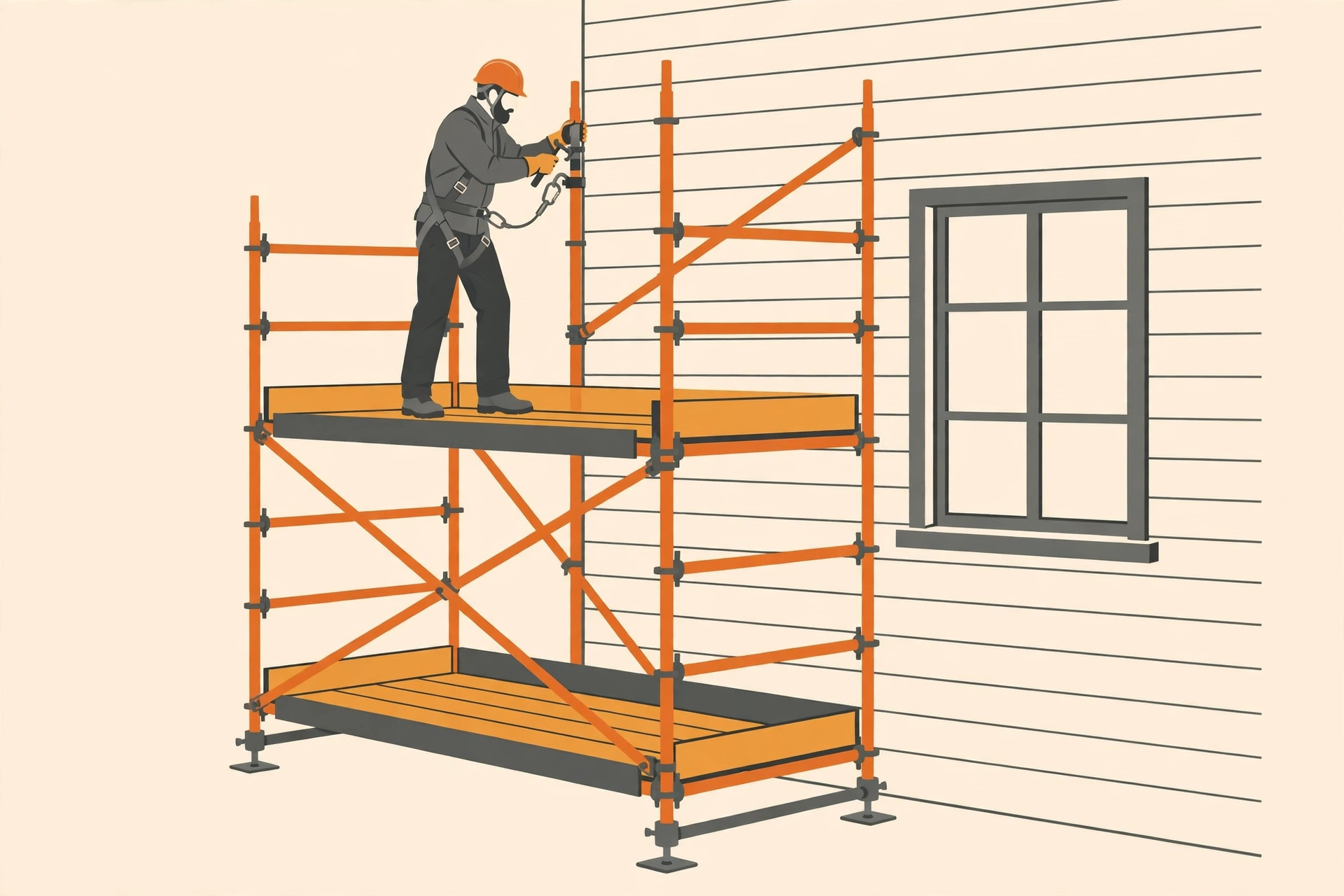
Scaffolding Safety Basics: Built, Tagged and Trusted
Towers, ties, boards and tags: how scaffolding is meant to be built, checked and used, and the habits that keep it boring in the best way.
Read the guide
Site Safety Essentials: The Habits That Protect Everyone
The unglamorous essentials: inductions, housekeeping, lifting, electricity and the culture that sends everyone home with the same number of fingers.
Read the guide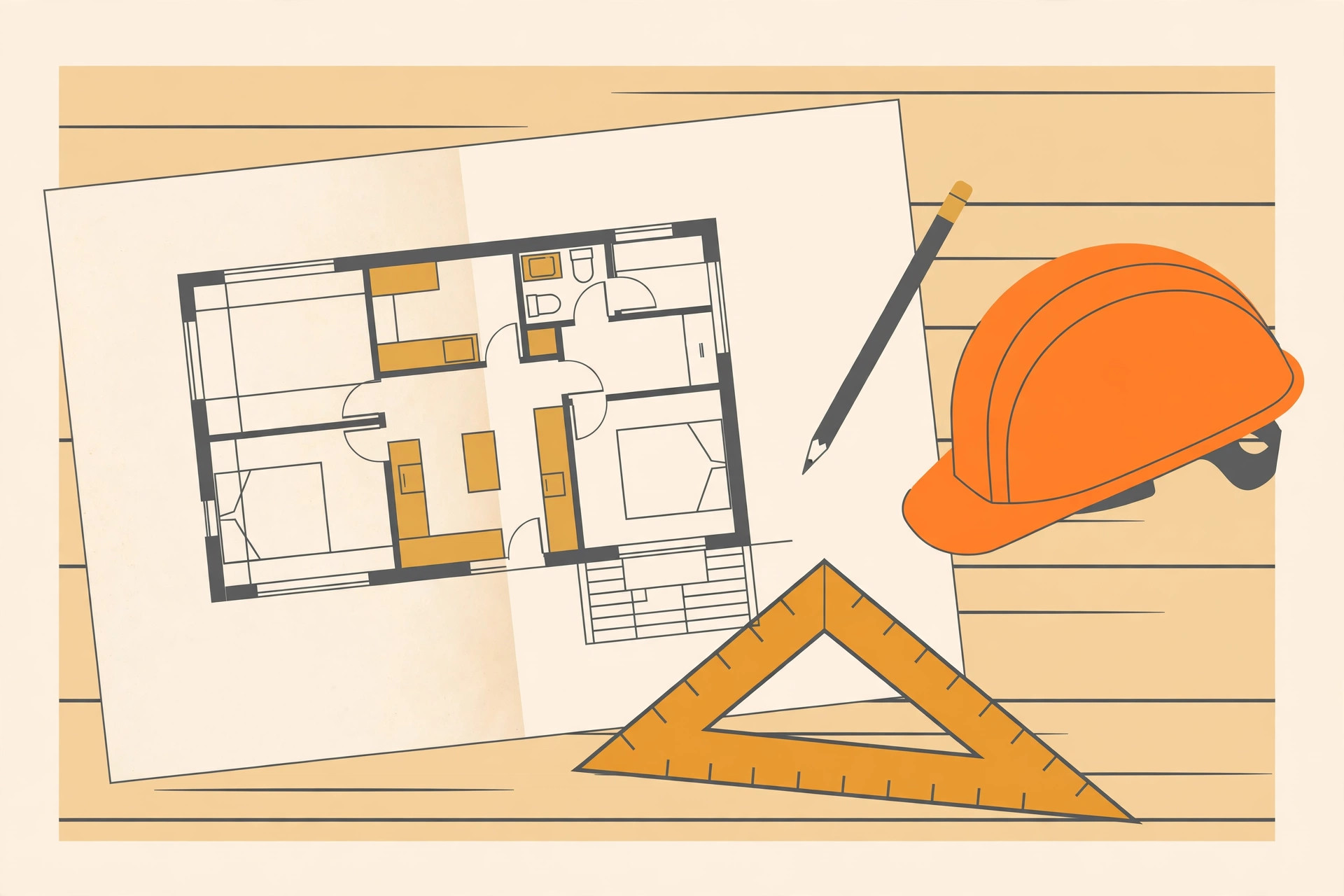
Reading Construction Drawings: Plans, Sections and Scales
Plans, elevations, sections and scales: how to pull dimensions, levels and specifications off a drawing set without guessing or scaling off paper.
Read the guide
Measuring and Marking Out: Setting Out That Stays True
Strings, squares, diagonals and datum levels: the setting out skills that decide whether everything after them fits.
Read the guide