Concrete Mix Ratios Explained: 1:2:4, 1:3:6 and the Rest
What the three numbers mean
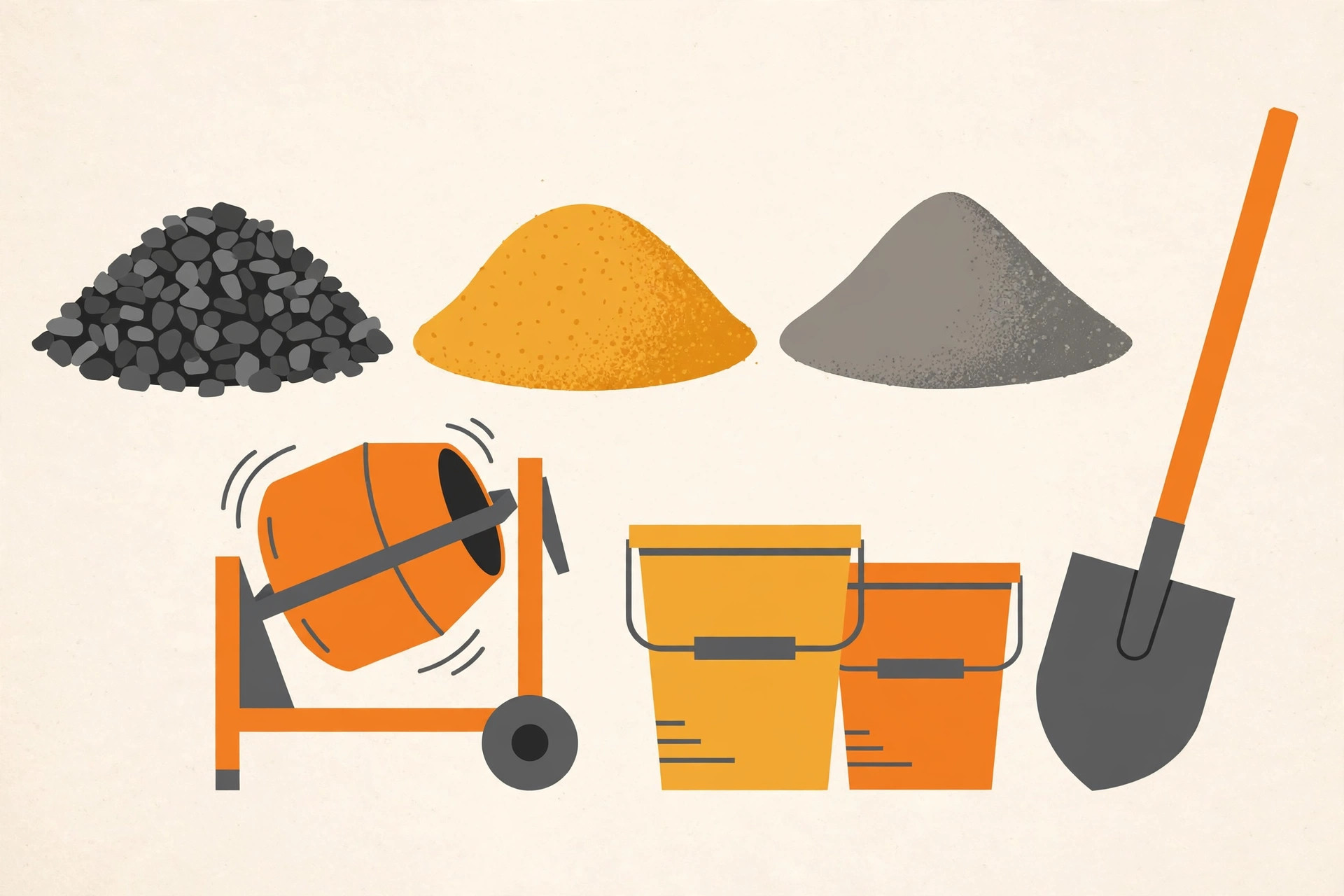
A mix ratio lists cement, sand and coarse aggregate in that order, measured by volume. A 1:2:4 mix is one part cement, two parts sand and four parts stone. The cement is the glue, the sand fills the gaps between the stones and makes the mix workable, and the aggregate gives the mass its strength and economy. Richer mixes carry more cement and cost more money; leaner mixes stretch further but cure weaker and less durable. The parts are volumes, not weights, which is why careful site batching uses gauge boxes or buckets filled level and struck off, never shovels counted loosely by different hands through the day. One bag of cement is the usual site measure of one part, which keeps the counting honest.
Matching the mix to the job
The everyday workhorse is 1:2:4, roughly an M15 grade, used for slabs, paths, floor beds and most domestic foundations where the design allows it. Leaner 1:3:6 and 1:4:8 mixes serve as blinding under foundations, as trench fill and as mass concrete where strength matters less than bulk. Richer 1:1.5:3 mixes, around M20, go into columns, beams, lintels and stairs that carry real loads. These are traditional nominal mixes passed down the trade; engineered work uses designed mixes with tested cube strengths, and the drawing or specification always wins over habit. When in doubt on anything structural, choosing the richer standard mix is cheap insurance compared with the cost of breaking out and replacing a failed pour, and your engineer will thank you for asking first.
From ratio to shopping list
Wet concrete shrinks as it is mixed, placed and compacted, so dry materials are figured with a factor of about 1.54: one cubic metre placed needs roughly one and a half cubic metres of loose ingredients. Split the dry volume by the total parts, seven for a 1:2:4 mix, and each share converts to weight through its density: cement at 1440 kilograms per cubic metre, sand near 1600, aggregate near 1550. That is how 1:2:4 lands at about six and a third 50 kilogram bags of cement to the cubic metre, a figure worth memorising. Water follows the water cement ratio, near 0.5 for concrete that is both workable and durable; more water pours easier and cures weaker, every single time, so add it by the measured jug and never by the hopeful hose.