Concrete Slab Thickness: What Each Job Really Needs
Thickness carries the load and the cracks
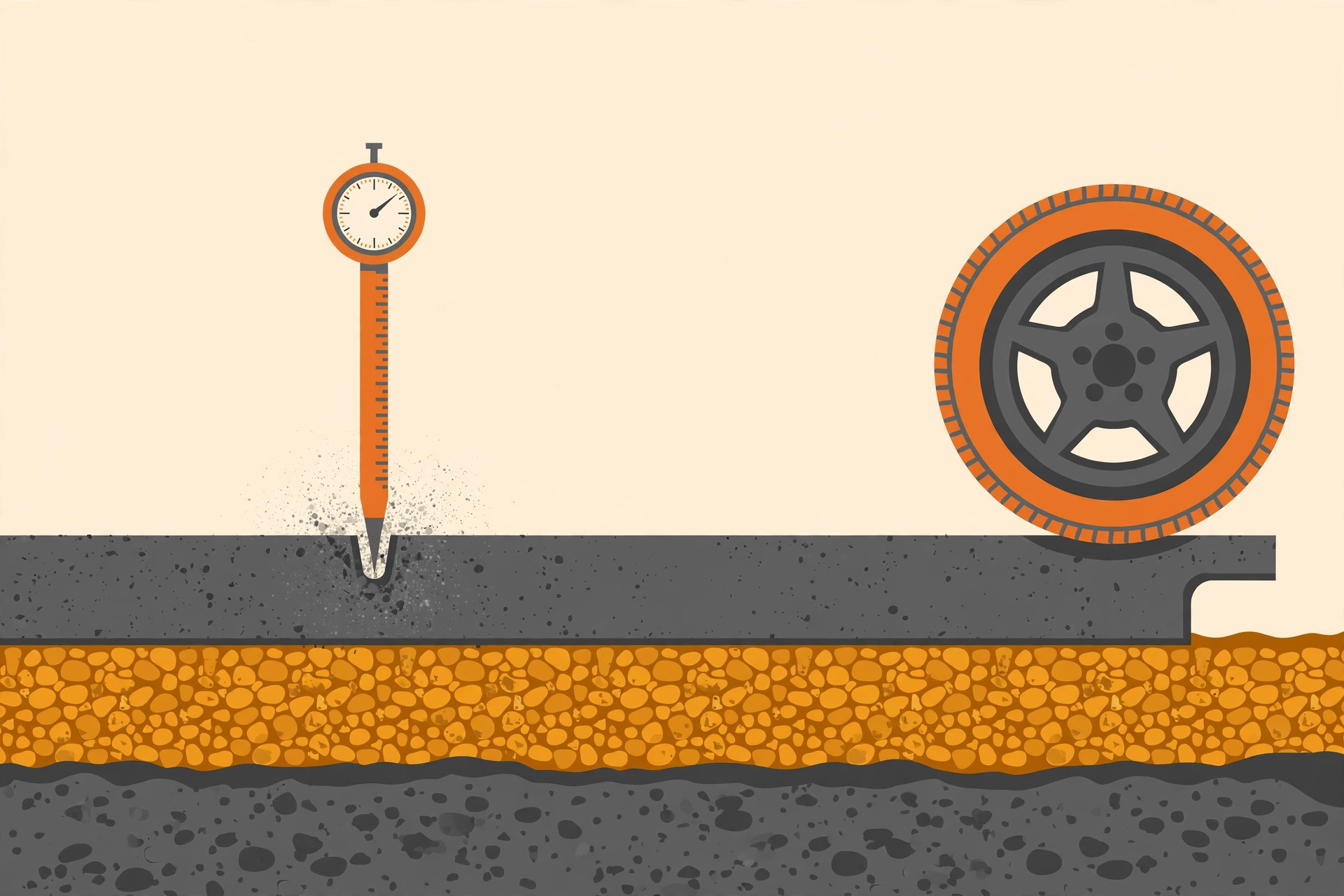
A concrete slab works as a plate: it spreads concentrated loads across the ground and bridges soft spots, and both talents grow with thickness, roughly with its square. Doubling a slab from 100 to 200 millimetres does not double its strength; it multiplies its stiffness and load spreading several times, at exactly double the concrete bill, which is the trade every thickness decision makes. Thickness also buys cover for reinforcement, room for falls and finishes, and forgiveness for a sub base that is good rather than perfect. The enemies it fights are wheel loads at edges and corners, frost and water beneath, and the shrinkage that every slab answers with joints; thickness without joints and preparation is money spent arm wrestling the wrong opponent.
The working thicknesses, job by job
Garden paths and light patios live well at 75 to 100 millimetres on a compacted base. Domestic driveways and garage floors standardise near 100 to 125, stepping up where vans and turning wheels work the surface. House ground floors are usually a system, slab or screed over insulation over a structural base, each layer with its own thickness and job. Agricultural and industrial yards, forklift aisles and turning circles for trucks move to 150, 200 and beyond, designed rather than habitual, often with mesh or fibres and joints at engineered spacings. These are the trade's habits, not a design: loads, ground and use set the real figure, and anything carrying vehicles over made ground or near trees deserves an engineer's hour before the order, not after the crack.
Thickness is bought by the cubic metre
Every extra 25 millimetres over a 40 square metre drive is another cubic metre of concrete, another tonne and more of barrowing, and a longer day. That arithmetic is why the volume calculator asks for thickness in your own units and why honest estimators check the sensitivity of the order to a centimetre of generosity. Spend thickness where the loads and the risk live: at entrances, turning heads, edges and the bay the delivery van mounts. Save it where a path carries only feet and weather. Pair the decision with the unglamorous partners that make thickness effective: a compacted, even sub base, a membrane where damp or weak ground demands, joints sawn or formed on time, and a cure that lasts the week. A 100 millimetre slab with all four partners outlasts a neglected 150 every time.
Put it into numbers
The free calculator that goes with this guide:
Open the concrete volume calculator