Curing Concrete Properly: The Week That Decides Strength
Curing is chemistry, not drying
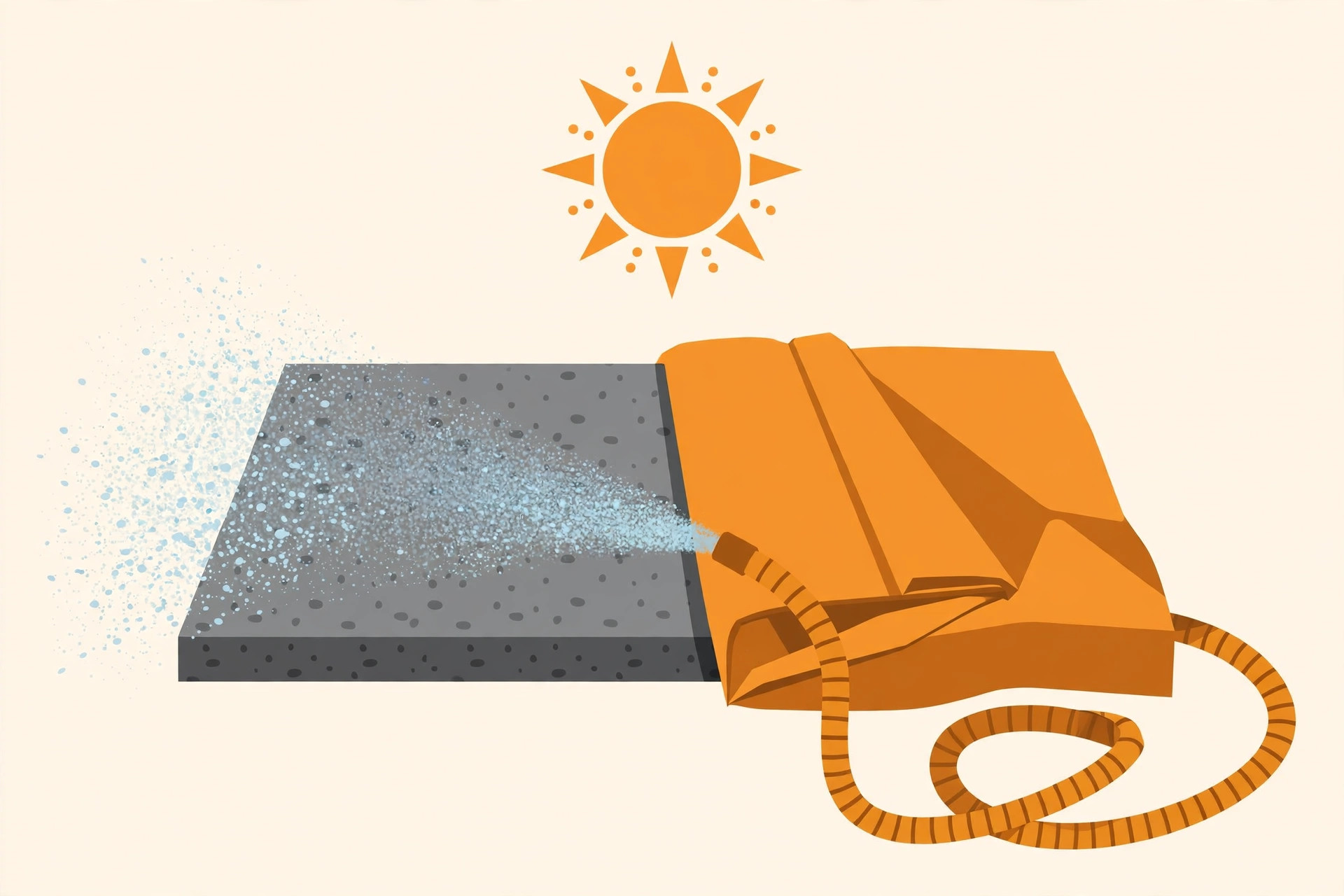
Fresh concrete hardens because cement reacts with water in a process called hydration, and that reaction keeps improving the structure for weeks. If the water leaves early, through sun, wind or a thirsty subgrade, the reaction starves and the surface stays soft, dusty and weak no matter how good the mix was on paper. Curing simply means holding moisture in and temperature extremes out while the young concrete gains its strength. Most of that strength arrives in the first week, with the classic benchmark measured at 28 days, which is why the first days of care matter out of all proportion to their cost. A slab that dries out on day one can lose a third of the strength it was designed for, permanently.
The practical ways to keep it damp
The simplest cure is water and cover: once the surface is hard enough not to mark, wet it down and lay polythene sheet weighted at the edges, or use hessian and old blankets kept damp underneath. Spray on curing compounds do the same sealing job with far less labour and suit big slabs and commercial work. In hot or windy weather, start curing early, shade the pour if you can, and rewet on a schedule rather than letting cycles of soaking and baking craze the surface. In cold weather the problem flips: protect the pour from frost with blankets and insulated covers, because frozen young concrete can lose half its potential strength before it ever gets warm, and never pour onto frozen ground.
Loading, striking and the patience rules
Foot traffic is fine after a day or two on a domestic slab, but wheels, point loads and drilled fixings must wait for real strength to develop. Formwork to slab edges can come away in a day or two in mild weather; the props under suspended beams and slabs stay far longer and follow the design, not impatience or the hire company's schedule. Keep vehicles off new driveways for at least a week, longer for heavy vans. If programme pressure demands coring, cutting or loading early, that is an engineer conversation, not a site hunch. The pattern through all of it is simple: the pour took an hour, the cure takes a week, and the building lives with the result for decades, so give the week its due. Keep a simple diary note of pour date and curing method with the delivery ticket; if a surface ever disappoints, that note is the first evidence you will want.
Put it into numbers
The free calculator that goes with this guide:
Open the concrete volume calculator