Damp Proofing Basics: Three Damps, Three Cures
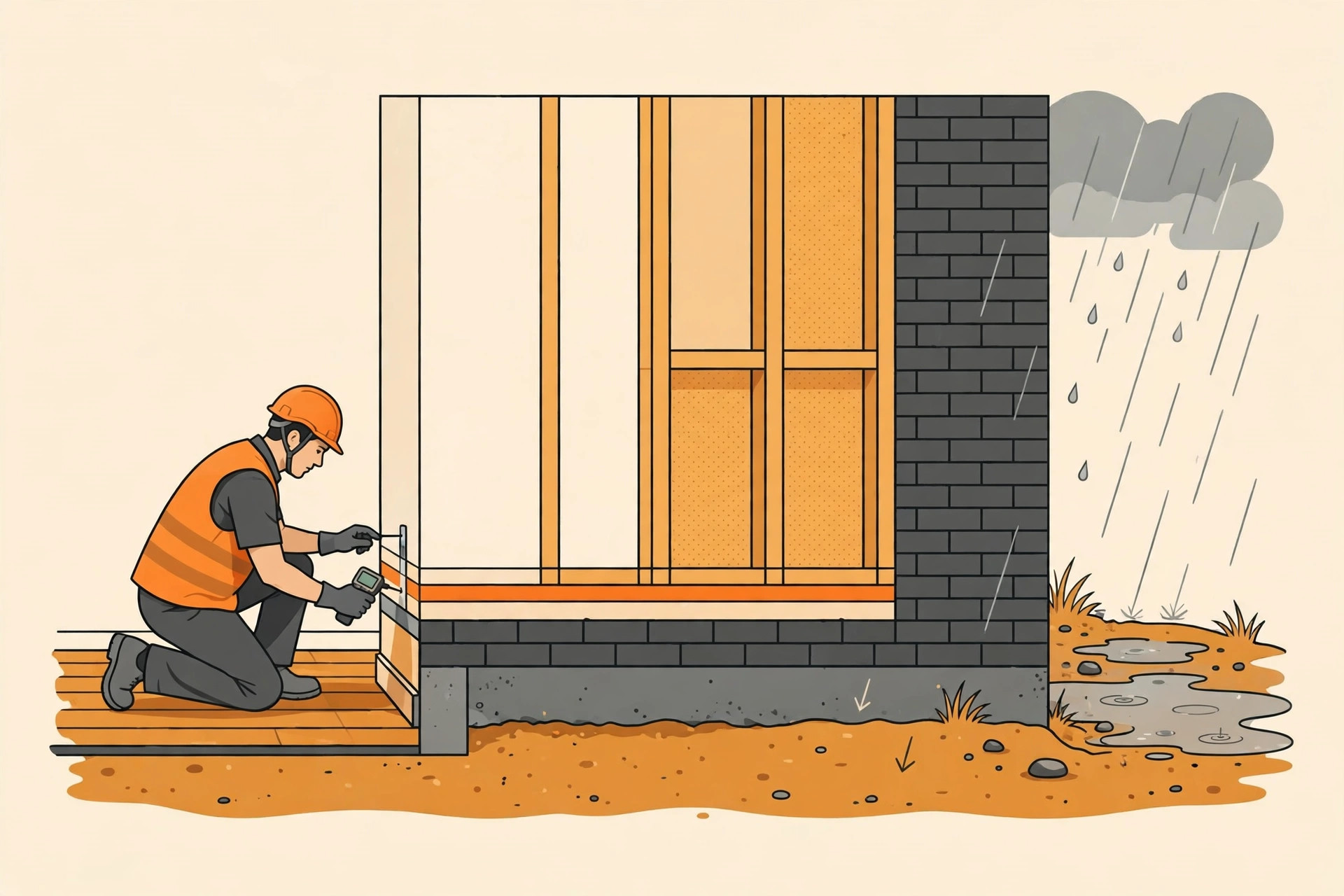
Three damps, three causes
Rising damp climbs from the ground through porous masonry where a damp proof course is missing, bridged or failed, and it rarely rises more than a metre, carrying salts that keep the plaster hygroscopic and spoiling long after. Penetrating damp travels sideways: failed gutters, cracked render, porous brick in driven rain, leaking roofs and plumbing, announced by patches that follow weather or water use. Condensation is indoor air surrendering its moisture on cold surfaces, the damp of bathrooms, bedrooms and behind wardrobes, and in many homes it is the true culprit wearing rising damp's clothes. Each has a different cure, and the industry graveyard is full of chemical injections sold to cure condensation.
Diagnose before you prescribe
Read the pattern before reaching for products. Tide marks and salt bands low on a ground floor wall suggest rising moisture; a patch under a gutter or beside a chimney suggests penetration; mould on cold corners and window reveals, worst in winter and in the morning, is condensation's signature. Check the simple things first: ground levels bridged above the damp proof course, air bricks buried, gutters dripping, render cracked, and rooms unventilated and underheated. A moisture meter helps and also lies cheerfully on salts and foil backed plaster, so treat readings as clues, not verdicts. Photograph the pattern across seasons if time allows. The cure that matches the cause is usually the cheap one: unblock, repair, ventilate, heat, then and only then consider barriers and membranes.
Cures that respect the building
For genuine rising damp in masonry, a new physical or chemical damp proof course, with salt resistant replastering, is the established remedy, done by people who guarantee diagnosis as well as work. Penetrating damp yields to maintenance: gutters, pointing, render, flashings and the humble act of moving a water butt. Condensation yields to the triangle of heating, insulation and ventilation, plus lids on pans and doors closed on steam. Old buildings built with lime need breathable repairs; sealing them in cement and plastic traps the moisture everyone then blames on the walls. Damp proofing is a diagnosis business wearing a building costume, and the tape measure, ladder and notebook cure more of it than the injection machine ever has. The buildings that stay dry are usually the ones somebody simply looks at twice a year, gutter by gutter, valley by valley. That looking, done faithfully, is the real damp proofing.