Decking Materials: Timber, Hardwood or Composite
Three board families, three bargains
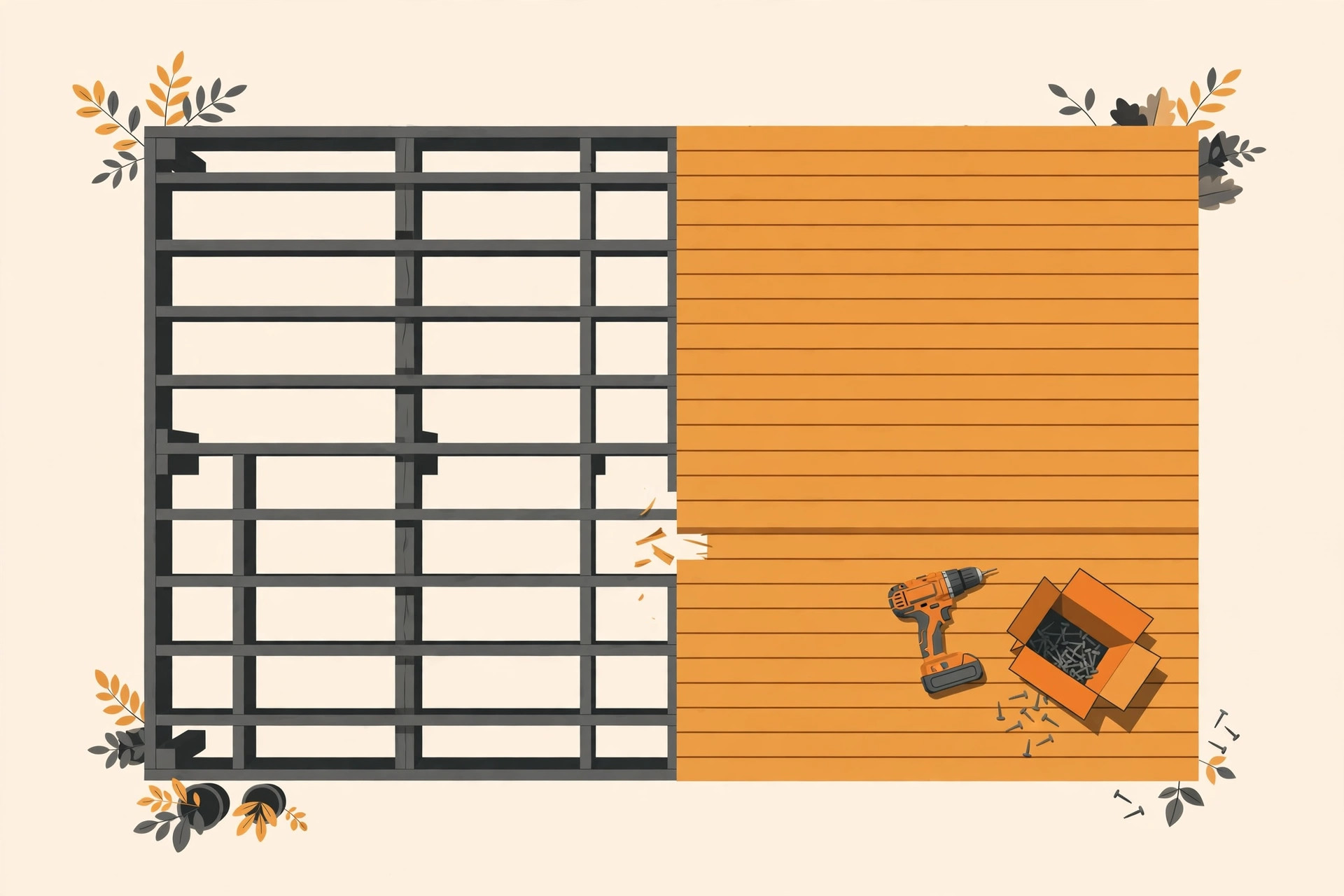
Softwood decking is the budget standard: pressure treated pine boards, cheap, light and easy to cut, asking for oil or stain and accepting a service life measured in a decade or so of honest weather. Hardwoods like ipe and balau arrive dense, naturally durable and heavy enough to blunt tools and budgets alike, silvering gracefully if left unoiled. Composites mix wood fibre and plastic into boards that never need staining and resist rot completely, at the price of heat underfoot in strong sun, expansion that demands respect, and a feel some people find hollow. All three sit on the same skeleton of joists and posts, so choose the board for the life you want and the maintenance you will truly do, not the one you promise yourself in spring.
Sizes, gaps and the way boards move
Boards come in widths from about 90 to 150 millimetres, and the width sets both the look and the count: narrower boards mean more rows, more screws and a busier surface. Every board needs a drainage and movement gap, around 5 millimetres for timber laid at typical moisture, set by the clip system for composites. Timber shrinks across its width as it dries, so a gap laid tight in a wet winter becomes a canyon by August; lay by the season and the moisture, not by the picture. Run boards along the longer dimension to reduce joints, stagger butt joints over joists, and pre drill hardwoods near ends or the splits will teach you why. The calculator counts rows from width plus gap, which is the arithmetic behind every tidy deck photograph.
The frame decides the lifespan
More decks die from the frame than the face. Joists at 400 millimetre centres for domestic boards, 300 for diagonal layouts and many composites, want treated timber or better, isolated from ground contact on posts and pads, and sloped a whisper so water leaves. Keep the deck off the house damp proof course, flash the ledger board where it fixes to the wall, and leave ventilation under low decks or the joists rot in the dark they created. Screws beat nails for holding power and future repairs; stainless near coasts and with hardwoods. Finish the edges with a picture frame border if the budget allows: it hides end grain, stiffens the perimeter visually, and makes a plain deck look commissioned.