Drywall Installation Basics: Boards, Fixings and Finishes
What drywall is and where it wins
Drywall, or plasterboard, is a gypsum core faced with paper, sold in sheets that turn studwork into a wall in an afternoon. The standard sheet is 2400 by 1200 millimetres; the smaller 1800 by 900 size exists for ceilings and stairwells where a big sheet is a wrestling match. Thickness runs 9.5 millimetres for ceilings and curves, 12.5 for general walls, with moisture resistant, fire rated and acoustic variants wearing coloured papers to tell them apart. Drywall wins on speed, flatness and predictable cost, and loses to wet plaster on toughness and sound, which is why the board choice and the stud spacing are design decisions, not shopping accidents.
Fixing patterns that hold
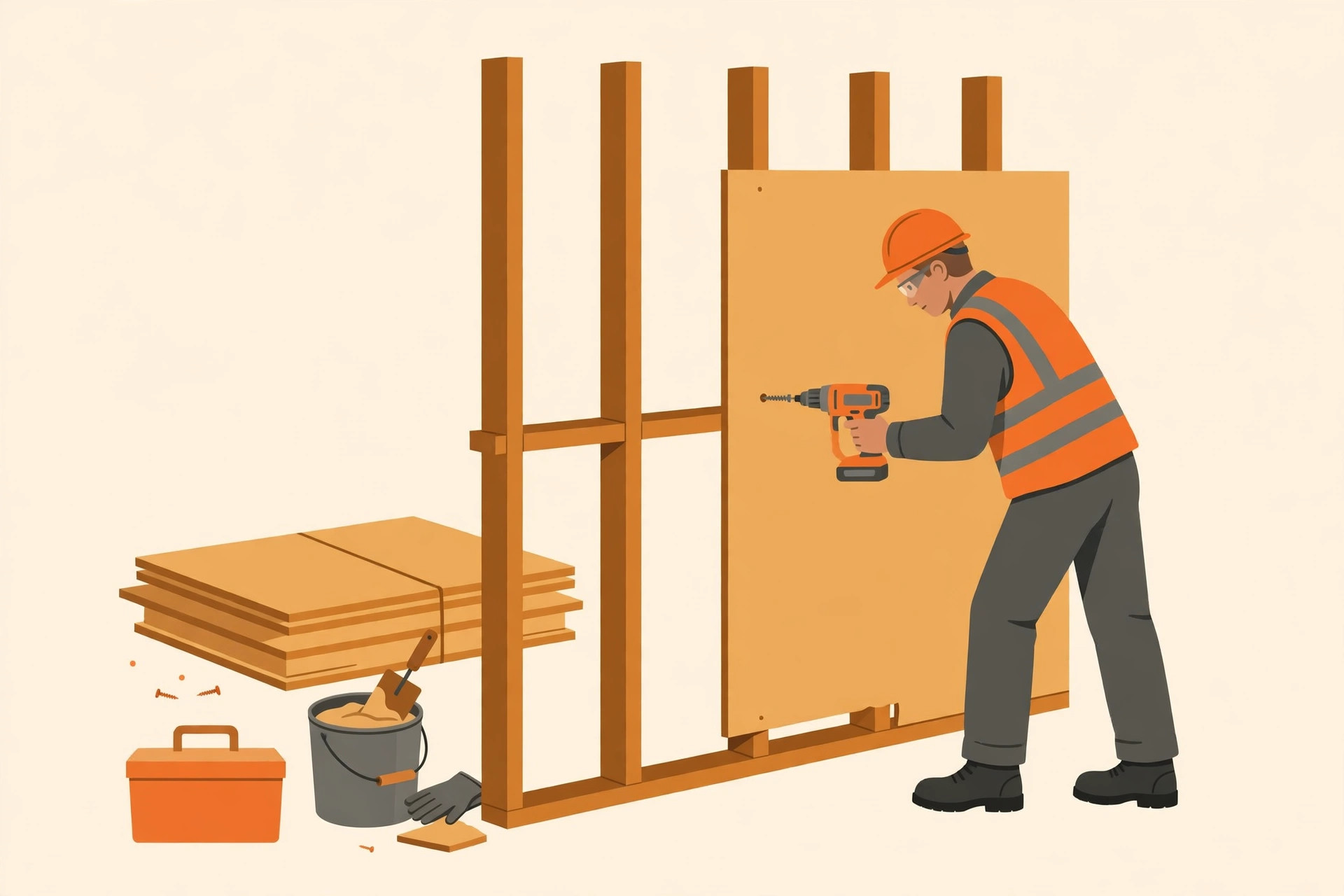
Boards fix to studs or joists at 400 or 600 millimetre centres, with screws every 200 to 300 millimetres along each support, driven just below the paper without tearing it. Stagger the joints between sheets, keep board ends on a support, and never let four corners meet at one point. Ceilings want the long edge across the joists and a helper or a board lifter; gravity grades every shortcut. Around openings, cut the board in an L rather than jointing at the corner of a door frame, because that corner is where cracks are born. Count screws honestly when ordering: near 32 per full sheet is a fair planning figure, and running out at sheet eleven of twelve is a tradition worth breaking.
Taping, jointing and the levels of finish
The joints make the wall. Paper tape bedded in compound, or mesh tape with setting compound, bridges each seam; then two or three widening coats of joint compound feather the repair until the joint disappears under a raking light. Sand lightly between coats, vacuum the dust, and seal the whole surface before painting, because compound and board paper drink paint at different rates and unsealed joints flash through emulsion as dull bands. Decide your finish level honestly: a garage needs less than a hallway under spotlights. Skim coating the whole wall with plaster remains the premium route where the light is cruel, but a well jointed board, sealed and painted, satisfies most rooms and most budgets. Joint under the best light you can borrow while you work, because the light you joint by is the finish you get; low daylight raking across the wall is the strictest inspector on any job.