Excavation and Earthworks: Digging With Your Eyes Open
Dug ground grows: the bulking rule
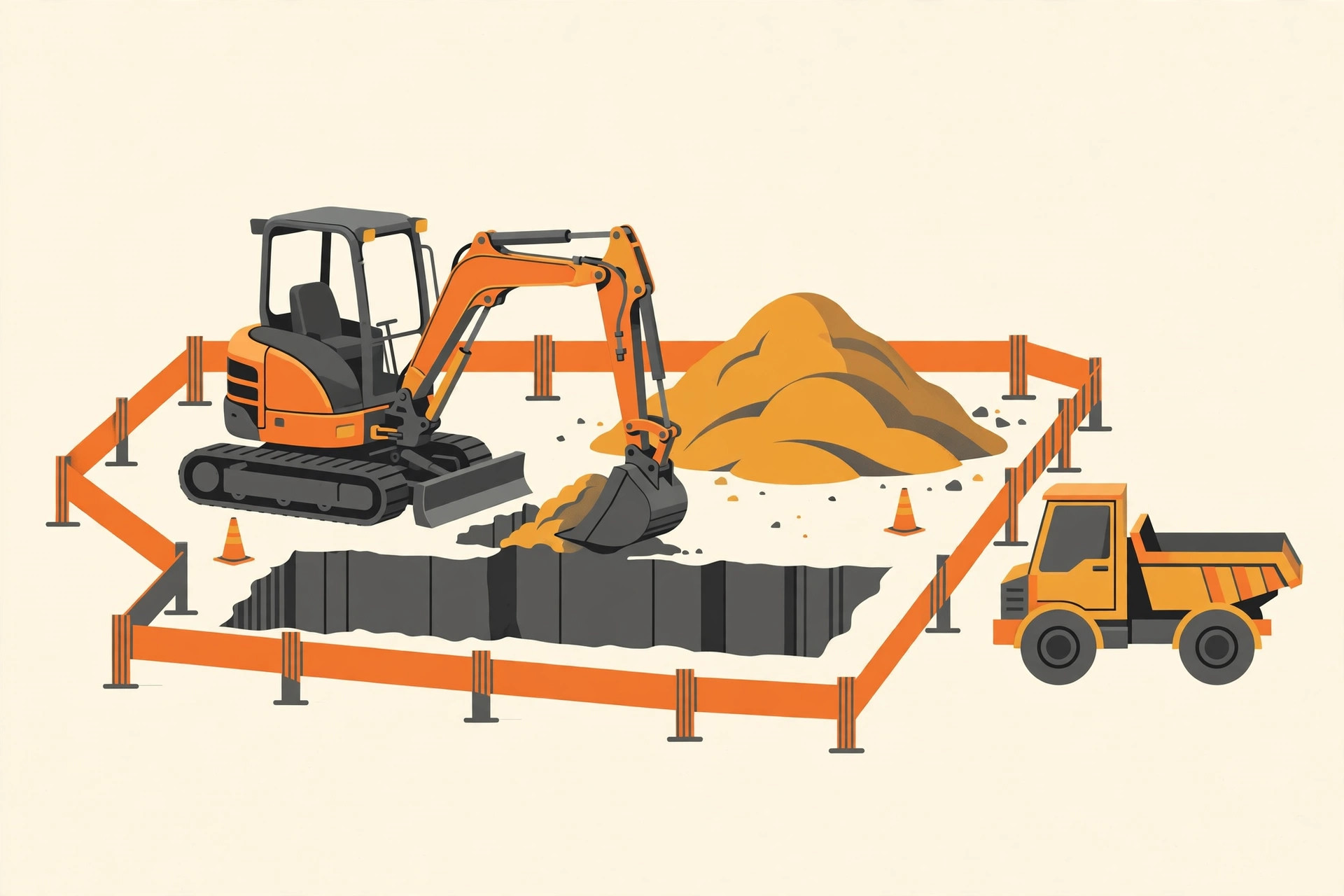
Soil in the ground is compacted by centuries; the moment you dig it, it fluffs. Sand grows least, around 10 to 15 percent; common earth about 25; clay about 35; blasted or ripped rock can grow by half. This bulking factor decides the real size of the job: a 30 cubic metre foundation dig in clay is over 40 cubic metres of loose spoil, which is six or more loads in an 8 cubic metre truck, not the four the bank volume suggested. Price and programme both hang on that conversion, so choose the soil type honestly and write the factor on the estimate. The excavation calculator on this site applies the factor and the truck division in one pass, which is the whole of the trick; there is no second trick.
Digging safely around what is buried
The most expensive thing in any hole is what you did not know was there. Services hide shallow and unmarked: water, gas, electric, fibre and drains cross gardens and sites at depths that owe nothing to logic. Scan with a cable avoidance tool, read any drawings, hand dig trial holes near expected lines, and treat every found pipe as live until its owner says otherwise. Support the sides as you deepen: batter them back or shore them, keep spoil and plant back from the edge, and never let anyone work in an unsupported trench deeper than they can climb from. A cubic metre of soil weighs about a tonne and a half, and trench collapses give no time for apologies; the precautions are minutes, the alternative is not discussed at tea.
Spoil: reuse first, remove honestly
The cheapest spoil is the spoil that never leaves: plan the levels so dig from foundations becomes fill under terraces and behind retaining walls, placed in layers and compacted, never tipped loose into a hole that will settle for a decade. What must leave should leave classified and documented; clean inert soil is a product some sites want, while contaminated ground is a specialist cost that must be priced before the dig, not discovered during it. Keep loads sheeted, wheels washed where the road demands it, and tickets filed. The tidy site habit is a spoil plan drawn before the excavator arrives, with heap positions, truck routes and the bulking maths already settled, because improvisation with twenty tonnes of clay is nobody's strength.