Footings: Depth, Width and the Frost Line
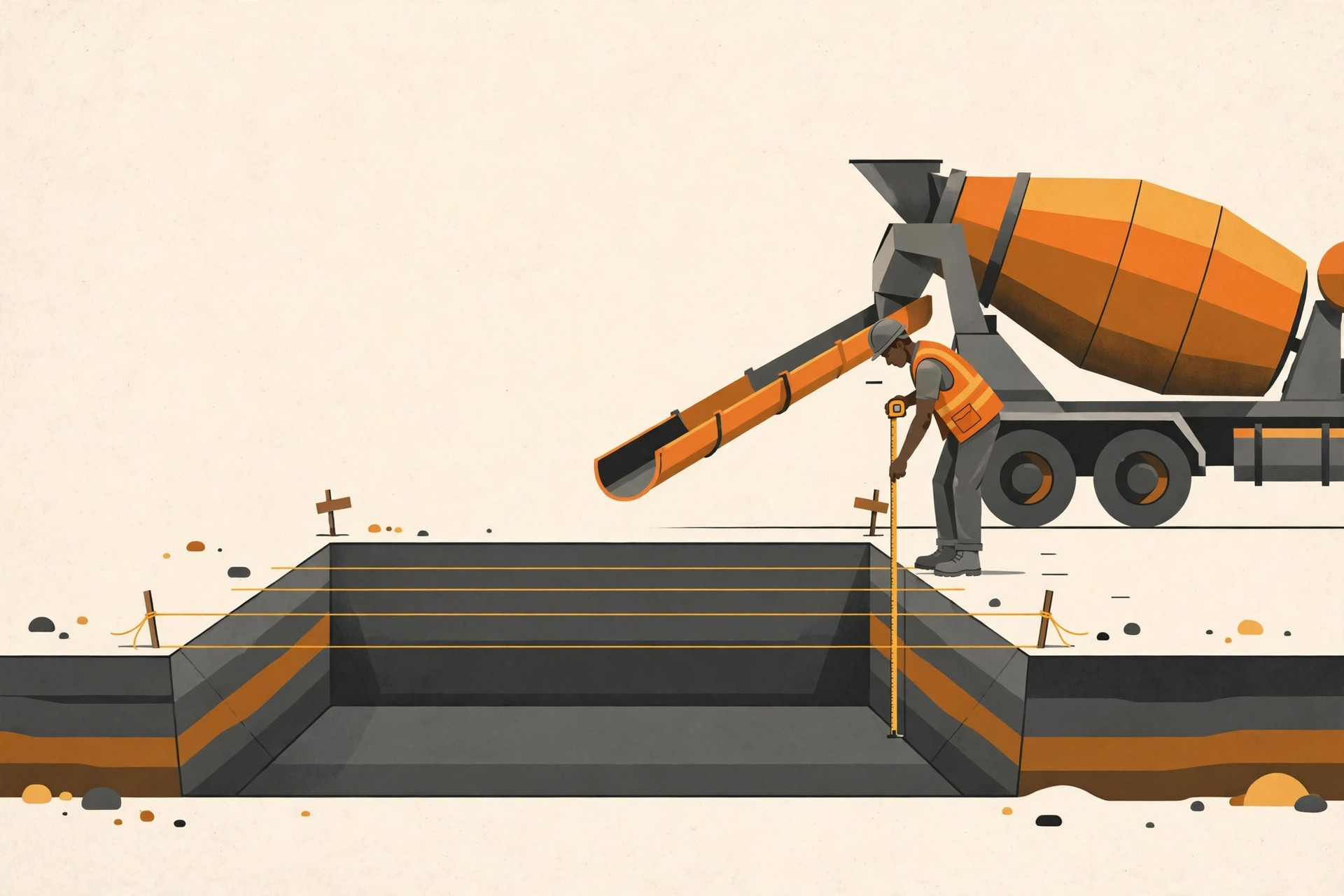
Width spreads, depth protects
A footing has two dimensions doing different work. Width spreads the load so the soil pressure stays below what the ground can carry: soft ground needs wide footings, firm gravel forgives narrow ones. Depth protects against the movements of the surface world: frost heave, shrinking clay, roots, burrowing and the gardener's spade. The classic failure is a footing wide enough and too shallow, riding the frost like a raft; the second classic is deep enough and too narrow, punching slowly into soft ground. Both dimensions come from the ground and the load together, which is why copying the neighbour's footing is a gamble dressed as research; their soil report, if any, describes their soil.
Frost lines and local ground truth
Frost depth is geography: mild coastal districts may design at 450 millimetres below ground, cold continental interiors at well over a metre, and mountain sites deeper still. Your building control, code or frost map holds the local number, and it is a minimum, not a target. Clay adds its own rule: near trees and hedges, depths grow by tables that account for the tree's height and thirst, sometimes beyond 2 metres, at which point piles start winning the argument. Decks, fences and garden walls live by lighter versions of the same logic: a fence post at 600 millimetres in firm ground stands for decades, while the same post at 300 is a rumour. When in doubt, the extra spade's depth of concrete is the cheapest insurance on the whole job.
Setting out, digging and pouring well
Mark the footing lines from the building lines, not from the fence, and check diagonals until the rectangle is true; a footing poured out of square taxes every trade that follows. Dig to firm, undisturbed ground and stop: over digging filled with loose soil is a soft spot wearing a disguise, and any over dig should be made good in concrete, not spoil. Keep trenches dry where you can, and pour promptly, because open trenches collect water, leaves and second thoughts. Concrete for ordinary footings runs at a 1:2:4 class of mix or the local standard grade, placed and tamped the same day. Use the volume calculator with the trench length, width and depth, add ten percent for the uneven bottom you actually dug, and the truck arrives once. That single arrival, neither short nor wasteful, is the sound of a footing done properly.
Put it into numbers
The free calculator that goes with this guide:
Open the concrete volume calculator