How Many Bags of Concrete Do You Need?
The yield figure that runs everything
A bag of dry ready mix does not make a bag sized lump of concrete. Mixed and placed, each kilogram of dry mix yields about 0.000465 cubic metres, so a 40 kilogram bag gives roughly 0.0186 cubic metres and a 20 kilogram bag about half of that. Put the other way round, one cubic metre of placed concrete swallows about 54 of the 40 kilogram bags or about 108 of the 20 kilogram bags. Those numbers shock people planning a shed base, and they are exactly why bagging a big pour is a young person's game. Brands vary a touch, and the bag often prints its own yield in litres, which beats any rule of thumb; check it in the shop. Knowing the yield before you buy turns a hopeful guess into a proper list.
Work the volume first, then the bags
Measure the pour as a plain box: length times width times thickness, all in metres. A 3 by 3 metre slab at 100 millimetres thick is 0.9 cubic metres before wastage. Add ten percent for uneven ground, spillage and the mix that stays in the barrow, then divide by the yield of your bag size. That example lands near 54 bags of 40 kilograms, a full pallet and a bit more, which is also the moment to compare honestly against a small ready mix delivery: past roughly one cubic metre, a delivered load is usually cheaper, far faster and much kinder to your back. Fence post holes, small pads and repair patches stay bag territory for good reason; slabs grow out of it quickly.
Buying, storing and mixing without waste
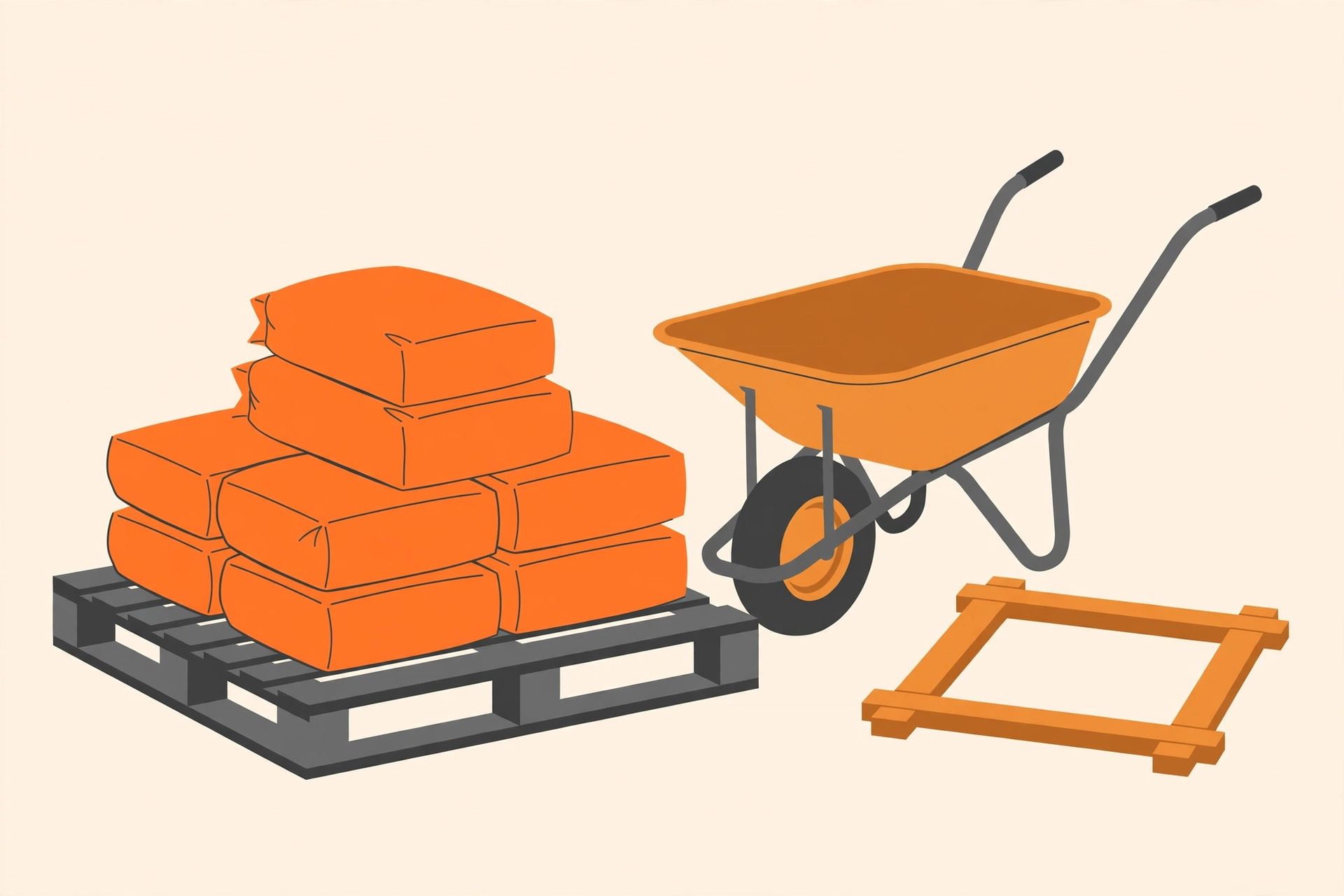
Buy the whole count in one trip and from one batch if you can, and keep the spare bag habit: one extra bag costs little and rescues the corner you measured short. Store bags off the ground on a pallet, under cover and off damp walls, and use the oldest first, because cement drinks moisture from the air and lumpy bags make weak, unpredictable concrete. Mix a bag at a time in a barrow or a small drum mixer, place and compact each batch as you go, and never retemper stiffening concrete with extra water; that washes strength out of the finished surface. Count your mixed bags against the plan as the pour advances, so a shortfall shows up with half the job left to fix it, not at the last trowel pass.