How to Calculate Tiles for a Floor or Wall
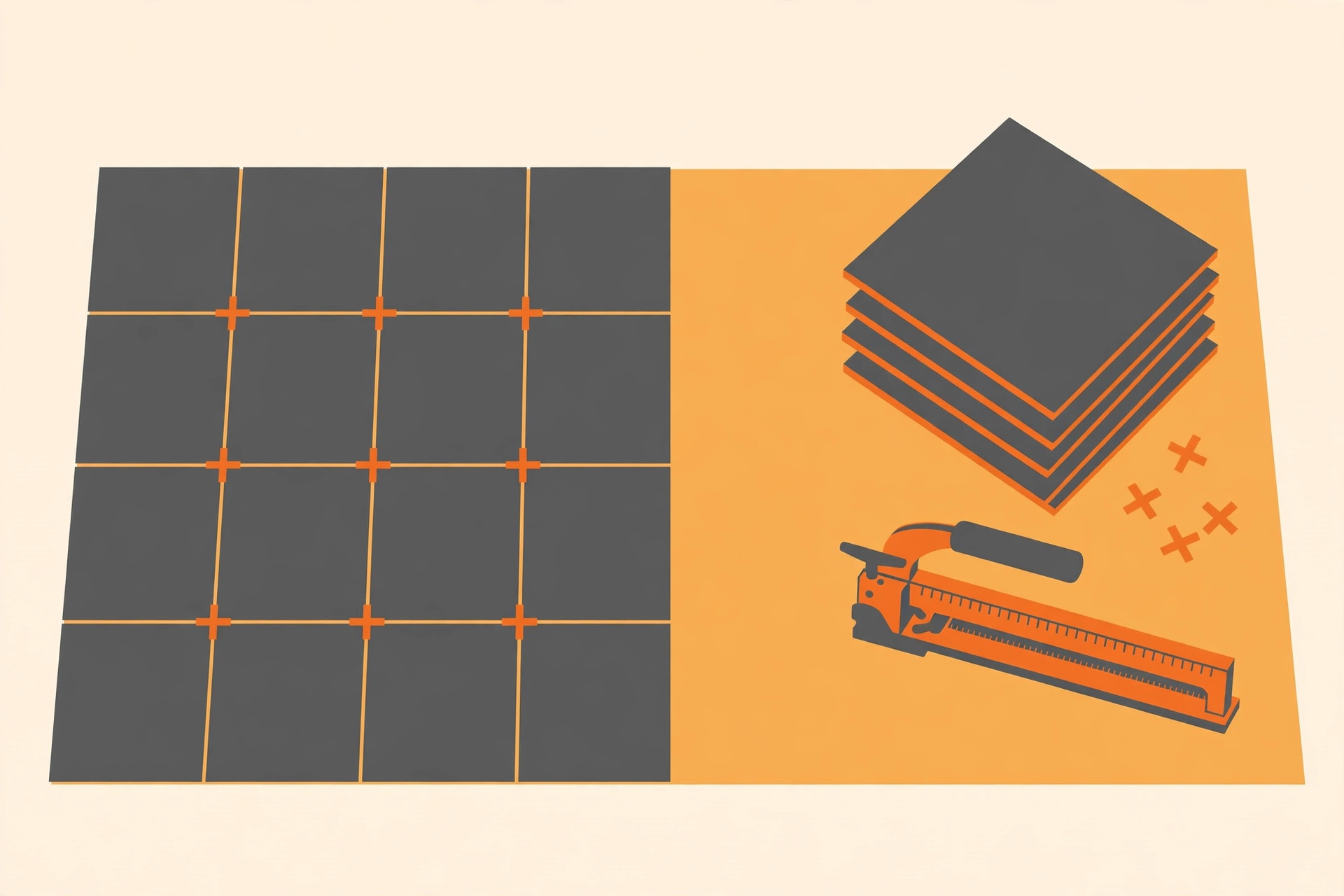
Measure the room, then the tile
Start with the true area: length times width for a floor, or each wall measured separately for a bathroom. Deduct nothing for small fixtures; tiles are cut around them, not saved by them. Then measure the tile itself rather than trusting the box label, because nominal sizes drift: a tile sold as 300 millimetres may be 298 with a joint expectation built in. Tile area is length times width in metres, and the raw count is room area divided by tile area. That raw count is a fiction no job survives, which is why the next step matters more than the division. Set the layout before ordering if you can: centred layouts, borders and feature rows all change the count of whole tiles against cuts.
Wastage is a layout decision, not a tax
Ten percent extra covers a straight grid in a rectangular room laid by careful hands. Diagonal and herringbone patterns throw away triangles at every edge and honestly need fifteen percent, sometimes more in small rooms where the pattern never settles. Large format tiles waste differently: one broken 600 by 600 tile is a third of a square metre gone, so the spare count should be in tiles, not just percent. Add a further allowance when the batch matters, because tiles are made in firings and a later box can differ in shade and calibre enough to shout from a finished floor. The professional habit is to order the wastage in, finish the job, and store the spares flat in the loft for the repair that life eventually books.
Boxes, adhesive and the forgotten consumables
Tiles arrive in boxes covering a stated area, so divide your tile count by the tiles per box and round up to whole boxes; merchants rarely split them. Under the tiles sits the adhesive bed: a notched trowel on a flat floor uses roughly 3 to 4 kilograms per square metre, more on uneven floors and with large tiles that need back buttering. Grout for standard joints runs near half a kilogram per square metre, varying with tile size and joint width. Spacers, trims, a new blade for the cutter and a spare tube of matching silicone belong on the same list. Counting only the tiles is how a job stops on Sunday with the shops shut; count the system, and the job flows. Count it twice, on different days, and compare the two answers before ordering.