Insulation Types and R Values, Without the Jargon
Two numbers that run the whole subject
The R value measures how well a material itself resists heat flow: thicker and lower conductivity means a higher R. The U value measures a whole construction, wall, roof or floor, layers and all, and lower is better: it is the heat leaking through each square metre for each degree of difference. Regulations set maximum U values for each element, and the design works backwards from them to a thickness of a chosen material. Mineral wool, rigid foam boards, wood fibre and spray foam all reach similar U values at different thicknesses and prices; foam is thin and dear, wool is thick and cheap, and the building usually votes through the space it can spare.
Materials and their honest homes
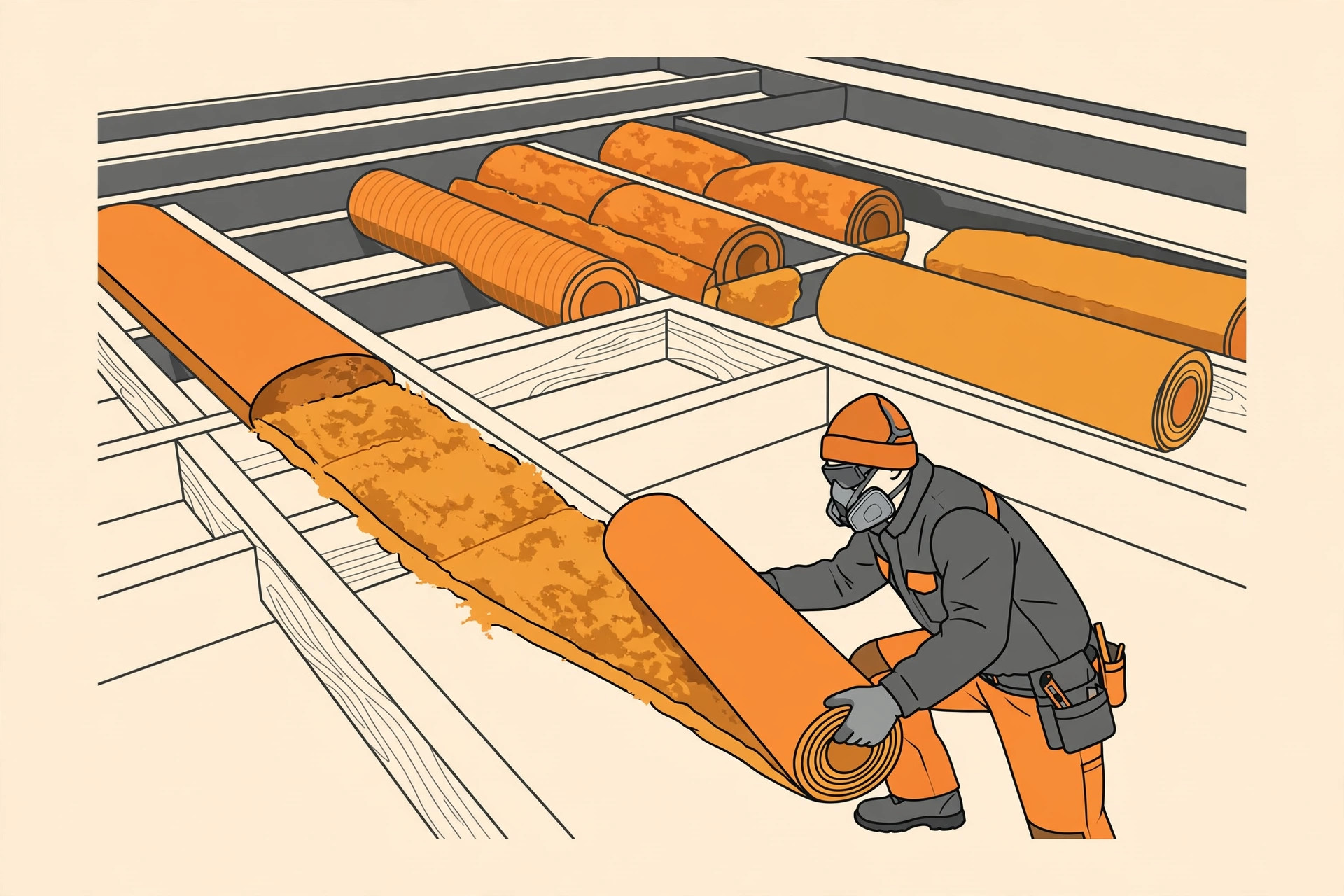
Loft rolls of mineral wool are the cheapest warmth in construction, laid between and across joists to 270 millimetres or more in cold climates. Rigid boards serve floors, flat roofs and cavity walls where thickness is rationed and strength underfoot matters. Batts friction fit into timber frames; blown and sprayed products fill the irregular voids of old buildings. Every material has a failure it specialises in: wool slumps and suffers gaps, boards leak at untaped joints, spray foam hides the roof timbers from future inspection. The best insulation is usually the one the installer can fit perfectly in your building, because a continuous ordinary layer beats a brilliant layer with holes at every joist and socket.
Continuity beats thickness
Heat is a burglar: it leaves through the weakest detail, not the average wall. Gaps at eaves, hatches left uninsulated, pipes and downlights punching holes, and insulation stopped short at junctions all leak out of proportion to their area, an effect called thermal bridging when the structure itself conducts. Air leakage is the bigger thief in many houses: seal the gaps and cracks, then insulate, because insulation in a draught is a jumper in the wind. Count packs from the label coverage, add your wastage, and lay the second loft layer at right angles over the first so the joists disappear under the blanket. The calculator counts the packs; the craftsmanship is in the edges. Photograph the finished layer before boards, flooring or plaster hide it for good; the picture is your evidence, and your only map of where the pipes and cables sleep. Warmth kept is money kept, quietly, on every winter night.