Laying Bricks for Beginners: Lines, Levels and Joints
Set up like it matters, because it does
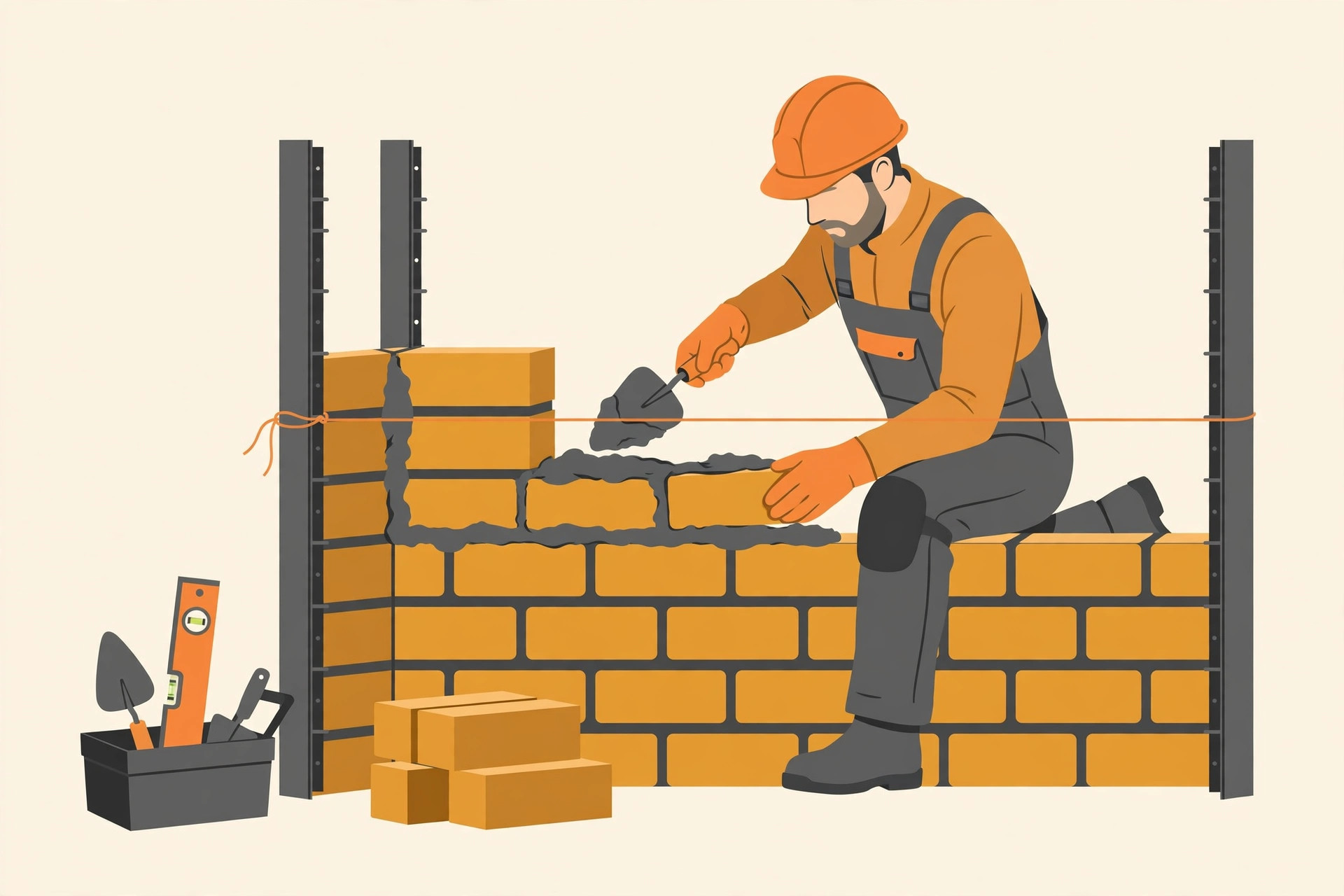
Good bricklaying is mostly preparation. Stretch a line between profiles or corner blocks so every course has a target, and check the line is level before the first brick touches mortar. Lay out the first course dry along the footing to settle bonding and cuts before any mortar is mixed; discovering a bad bond at full height is a beginner rite of passage you can skip. Build corners and leads first, several courses high, because the middle of the wall is then just filling between two correct ends. Keep bricks stacked close, mortar board within reach, and your water bucket clean, so the rhythm of the work is never broken by fetching.
The laying rhythm, brick by brick
Spread a bed of mortar a brick and a half long, furrow it lightly, then place the brick with a buttered end so the cross joint fills as it slides home. Tap down to the line, not to your eye, and check level along and across as you go. The line should kiss the top arris of every brick without being pushed out by any of them. Scrape off the squeeze out as you lay and use it for the next buttering; mortar on the ground is waste, mortar in the wall is the job. Gauge matters more than speed: every fourth course, measure against the gauge rod, because four courses of standard bricks with joints should make exactly 300 millimetres, and small errors compound into big ones at the top.
Joints, curing and the honest finish
Tool the joints when the mortar is thumbprint hard, not while it is wet and not after it has gone off; tooled joints shed water and give the wall its finished face. Brush down lightly once the joints firm up, and keep new work covered from driving rain and hot sun for the first days. Clean splashes the same day with water and a brush, because acid cleaning later is a poor substitute for care now. Judge your first wall kindly but honestly: straight lines, even joints and true corners matter more than speed, and speed arrives by itself once the hands learn the rhythm. Every professional on the scaffold started with a wall they would now rebuild. When the wall is done, walk away and look at it from across the street the next morning; fresh eyes find the wandering course that tired eyes forgave at dusk, and knowing your faults plainly is the whole of the apprenticeship.