Metric and Imperial on Site: A Bilingual Survival Guide
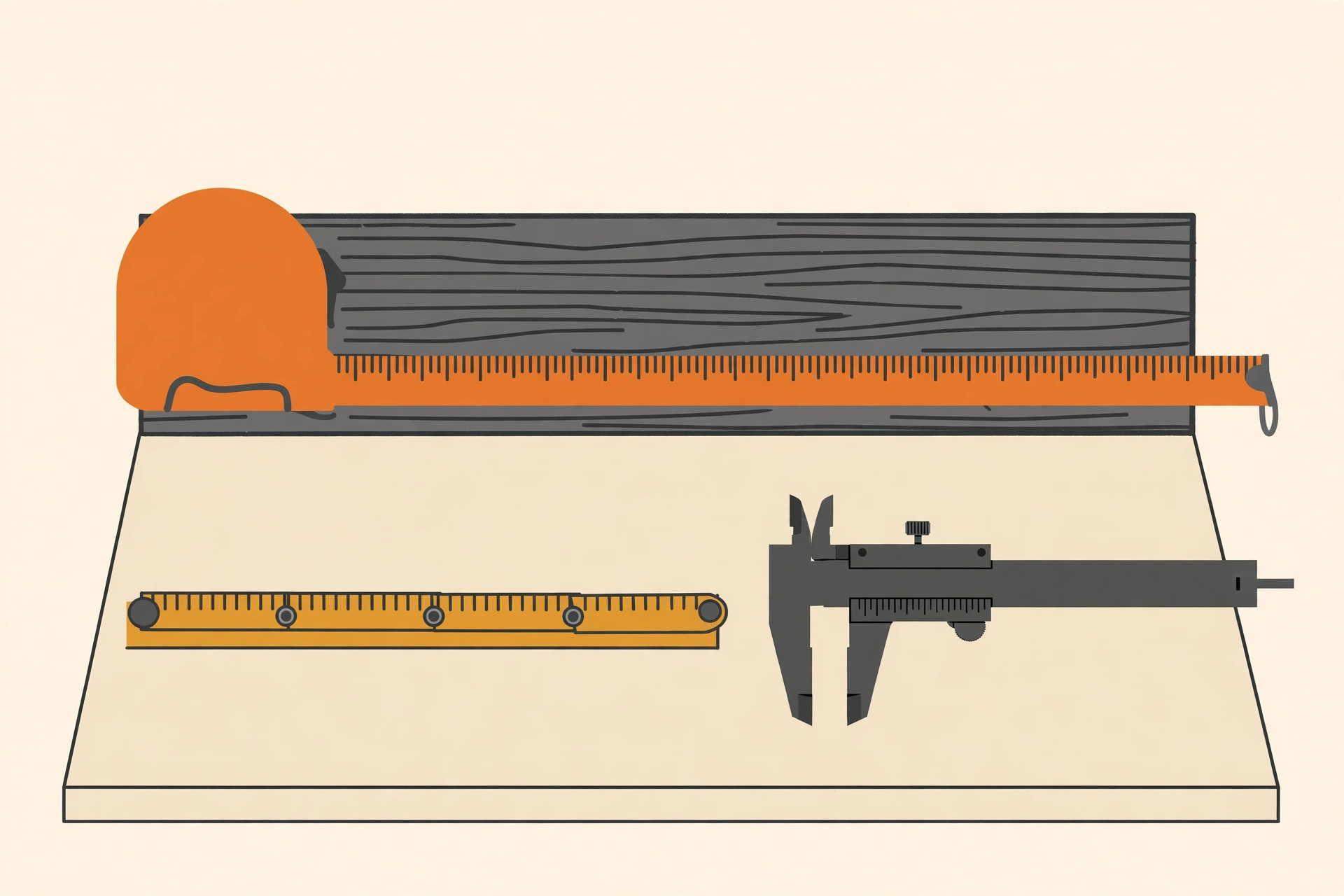
The conversions that run a site
A working handful of conversions covers nearly everything: an inch is 25.4 millimetres exactly; a foot is 304.8; a yard is 0.9144 metres; a square yard is 0.836 square metres; a cubic yard is 0.765 cubic metres; a gallon is 4.55 litres in Britain and 3.79 in America, a difference that has embarrassed orders on both sides of the Atlantic. Weight crosses at 2.205 pounds to the kilogram and about 2205 pounds to the tonne. Timber keeps its own dialect, where a 2 by 4 is neither, and board feet convert at 424 to the cubic metre near enough for ordering. Pin the short list inside the site cabin and inside your notebook; the long tail of conversions can live in a phone, but these ten must live in your head.
Where the two systems collide
Trouble starts where a drawing in one system meets materials in the other: metric blocks coursing against imperial bricks, a 600 millimetre tile module meeting a room measured in feet, American plans read by metric hands. The defence is to convert once, at the start, into the system of the materials, and to mark every converted dimension as converted. Mixing units inside one calculation, metres of length times inches of thickness, is the classic silent error, producing answers wrong by a factor of 25.4 that still look plausible. The calculators on this site take a unit picker on every measurement precisely so the conversion happens in the open, one field at a time, where your eye can audit it before the order is placed.
Fluency is a professional courtesy
Clients, drawings and merchants will each arrive speaking their own system, and the builder who translates without drama earns trust cheaply. State units with every number you write or speak, because 150 alone is a thickness in millimetres, a length in centimetres or a small fortune in feet. When you inherit a dimension, ask which system birthed it. Keep one tape that reads both, check it against a known metre, and retire tapes that have lost their end hook's honesty. In time the two systems stop being a translation and become a single landscape seen in two lights, which is the real fluency: knowing that 100 millimetres is four inches near enough for a footing, and knowing exactly when near enough is not enough. That judgement, practised daily, is fluency itself.