Mortar Mix Ratios: A Plain Guide for Bricklayers
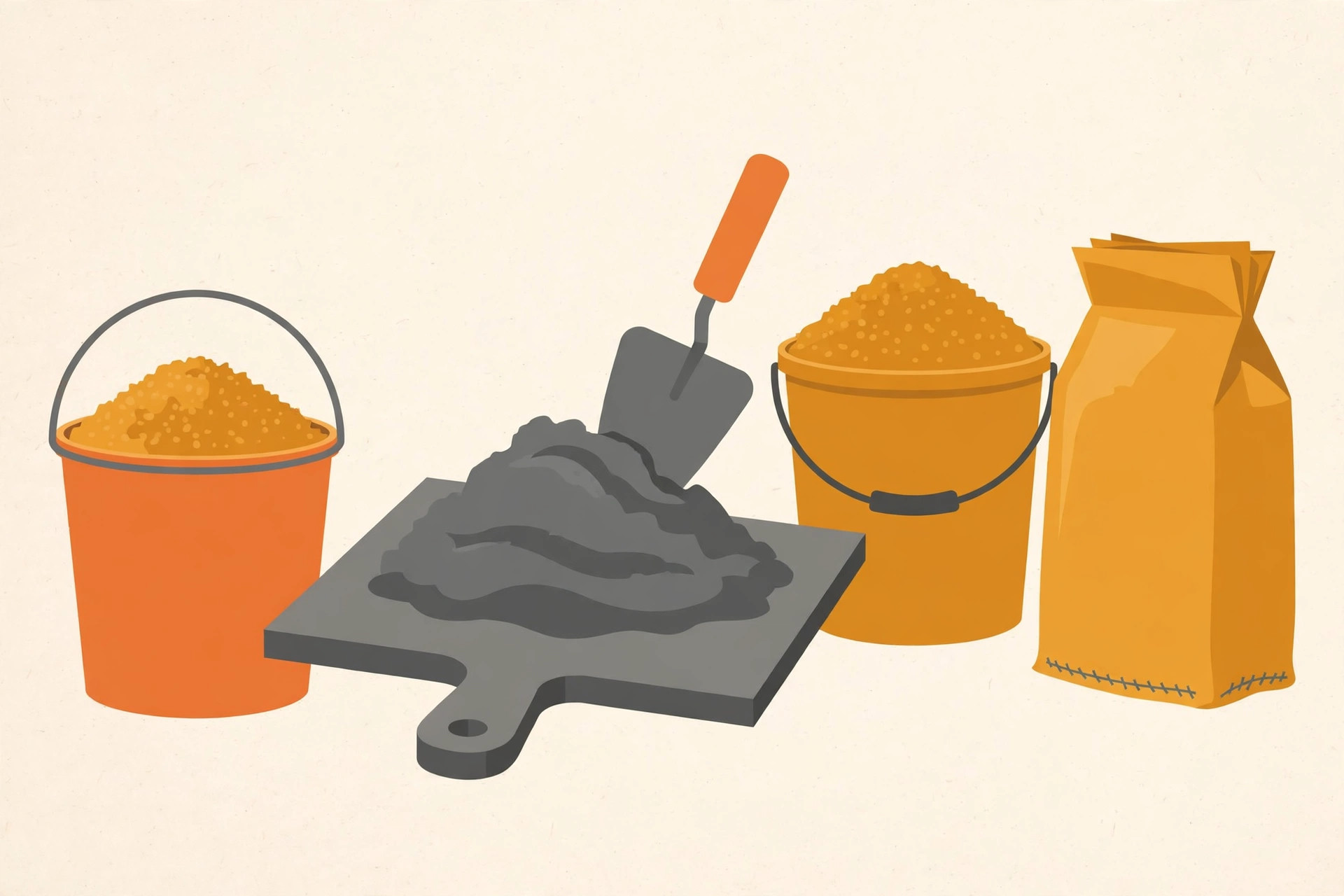
Two ingredients and a number line
Mortar is cement and sand with water, and the ratio states cement first, sand second, by volume. A 1:4 mix is one bucket of cement to four level buckets of sand. The number line runs from rich to lean: 1:3 is strong and stiff, 1:4 is the general purpose standard, 1:5 and 1:6 are leaner mixes for sheltered or lightly loaded work. More cement is not automatically better. Rich mortar shrinks, cracks and can be harder than the bricks it beds, which forces movement cracks through the units instead of the joints and makes future repairs miserable. The joint should always be the sacrificial, weakest part of the wall.
Matching the mix to the masonry
Strong, dense bricks and blocks in exposed places, copings, chimneys and below damp proof course, suit a 1:3 or 1:4 mix that resists weather. Ordinary house brickwork above ground is traditionally laid in 1:5 or 1:6, or in cement lime sand mixes that trade a little strength for workability and movement tolerance. Soft historic bricks demand weak lime mortar and never strong cement, a rule whose breach visibly destroys old walls within a few winters. Internal blockwork is forgiving and usually runs at 1:5 or 1:6. When a drawing or specification names a mortar class or designation, that instruction outranks every habit in this guide, including the ones your grandfather swore by.
Batching, mixing and using it in time
Batch by the bucket or gauge box, level and struck, so every mix of the day matches the last. Add water gradually to a workable, buttery consistency that hangs on the trowel without slumping; soup mortar is weak mortar and it stains the face of the wall. Plasticiser, where used, replaces guesswork air with measured air, and lime improves workability and water retention on thirsty bricks. Mix only what the gang will lay within about two hours, less in hot weather, and never retemper stiffened mortar with water for structural work. Keep a simple tally of batches against wall progress; when the tally and the wall disagree, believe the wall and recount before the next delivery of sand. Write the chosen ratio on the mixer with chalk at the start of the day, because tired hands at four in the afternoon batch what is written down, not what was decided at breakfast. And draw sand from one heap for one wall, since a change of sand colour halfway up shows in every joint forever.