Painting Preparation: The Work Behind the Finish
Wash, scrape and find the truth
Preparation begins with honesty: shine a light along the wall and the dents, cracks and old drips announce themselves. Wash down with sugar soap to strip grease and nicotine, especially in kitchens and around switches, because paint over grease fisheyes and peels in sheets. Scrape anything loose back to a firm edge with a stiff blade; painting over flaking paint just gives the flake a coloured coat. Outside, kill algae and mould first and let the wall dry properly. This stage feels like going backwards, and it is the stage professionals refuse to skip, because every minute here saves three at the finish and the finish is what the client photographs.
Fill, sand and make it one surface
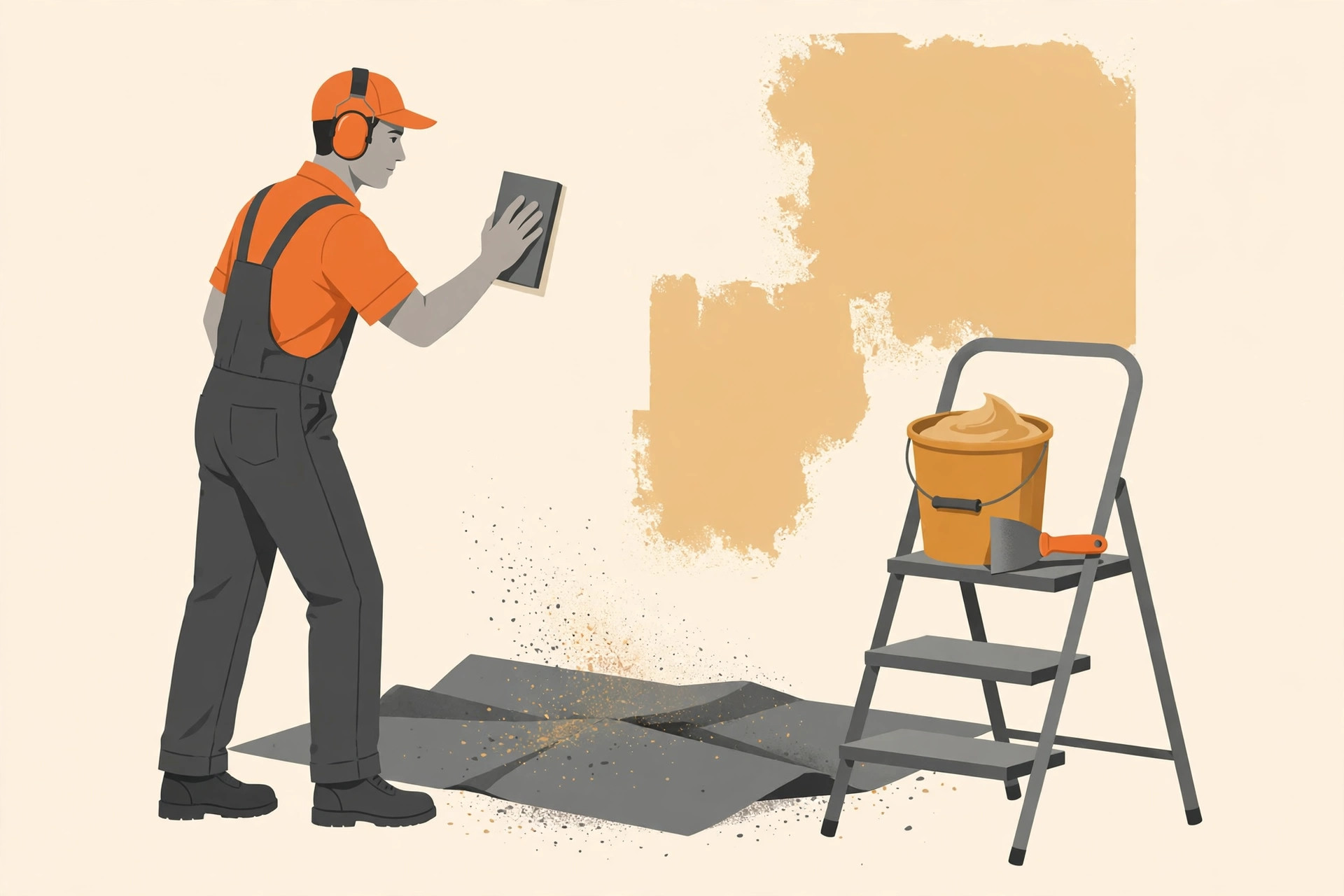
Rake out cracks slightly so filler keys in, then fill proud in thin layers rather than one proud lump that shrinks and sinks. Deep repairs belong in proper filler or a patch of plasterboard and compound, not in hope and emulsion. When fillers are hard, sand through the grades, coarse to shape and fine to feather, with a block or a pole sander to keep the wall flat rather than wavy. Dust is the enemy between coats: vacuum, then wipe with a barely damp cloth or tack rag. Caulk the junctions at ceilings, skirting and architraves with paintable flexible caulk, smoothed with a wet finger, because a shadow gap reads as a crack from across the room and no topcoat will forgive it.
Prime with a purpose, not a habit
Primer is not watered paint; it is a problem solver chosen for the surface. Bare plaster takes a mist coat or a dedicated sealer so the finish coats sit on it instead of sinking in patches. Stains from water, smoke and markers bleed through emulsion unless blocked with a stain blocking primer. Glossy old paint needs a grip: either sand it to a key or use a bonding primer made for the job. Wood gets knotting solution on the knots and primer on the bare grain, or the knots will grin through by spring. Mask properly, sheet the floors, and remove the hardware you can; the painter who tapes everything paints faster than the one who cuts in around sockets and hinges all day. Keep the working order written on the wall itself if it helps, in pencil where the first coat will cover it: wash, scrape, fill, sand, prime, paint, ticked off stage by stage as the room earns each one.