Plastering a Wall Step by Step
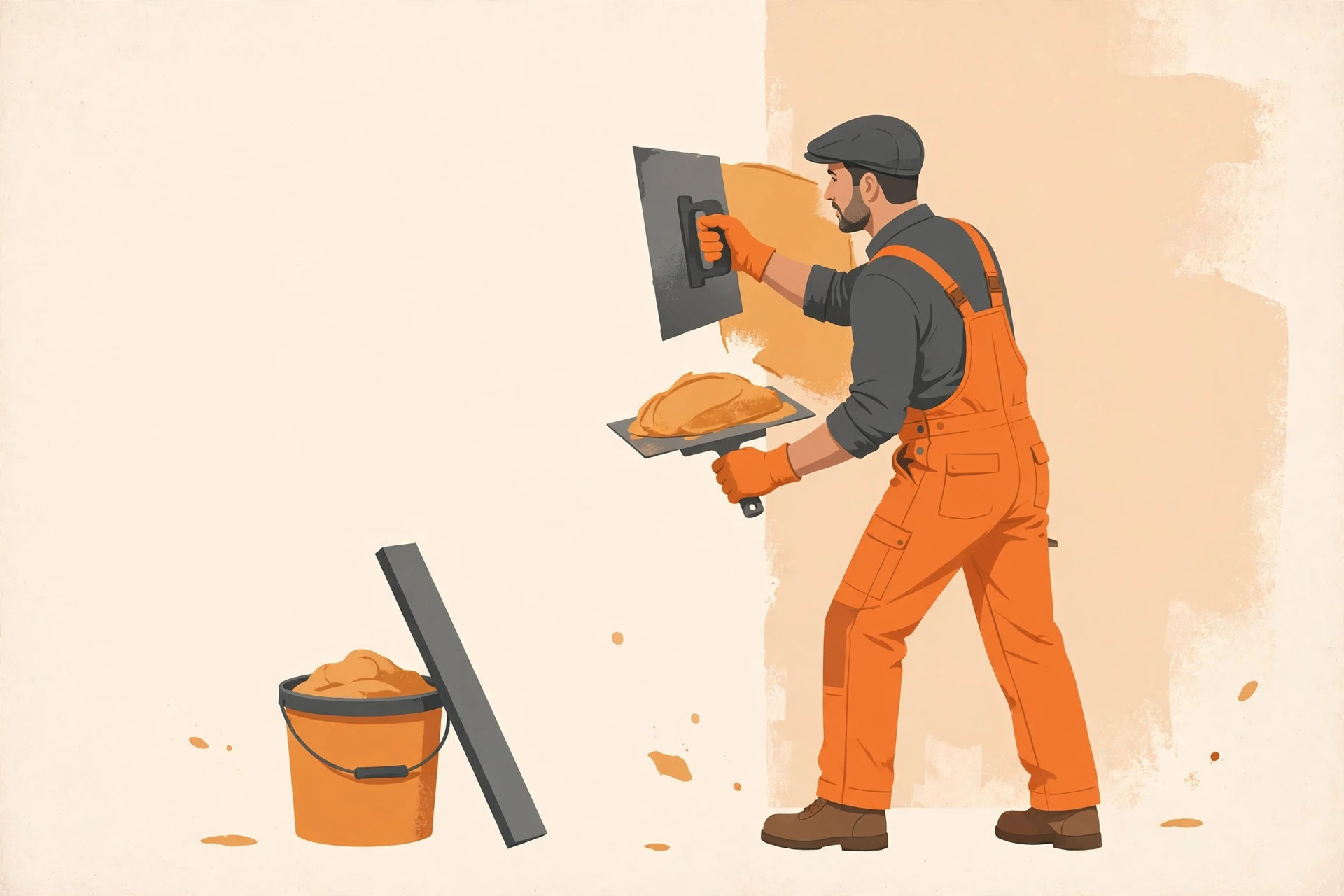
The background decides the finish
Plaster sticks to preparation, not luck. Start by judging the background: dense, smooth surfaces like old concrete need a bonding agent or a keyed slurry coat, while thirsty brick and block need their suction controlled with water or a primer so they do not steal the mix water in minutes. Remove anything loose, dusty or painted with doubtful paint, fill deep holes and dub out hollows a day ahead, and fix beads at corners and stops while you can still adjust them. Check the wall with a long straightedge and mark the hollows honestly; plaster follows the wall beneath it, and no finish coat has ever hidden a bad background from raking light.
Mixes, coats and sensible thicknesses
Most internal plastering is two coats: a backing coat of 9 to 11 millimetres that does the straightening, and a finish coat of about 2 millimetres that does the smoothing. The backing mix for cement plaster runs near 1:6 on protected internal walls and 1:4 where weather or wear demands more; gypsum undercoats follow the bag instructions and forgive beginners more. Thickness is not a virtue contest: one thick coat slumps, cracks and dries unevenly, while two thinner coats bond and cure kindly. Work the area your mix life allows, keeping a wet edge, and remember the calculator counts: area times thickness gives volume, and the dry materials run about a third more than the wet volume placed.
Timing the trowel is the whole craft
Plastering is a race you win by waiting. Lay the backing coat, rule it flat, scratch it in a diamond pattern for key, and let it firm and cure before the finish goes on; rushing the finish over green backing traps moisture and shells off later. The finish coat is trowelled in stages as it tightens: lay on, flatten, then polish with a clean trowel and the lightest water flick, each pass a little later and a little lighter than pride suggests. Over trowelling drags fat to the surface and crazes it. Keep the room ventilated but not blasted with heat, let the wall dry slowly to a pale even colour, and only then think about paint; fresh plaster under sealed paint blisters, and the fault will be blamed on everything except the calendar. That patience, more than any tool in the bag, is what separates plastering from merely spreading.