Rebar in Concrete Explained: Cover, Laps and Weight
Concrete is strong squeezed and weak stretched
Plain concrete carries compression beautifully and tension barely at all, which is why a plain beam snaps at the bottom while a reinforced one bends and warns. Steel bar takes the tension the concrete cannot, and the two materials expand with heat at nearly the same rate, a happy accident the whole industry is built on. The bars work only where the tension lives: bottom of a simply supported beam, top over its supports, both faces of a slab that can hog or sag. Reinforcement drawings are therefore maps of invisible forces, and moving a bar from where the drawing puts it is not a rearrangement; it is a different, weaker structure wearing the same concrete.
Cover, laps and the quiet details
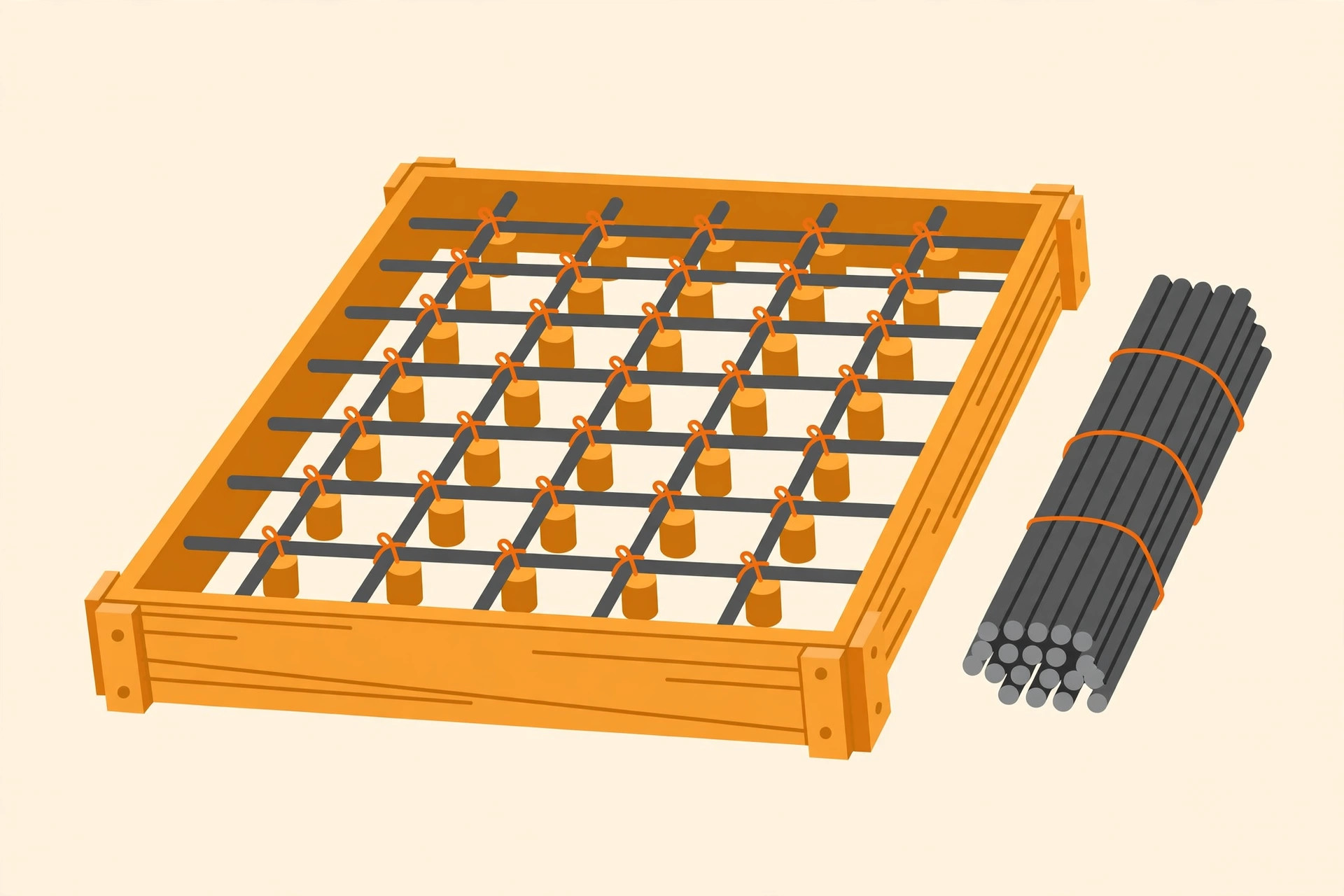
Steel rusts, and rust expands and bursts the concrete that hosts it, so bars are kept away from every face by a zone of plain concrete called cover: commonly 25 to 40 millimetres in slabs and beams, more against ground. Bars join by lapping, overlapping typically 40 or more diameters so the force hands over through the concrete between them, and the lap belongs in low stress zones, never all at one section. Chairs and spacers hold the cage at its cover during the pour, because a cage trampled to the bottom of a slab is decoration, not reinforcement. Mesh sheets serve ground slabs well; loose bars serve beams and columns. Every one of these details is invisible in the finished building and decisive in its life.
Counting bar: weight is the currency
Steel is bought by weight, cut by length and scheduled by the bar list. Weight per metre follows the site formula, diameter in millimetres squared divided by 162: a 12 millimetre bar is 0.89 kilograms per metre, a 16 is 1.58, a 20 is 2.47. For a slab grid, count bars each way from the spacing, multiply by their lengths, and the total length times the unit weight gives the order weight; add laps, waste and the cutting list's optimism. The rebar calculator on this site runs that grid count and converts to 6 or 12 metre stock bars. Compare its total against the bending schedule when one exists; where they differ, believe the schedule, and ask why before the saw starts. Steel rusts in the yard too, so store bundles off the ground, under cover where you can, and use the oldest stock first.