Rendering Exterior Walls: Coats, Mixes and Finishes
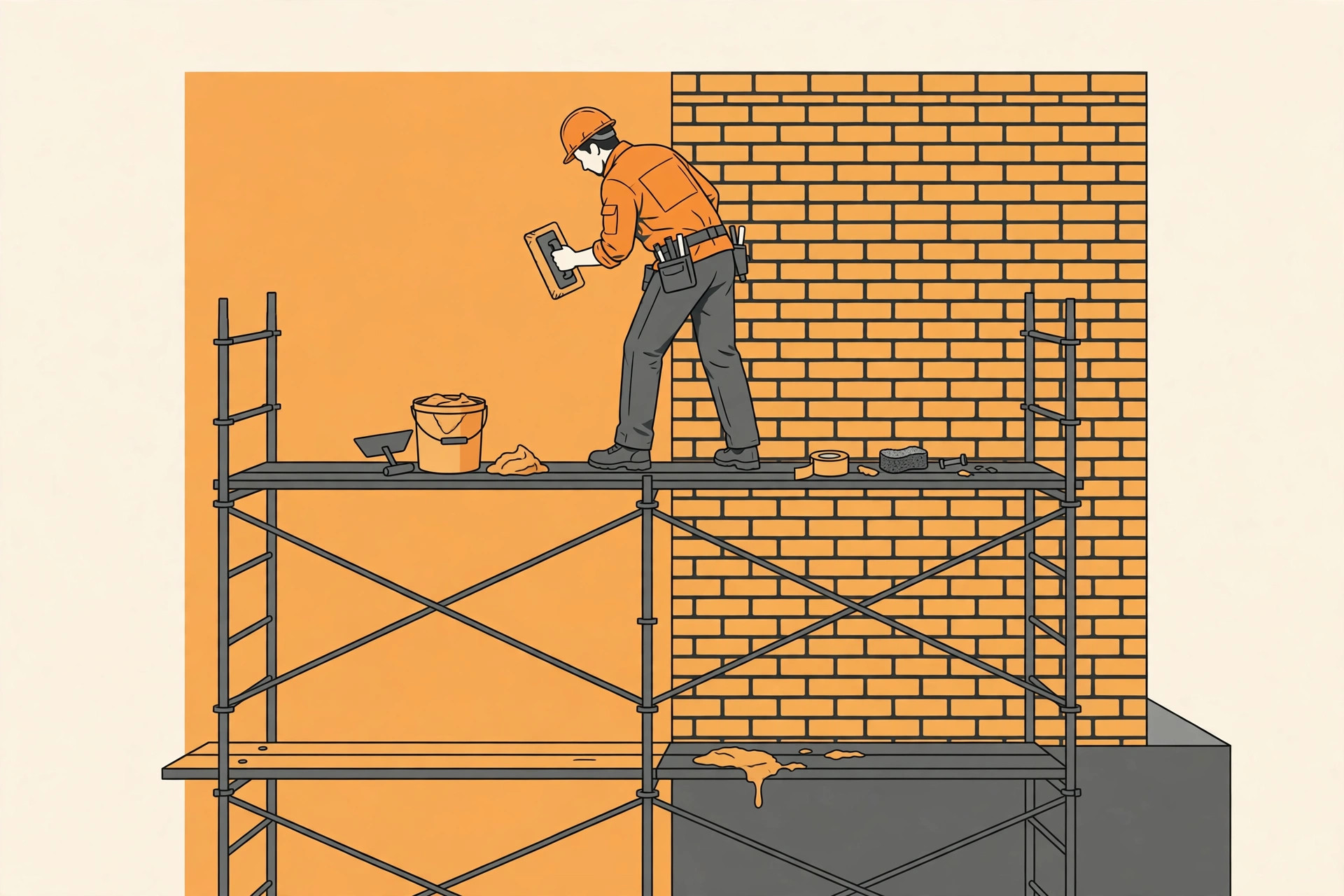
Render is a system of coats
External render protects masonry from weather and gives the wall its public face, and it works as a system: a spatterdash or key coat where suction demands, a scratch coat that straightens and keys, and a finish coat that weathers and decorates. Each coat is weaker and thinner than the one beneath, the golden rule that lets the wall move without tearing its skin: strong over weak cracks, weak over strong endures. Traditional mixes run from 1:4 cement and sand with lime or plasticiser for exposed work to 1:6 for sheltered walls, with lime rich renders on old and soft masonry where breathability is the whole point. Thickness totals around 15 to 20 millimetres over two coats on sound backgrounds.
Backgrounds, beads and the honest edges
Render fails at preparation and at edges, rarely in the field. Rake out loose pointing, control suction on thirsty brick with water or a bonding slurry, and use a proper key or mesh on smooth concrete and mixed backgrounds. Fix stainless or coated beads at corners, stops and bellcast drips above openings, dead plumb and level, because the beads are the geometry the eye will judge. Movement joints belong over structural joints and at changes of background, filled flexible, never bridged in hard render. Scaffold lifts should plan the render joints: a day's work ends at a bead, a corner or a joint, never in a random tide line across an elevation that the afternoon sun will read aloud.
Finishes, curing and the weather window
Finishes range from floated and sponged textures to scraped, pebbledash and smooth through coloured renders that carry their pigment in the mix and never ask for paint. Whatever the finish, timing is the texture: tooled too early it slumps and shines, too late it tears, and every elevation wants one gang, one mix and one weather mood from top to bottom. Cure render like the mortar it is: protect from frost, baking sun and driving rain for the first days, and never render onto a frozen or saturated wall. The weather window is part of the specification; a finish coat applied ahead of a storm is a donation to the pavement below. Done well, render asks for nothing but an occasional wash for twenty years. Twenty quiet years is the only applause render asks for, and with sound coats beneath it, it usually gets them.