Roof Pitch Explained: Degrees, Ratios and Rise Over Run
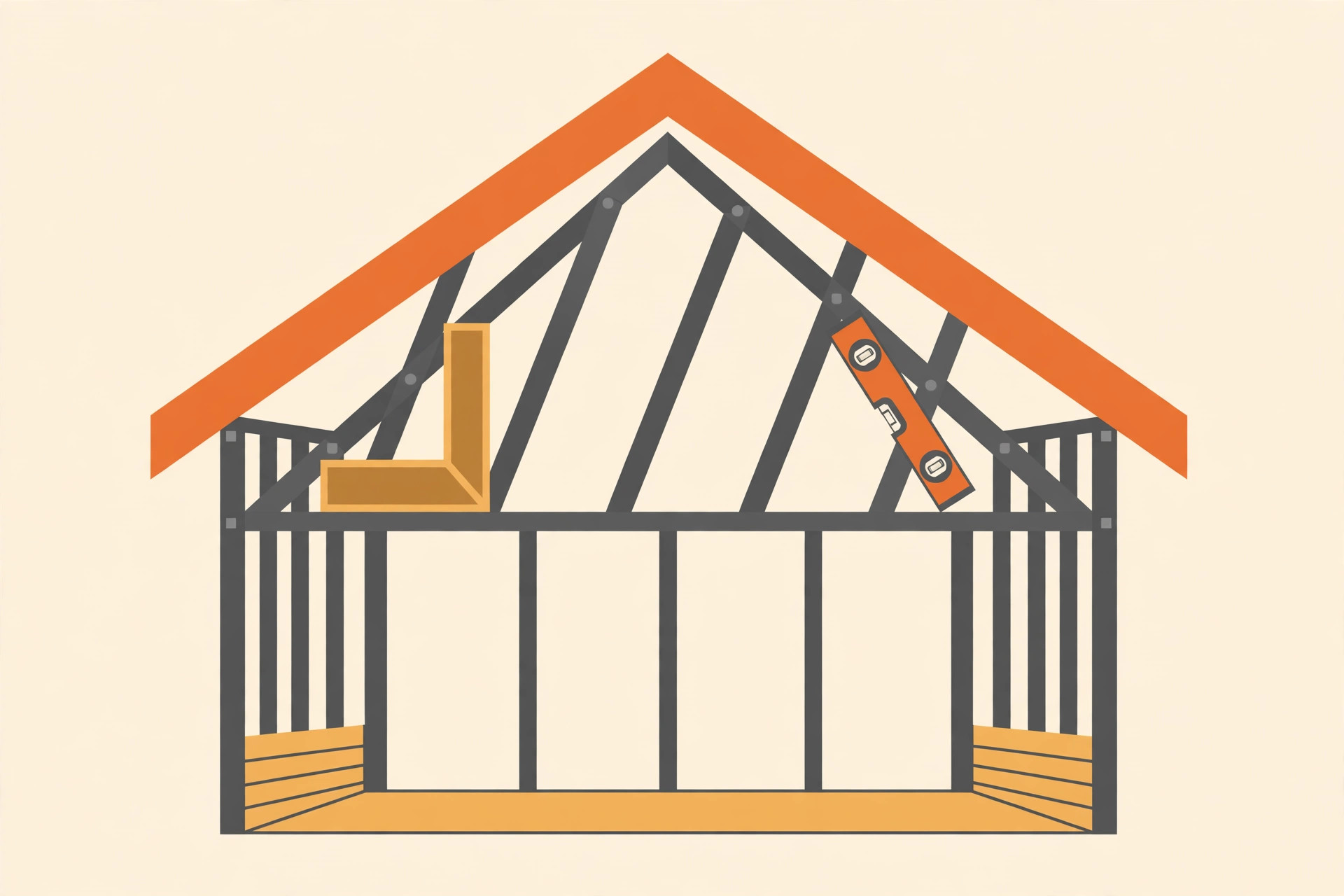
Four ways to say the same slope
A roof pitch is a single fact wearing four costumes. The angle in degrees is what a protractor or phone app reads and what solar panel and roofing suppliers quote. The ratio states rise against run, like 1 to 2.4, and suits setting out on paper. Rise over twelve, the American framing habit, says how many inches the roof climbs over twelve inches of horizontal run, so a 6 in 12 pitch is a honest middle slope. Percentage grade belongs to roads and drainage, where 100 percent means 45 degrees. They interconvert with simple trigonometry: the angle is the arctangent of rise over run, and every other form is that ratio dressed differently. Confusion between them has ordered wrong trusses; state the system whenever you state the number.
Measuring a real roof safely
Measure from inside where you can. In the loft, hold a level against a rafter's underside, mark 300 millimetres along the level, and measure the vertical drop to the rafter at that mark; that drop over 300 is your rise over run, taken dry and safe. From the ground, a phone inclinometer on a straight board against the gable verge gives a fair reading. Counting courses works too on tile and brick: brick courses rise 75 millimetres each, and many roof tiles expose a fixed gauge you can measure at the eaves. Take the reading in two places, because old roofs sag and additions get framed at friendly angles. Record the method with the number, so the next person trusts it correctly.
What the pitch decides downstream
Pitch is not decoration; it gates the whole roof. Every covering has a minimum pitch below which wind driven rain climbs the laps: plain tiles demand steep slopes, interlocking tiles go lower, and metal sheets and membranes go lower still. Pitch sets the rafter multiplier that turns plan lengths into timber lengths, drives the true roof area for ordering, and decides whether the loft is a store room or a future room. Snow country wants steep sheds or strong shallow structures, and planning rules often cap ridge height, which is pitch by another name. When you change a pitch on paper, you have changed the covering, the cost, the structure and the silhouette in one stroke, so treat the number with the respect of a foundation dimension. It has earned that respect on every drawing ever made.