Sand Types for Construction: Sharp, Soft and Grit
Sand is graded rock, and the grading is the point
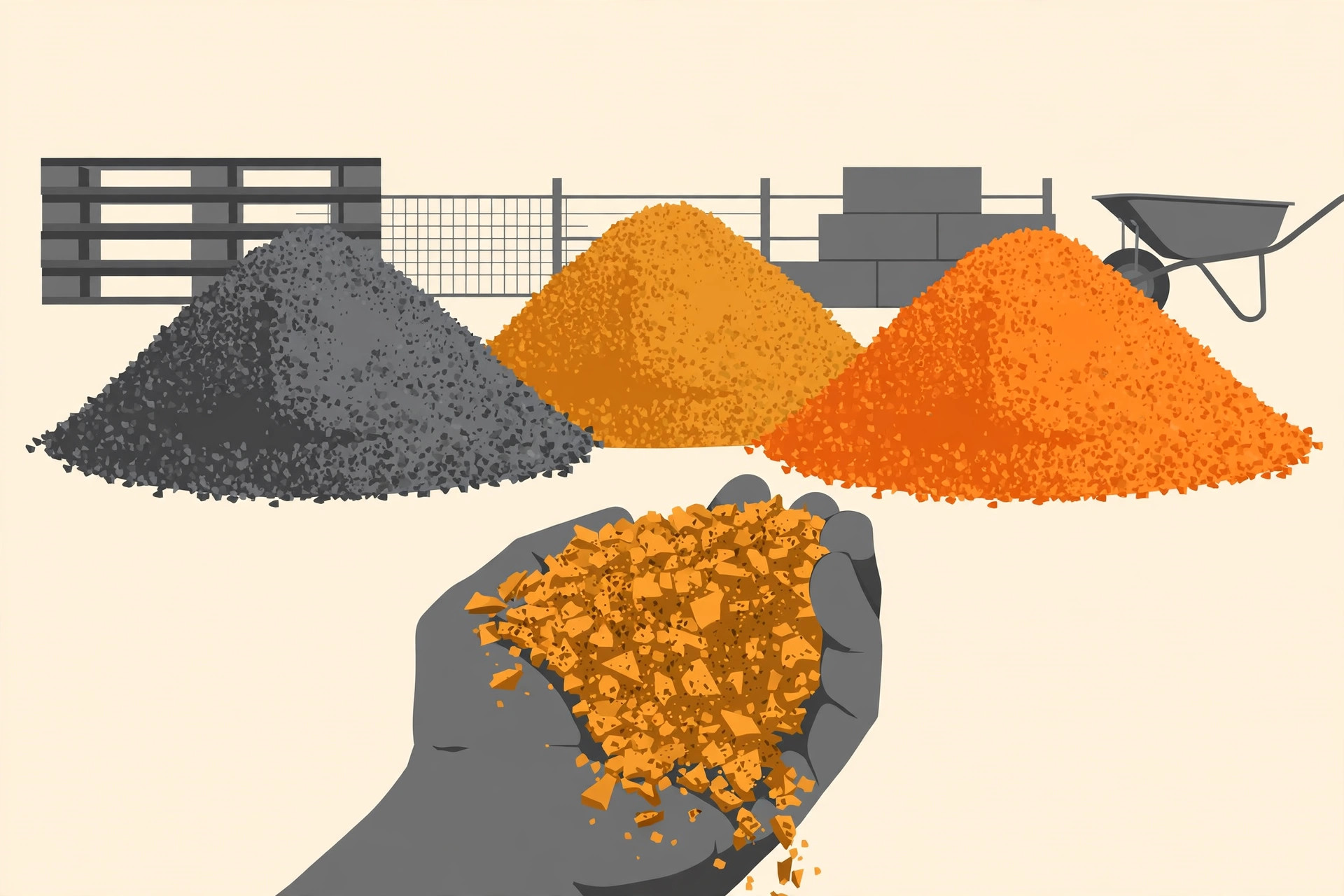
Sand is defined by particle size and shape, and both decide its behaviour. Sharp sand has angular, coarse grains: it locks together, drains, and gives concrete, screeds and block paving bedding their strength and stability. Building sand is finer and rounder, often with a touch of clay, which makes mortars buttery and workable but weaker and thirstier. Plastering sand is washed and evenly graded so finish coats spread without dragging stones. Grit sand, the coarsest, beds paving and renders where body is needed. The names vary by country and by yard, which is why the fingers and the job, not the label, should confirm the load: sharp sand crunches and falls clean from the hand; building sand clumps softly and stains the palm.
What goes wrong with the wrong sand
Soft sand in concrete is the classic quiet failure: the mix looks rich, places easily, and cures weak and shrinkable, because round fine grains demand more water and offer less lock. Sharp sand in bricklaying mortar makes a harsh, tearing mix that bricklayers secretly regrade with the hose, ruining the ratio. Sand contaminated with clay lumps, salt or organic matter poisons everything it touches: beach sand in reinforced concrete is a corrosion time capsule, and unwashed sand in plaster blooms and pops. Buy washed sand from a known source for anything structural or finished, and reject loads that smell, stain or carry visible rubbish; the saving on a bad load is spent many times over in the work it ruins.
Storing, measuring and matching
Sand changes with the weather in a way that quietly moves your mixes: wet sand bulks, occupying more volume per tonne, so a gauge box of rain soaked sand holds less actual sand than the same box dry, and mortar strengths wander with the seasons for exactly this reason. Keep heaps covered where you can, draw from one heap for one job so colour and grading stay constant in face work, and batch by weight when the work is specified tightly. For matching existing mortar and render, the sand is the colour: the cement dries pale and the sand shows through, so a sample panel with the candidate sand, dried fully, is the only honest test. Sand is the cheapest material on the lorry and the one that decides the most finishes. Respect the heap, keep it clean and covered, and it will respect the work.