Scaffolding Safety Basics: Built, Tagged and Trusted
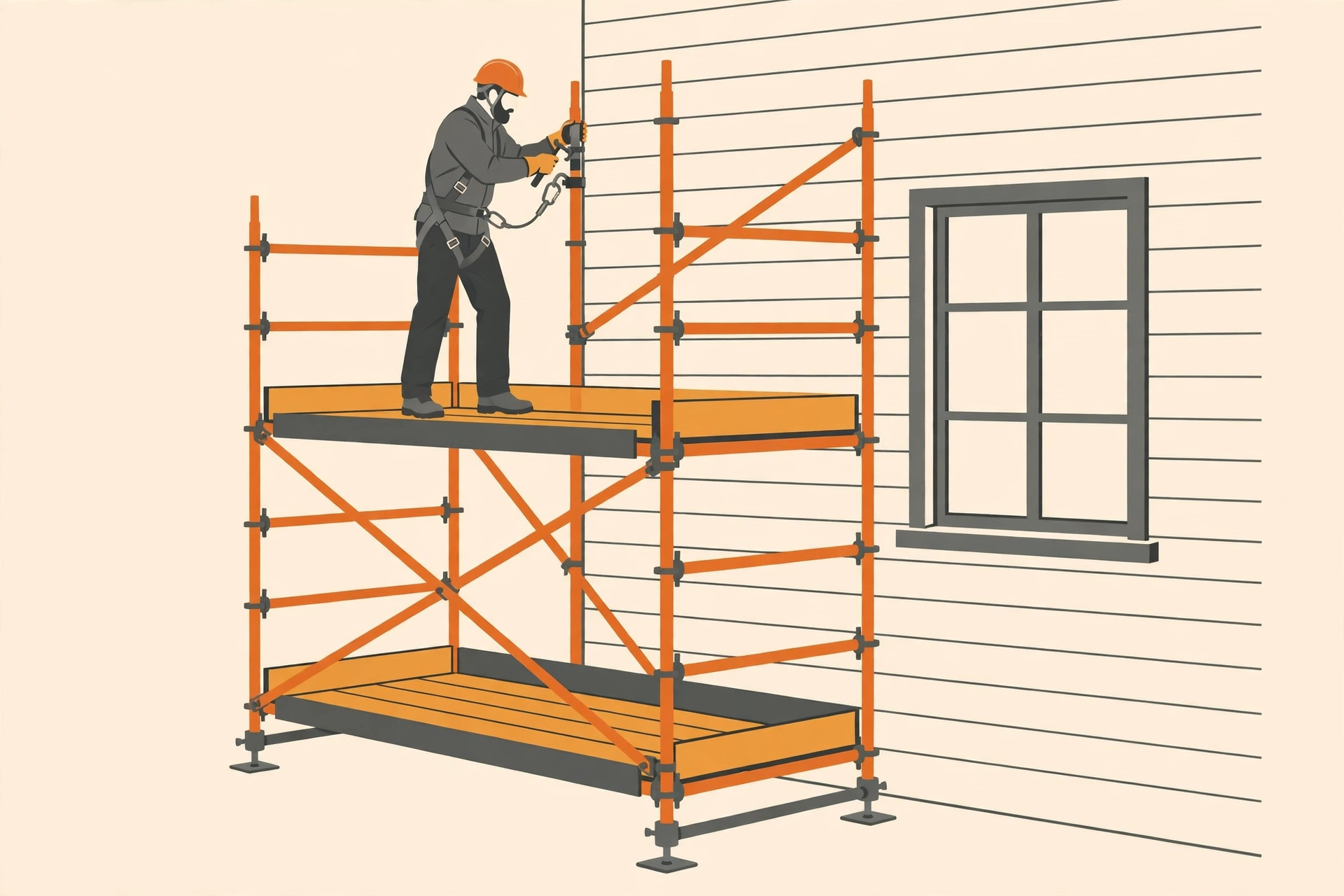
A scaffold is a structure, not a pile of tubes
Every scaffold is a temporary building that people stand on at height, and it deserves a building's respect. It starts on firm ground: sole boards spreading the load, base plates or jacks level, and standards rising plumb. Ledgers and transoms tie the frame at lifts the design sets, commonly 2 metres, and diagonal bracing in both directions stops the frame racking into a parallelogram. Ties anchor the whole to the building at a pattern the design states, because an untied scaffold is a sail waiting for weather. Boards must be sound, supported and clipped against uplift, with toe boards where things roll and people below deserve protection. None of this is optional decoration; each piece answers a collapse that has already happened somewhere.
Erection, alteration and the tag system
Scaffolds are erected, altered and dismantled by trained, competent scaffolders, in that order and no other; users do not move ties, remove braces or lift boards to make a job easier, however small the change feels. A handover and a visible tag at the access point declare the scaffold complete and its duty: light, general or heavy, with a load limit in plain numbers. Inspections follow erection, alteration, bad weather and every week in use, recorded rather than remembered. Ladders or stair towers give access; climbing the frame is forbidden for the sound reason that frames are not ladders. Loading is spread and modest: bricks stacked over standards, never heaped at mid span, and mortar tubs placed like they weigh what they weigh.
Working from it without becoming a statistic
Most scaffold injuries are falls of people or things, and both are habits before they are accidents. Keep platforms clear enough to walk without stepping over stock; a tidy lift is a safe lift. Never work from a board resting on a guardrail, a bucket or a hope. Edge protection is a system: guardrails at the right heights, intermediate rails and toe boards, fitted before the platform is used, not after the near miss. Weather judges every day: ice, high wind and lightning close scaffolds that pride would keep open. At the end, the scaffold is dismantled in reverse, ties last and never early, materials lowered, not dropped. Boring scaffolds, inspected and tagged, are the ones nobody writes reports about. That quiet record, kept week after week in all weathers, is the scaffold's real certificate of safety.