Screeding a Floor: Flat, Bonded and Built to Last
What a screed is doing there
A floor screed is a thin, level layer of mortar, usually sand and cement, laid over a structural slab to create the flat, true surface the finished floor demands. Concrete alone is finished with a power float and good intentions; screed is the correction. Traditional bonded screeds sit at 25 to 40 millimetres glued to the slab; unbonded screeds float on a membrane at 50 millimetres or more; floating screeds over insulation run thicker still, commonly 65 to 75, because they must be structures in their own right. The mix is typically 1:3 or 1:4 cement to sharp sand, mixed just damp enough to ball in the fist, a consistency beginners find absurdly dry until they see it compact and rule flat.
Laying in bays with levels that hold
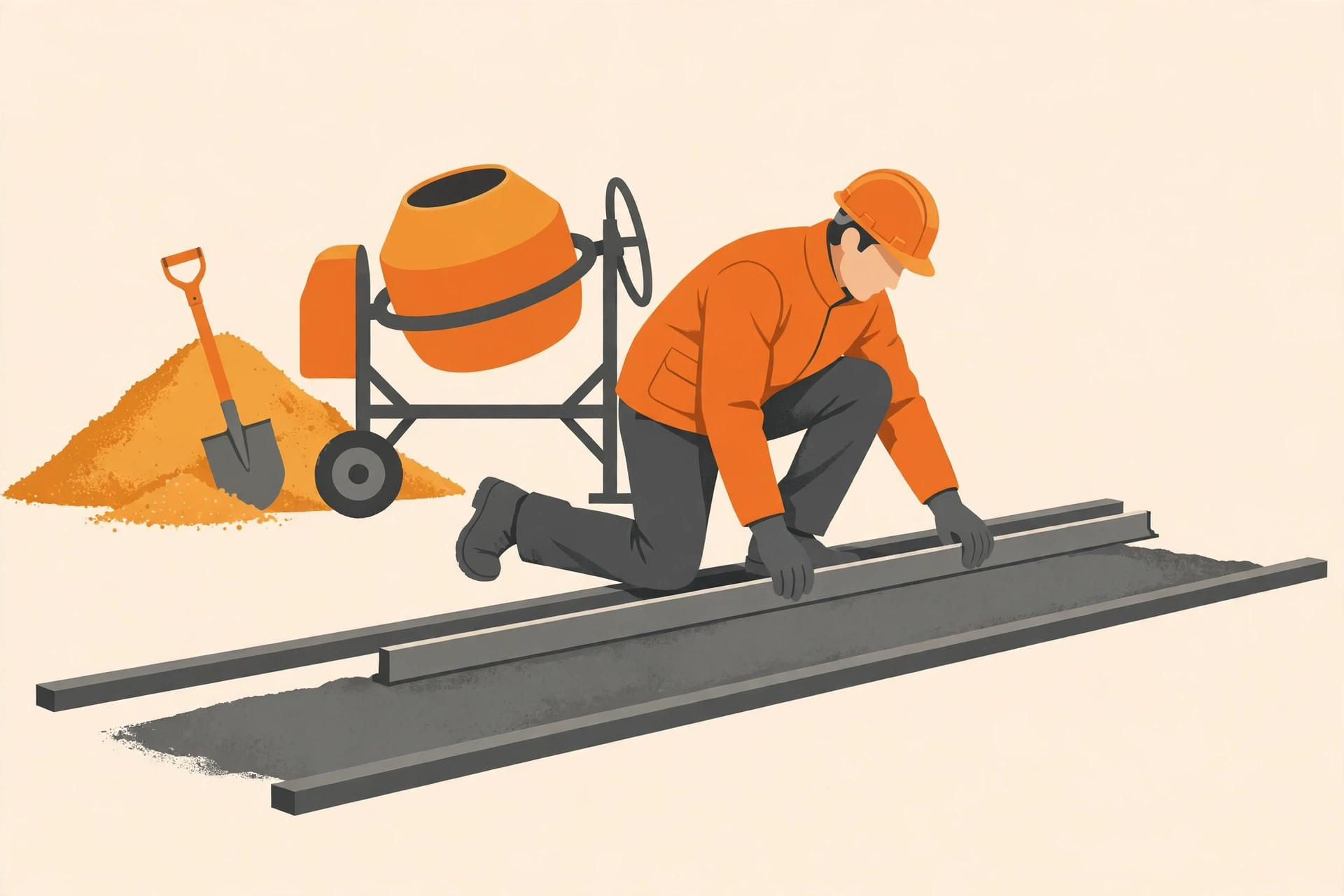
Screeding is won at the edges. Set levelled battens or screed rails in bays no wider than you can rule comfortably, commonly 3 to 4 metres, with the levels taken from the room's datum and checked against door thresholds and the falls of any wet areas. Fill a bay, compact the mix into the corners, and rule it off with a straightedge worked in a sawing motion across the rails; then fill the low spots the rule reveals and rule again. Work away from the door, finish a bay completely before starting the next, and remove rails as you go, filling their tracks with fresh mix. The semi dry mix forgives nothing about timing: mix what the gang can lay within the hour, because retempered screed is a cracked screed on a schedule.
Curing, drying and the floor that follows
A fresh screed is a promise that needs seven days of protection: cover it, keep traffic off, and let it cure before it dries, because a screed dried by wind and sun on day one is a screed that curls and dusts. Drying for floor finishes then runs by the old rule of a day per millimetre in good conditions, tested with a moisture meter or a sealed plastic sheet before timber, vinyl or resin is committed. Cracks that appear are usually shrinkage speaking about water content or missing bay joints in large floors; large areas are divided by joints that let the screed move in panels. Sound, flat and dry is the whole specification, and the finished floor, whatever it costs per metre, will advertise whether the screed beneath it earned its keep.