Site Safety Essentials: The Habits That Protect Everyone
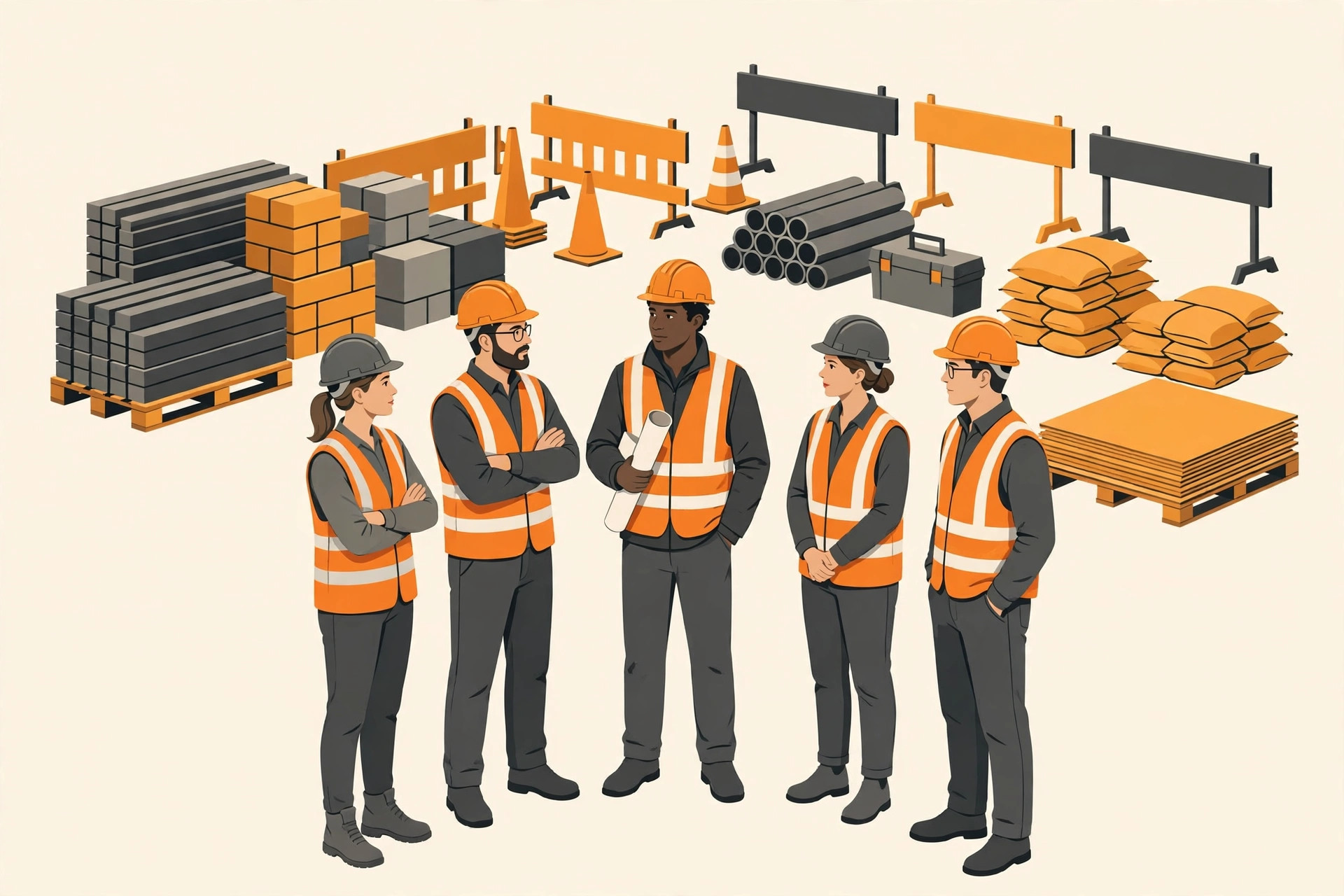
Safety is a system, not a poster
Site safety rests on layers: a plan that sequences work so trades do not endanger each other, inductions that tell every newcomer the site's rules and hazards, and supervision that notices drift before it becomes injury. Risk assessments name the significant hazards of each task and the controls that answer them; method statements turn those controls into the order of work. Paper alone protects nobody, but paper that matches practice is how a site thinks before it acts. The hierarchy is always the same: eliminate the hazard, substitute something safer, engineer it away, administrate around it, and only then lean on personal protective equipment, which is the last line, never the plan.
Housekeeping, lifting and the daily killers
More site injuries come from trips, manual handling and falling objects than from dramatic collapses. A tidy site is therefore a safety device: materials stacked stable and clear of walkways, cables routed overhead or ramped, waste into skips the day it is made. Lifting follows the simple physics of backs: plan the lift, test the weight, bend the knees, and use the trolley, hoist or crane that the job should have hired; anything over about 25 kilograms is a team or mechanical lift wearing a solo costume. Electricity on site runs through reduced voltage tools or protected circuits, cables inspected, and water kept in its own world. Dust, especially silica from cutting masonry, is controlled with water and extraction and masks that actually fit, because lungs keep every receipt.
Culture: the part that actually works
Rules fail where culture shrugs. The sites that send everyone home whole are the ones where stopping a job to fix a guardrail earns thanks, where the newest labourer can question the oldest ganger, and where near misses are reported like free lessons rather than hidden like shame. Toolbox talks take ten minutes and repay them in attention. Fatigue, rushing and the last hour of Friday are recognised hazards with their own controls: sequencing, breaks and the discipline to leave a task safe rather than finished. Everyone signs the induction; the good sites live it. Safety is not the opposite of production; it is the condition that lets production continue next week, with the same crew, uninjured and unashamed. The measure of it is simple and total: the crew that starts the month is the crew that ends it.