Stair Rules: Rise, Going and Headroom in Plain Words
Why stairs have rules at all
Stairs injure more people at home than any other building element, and they injure them predictably: a riser that changes mid flight, a going too short for a foot, a missing handrail on the open side. Building rules therefore fence the geometry. The pattern across countries is consistent even where the numbers differ: risers are capped, goings have a floor, the relationship between them is bounded by the comfort formula, and every riser in a flight must match its brothers within a few millimetres. A stair that obeys the rules feels unremarkable, which is the point; nobody should ever have to think about a staircase while carrying a child and a laundry basket down it.
The numbers in typical frameworks
As an orientation, not a substitute for your local code: private stair rules in the United Kingdom cap the riser near 220 millimetres and floor the going near 220, with the sum of twice the riser plus the going between 550 and 700. American residential codes cap risers near 196 millimetres and ask at least 254 of going, measured nosing to nosing. Many European and Commonwealth frameworks land in the same neighbourhood, because human legs are the same everywhere. Headroom is commonly 2 metres minimum above the pitch line. Handrails are required above a certain drop, guarding must resist a child and a crowd, and landings must be at least as wide as the flight. Treat these as the shape of the law and then read the actual document for your building and its use class.
Designing inside the rules with room to spare
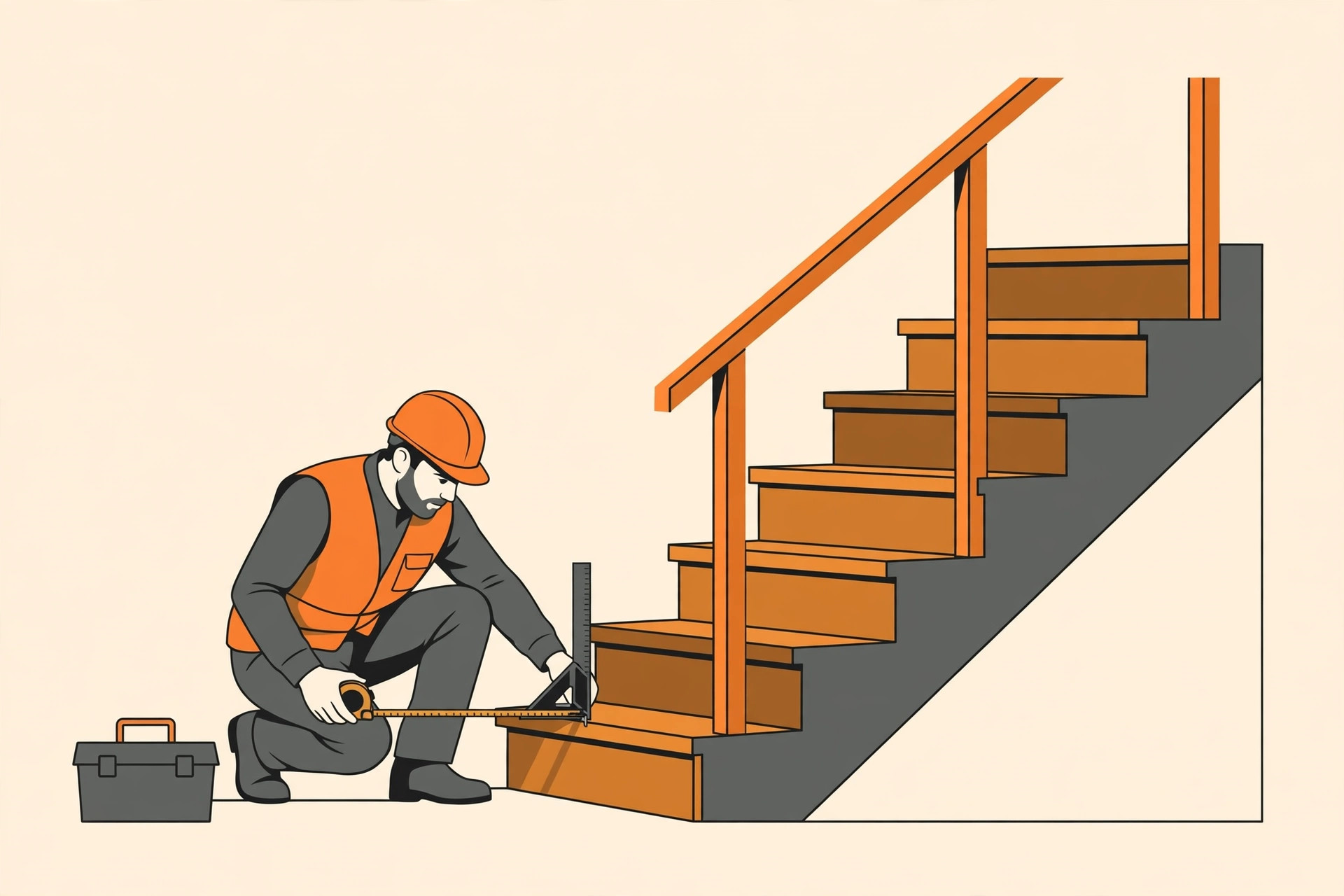
The professional habit is to design to the comfortable middle of the legal band, not to its edges: a riser near 175 and a going near 250 satisfies almost every framework and every leg. Check the whole flight as one system: total rise divided into equal risers, the run fitted to the room, headroom proved at the tightest point over the pitch line, and the well opening sized so the headroom survives at the floor edge. Where an existing building fights back, a landing that turns the flight often rescues geometry that a straight run cannot. Document the final riser and going on the drawing and measure the built stair against it before the finishes hide the evidence; inspectors measure, and so should you. Comfort and compliance, it turns out, are allies rather than rivals.