Steel Sections and Weights: Bars, Plates and Tubes
Sections are shapes with jobs
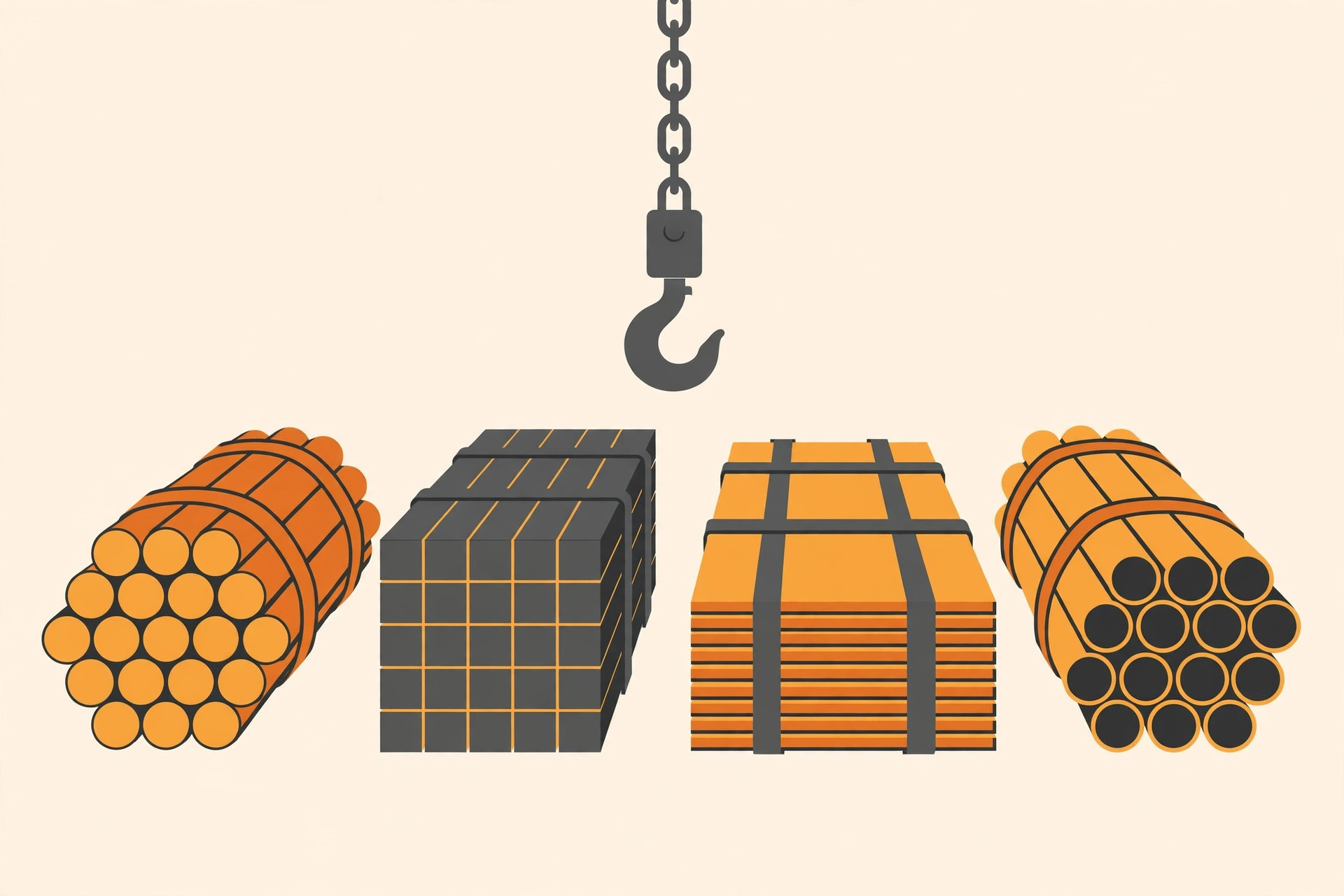
Steel is rolled into shapes because shape is strength. A round bar is honest in tension and easy to thread; a square bar keys into mortar and machinery; plate is the flat currency from which brackets, baseplates and gussets are cut; tube gives the stiffness of a large diameter at a fraction of a solid bar's weight, which is why scaffolding, rails and frames are tubular. Angles, channels and I sections extend the same logic into building frames. When you price or lift any of them, the question is always weight, and weight is always cross sectional area times length times density: 7850 kilograms per cubic metre for carbon steel, a number worth memorising beside your own phone number.
The weight maths, worked by hand
A 20 millimetre round bar has an area of pi over four times the diameter squared, about 314 square millimetres, which over a 6 metre length at steel density gives just under 15 kilograms: the same answer the calculator returns. Plate is simpler still: length times width times thickness times 7850, so a 2 by 1 metre sheet at 10 millimetres is 157 kilograms, a two person lift only with help and gloves. Tube subtracts the hollow core from the solid circle. Learn to run these three shapes in your head to one significant figure and no delivery note, crane plan or merchant quote will ever surprise you by much. Precision belongs to the mill certificate; estimation belongs to you.
Grades, finishes and ordering sense
Weight is only half the description. Grade states the strength: common structural grades yield around 250 to 355 megapascals, high yield reinforcement near 500. Finish states the fight against rust: black steel for internal and buried work, galvanised where weather reaches, stainless where corrosion would be a scandal or a danger. Order with the full sentence: section, size, grade, finish, length and count, because a 50 by 50 angle exists in several thicknesses that share a name and nothing else. Allow cutting tolerance in your lengths, ask for the mill test certificate on structural orders, and store steel off the ground, stacked flat and dry, so the section you designed is the section that arrives at the saw. A delivery checked against the order in the yard takes ten minutes; the same discovery made mid fabrication takes the whole day. Nobody budgets for that day, and everybody remembers it.