Tile Adhesive and Grout: Getting the Bed Right
Adhesive is chosen, not grabbed
Tile adhesive is a family, not a product. Ready mixed pastes suit small ceramic wall tiles in dry rooms and fail quietly in showers and on floors. Bagged cement based powders are the workhorses: standard set for unhurried work, rapid set when the floor must walk again, flexible grades for timber floors, large format tiles and underfloor heating, where movement and heat punish rigid beds. Porcelain, being nearly waterproof itself, needs a polymer modified adhesive that can grip a dense body. Read the bag for its classification and its floor or wall rating, and match primer to substrate while you are reading; the few minutes at the merchant are cheaper than lifting a drummy floor tile by tile.
Coverage lives in the notch
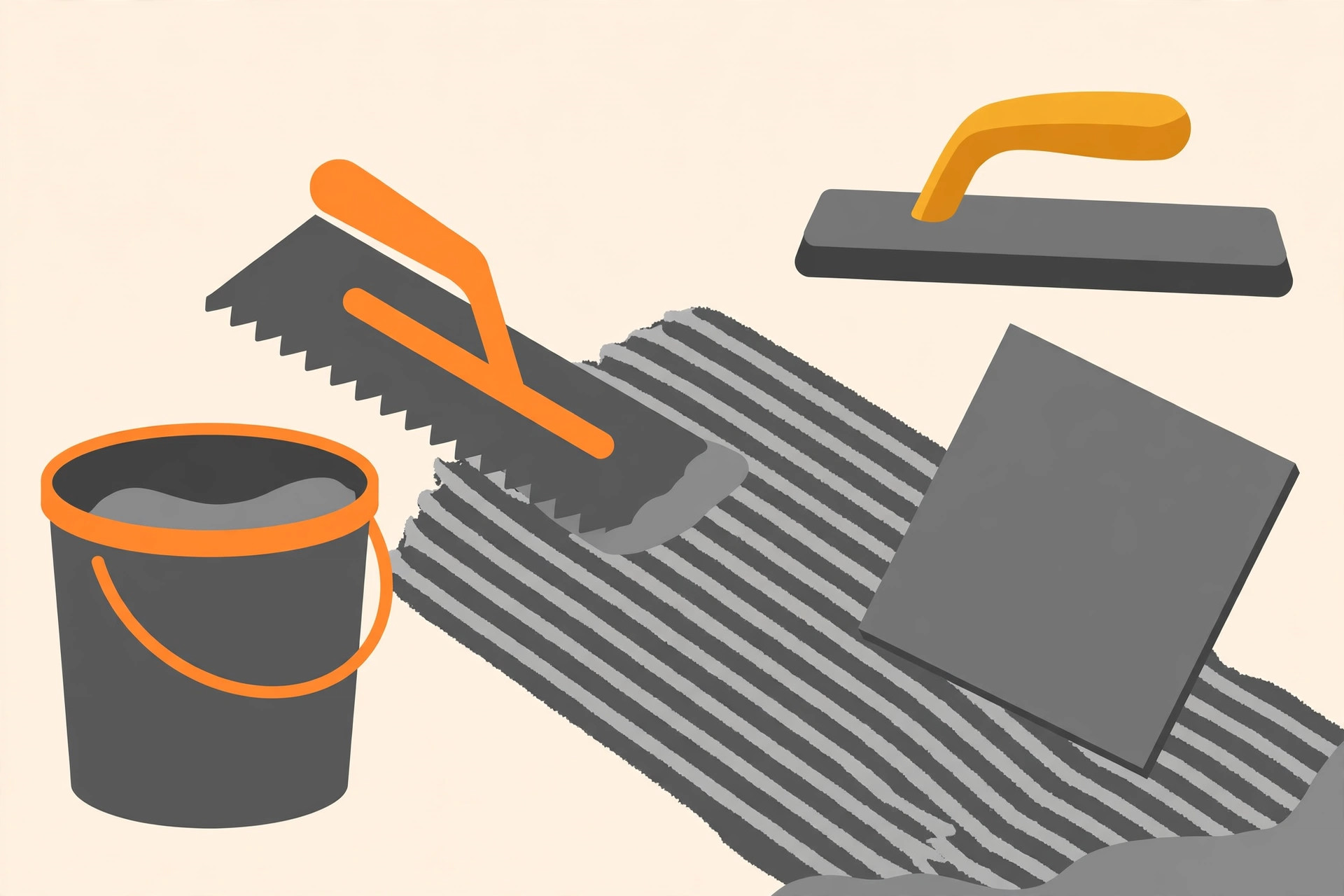
Adhesive coverage is set by the trowel notch and the flatness of the floor, not by hope. A 6 millimetre notch on a flat wall bed uses about 3 kilograms per square metre; a 10 millimetre notch under large floor tiles uses 4 to 5, and back buttering big tiles adds more while killing the voids that crack corners. The test is physical: lift a freshly laid tile and look for near complete contact, full coverage in wet areas and under every large format tile. Comb the adhesive in straight lines one way so air escapes as the tile is slid into place, work in areas you can finish inside the open time, and skin over adhesive is dead adhesive; scrape it off and comb fresh.
Grout is a wearing surface, not a filler
Grout seals the joints, shares small movements and takes the daily wear of mopping and grit. Cement grouts suit most floors and walls; epoxy grouts earn their price in commercial kitchens and hard worked showers. Joint width is a design and tolerance decision: rectified tiles can run 2 to 3 millimetres, handmade and rustic tiles need more to absorb their variation. Mix grout to a firm paste, press it diagonally across the joints with a float so it packs rather than smears, and wash off in stages with a barely damp sponge before the haze sets like cement on the tile face. Seal the movement joints at perimeters and corners with flexible silicone, never rigid grout, because that is where floors breathe. Done well, nobody notices the grout at all, which is precisely the compliment it aims for.