Timber Sizes and Board Feet Without the Headache
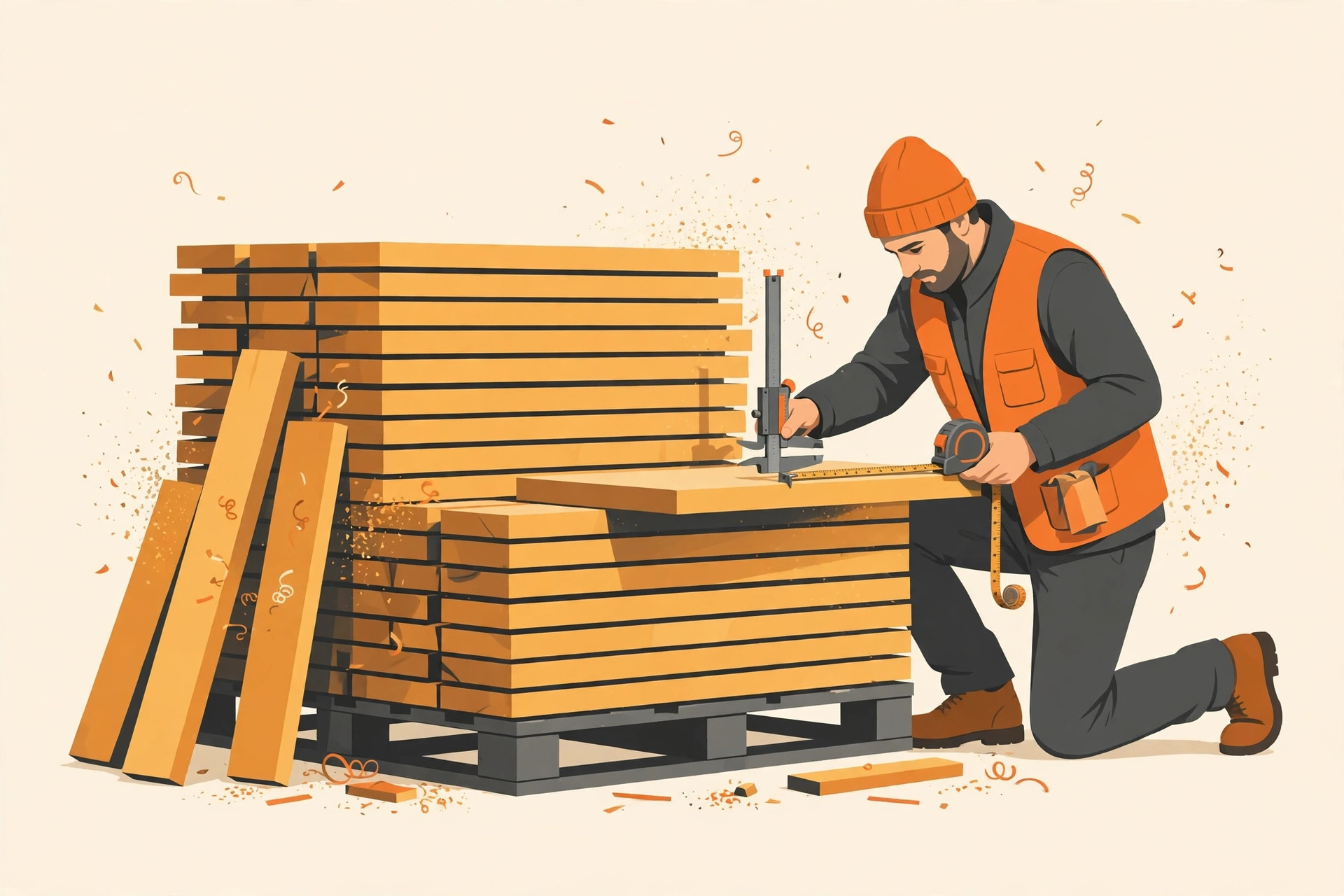
One unit, three dimensions
A board foot is a volume disguised as an area: a board one foot long, one foot wide and one inch thick, 144 cubic inches of wood. The formula follows from the definition: thickness in inches times width in inches times length in feet, divided by twelve. A 2 by 4 at 8 feet is 5.33 board feet; a 1 by 12 at 10 feet is exactly 10. North American lumber is priced this way because mills think in it, and a quote per thousand board feet is the wholesale dialect. Once the definition clicks, the unit stops being folklore and becomes arithmetic you can check on a phone in the yard, which is where it matters.
Nominal sizes and the dressed lie
The board named 2 by 4 is not 2 by 4. Rough sawn, it may have been; dressed and dried for sale, it measures about 1.5 by 3.5 inches, yet it is sold, and its board feet counted, on the nominal name. This is not fraud; it is convention, universal and old, but it means a board foot calculation from the ticket overstates the wood in your hand by a quarter for small sections. For volume honesty, measure the real piece. For price comparison, use the ticket figures everyone else uses. Metric countries skip the theatre and sell by the cubic metre or the linear metre at a stated section, which is why the calculator on this site converts freely between board feet and cubic metres in both directions.
Buying timber by the numbers
Order lumber with the waste in the count: ten percent for straight runs of framing, more where lengths are cut from stock with defects to dodge. Grade decides how much of a board is usable; a knotty low grade can waste a third of its length to cuts, making the cheap board the dear one. Stack delivered timber flat, stickered and covered the day it arrives, because a board foot of twisted pine is firewood at lumber prices. Keep the tally by section and length as the job proceeds, and the next estimate writes itself from your own records rather than from the merchant's optimism. Timber is one of the few materials where the calculator, the tape and the eye must all agree before the saw agrees too. Measure twice remains a proverb because it is cheaper than the alternative.