Topsoil: Depths, Weights and Buying Well
What good topsoil is, and is not
Topsoil is the living top layer of ground, dark with organic matter, crumbly, and able to grow things without argument. What is sold under the name varies from screened, tested loam to the scrapings of somebody else's site, so buy by description: screened to a stated size, weed reduced, and ideally certified to a soil standard for gardens. Run it through your fingers before the truck tips if you can; it should smell earthy, not sour or chemical, and stones should be guests, not the population. The cheapest load is often the most expensive once you have paid to dispose of the rubble, roots and crisp packets it was hiding.
Depths for lawns, beds and levelling
Depth follows purpose. A new lawn wants about 100 to 150 millimetres of topsoil over a loosened subsoil, enough for roots and for the mower droughts of July. Vegetable and flower beds reward 200 to 300 millimetres, because roots and worms both work that depth. Levelling a bumpy lawn takes less than people fear: fill the hollows in stages of 25 millimetres so the grass grows through rather than suffocating under a blanket. Under turf on heavy clay, a gritty soil or a sand dressing helps the surface stay open. Measure the area honestly, multiply by the depth in metres, and the volume appears; the calculator then turns volume into tonnes at about 1250 kilograms per cubic metre loose, and into the bulk bags and barrow loads your back will meet.
Settling, storing and spreading well
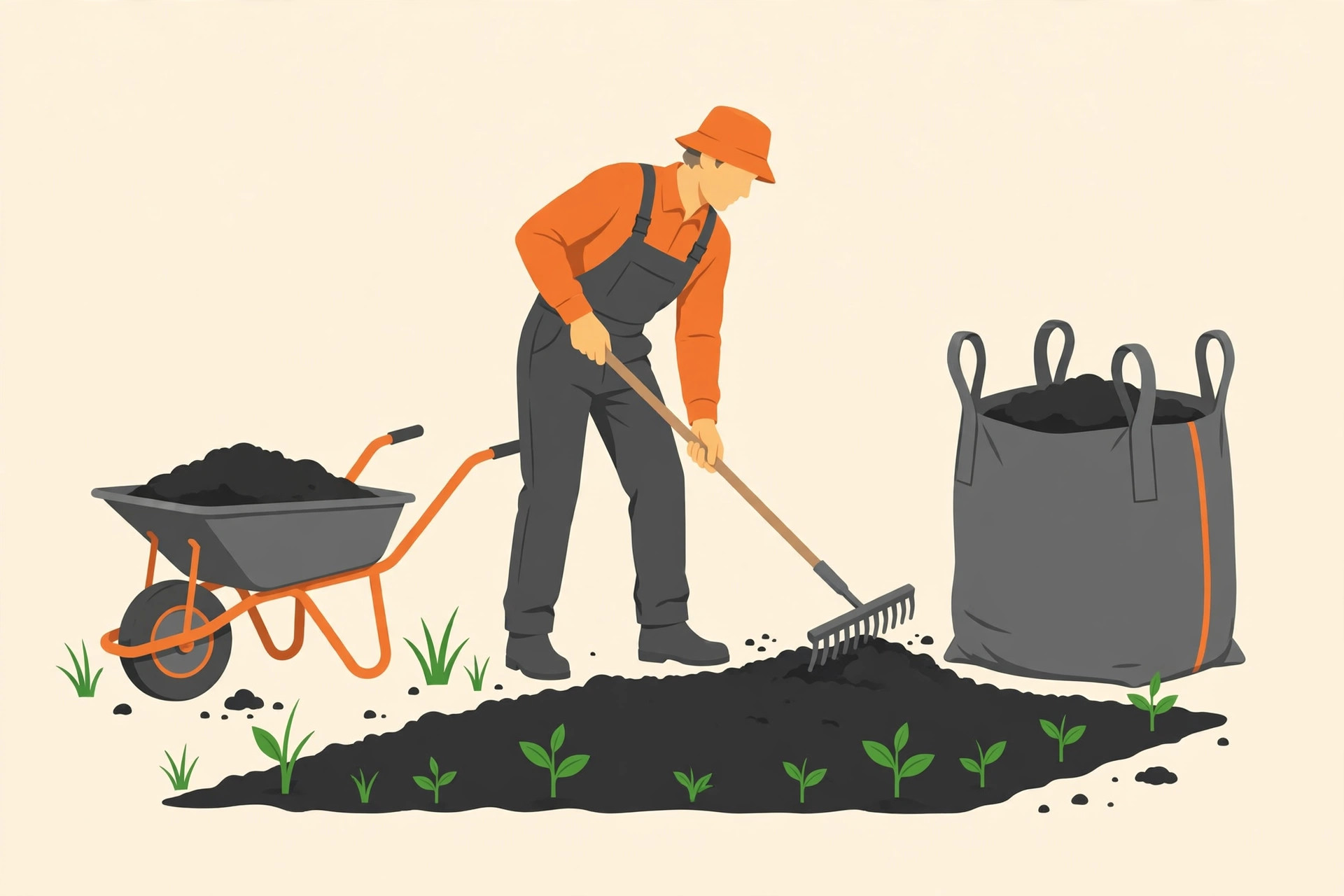
Topsoil settles. Rake it level, let rain or a hose settle it, roll or tread it in passes, and expect to top up hollows by a tenth before turf or seed commits you. Ordering ten percent beyond the bare volume is not waste; it is the settlement already paid for. Store a surplus heap on a sheet, covered, off the lawn it would kill, and use it within the season before weeds colonise your purchase. Spread on a dry day when the soil works rather than smears, keep it below damp proof courses and air bricks on house walls, and slope finished levels gently away from buildings. The last pass with the rake, in two directions, is the difference between a lawn that mows like a table and one that scalps its own bumps forever. Good soil, well spread, quietly disappears into the garden's success.