Wastage Allowances Explained: How Much Extra to Order
Wastage is three different things wearing one name
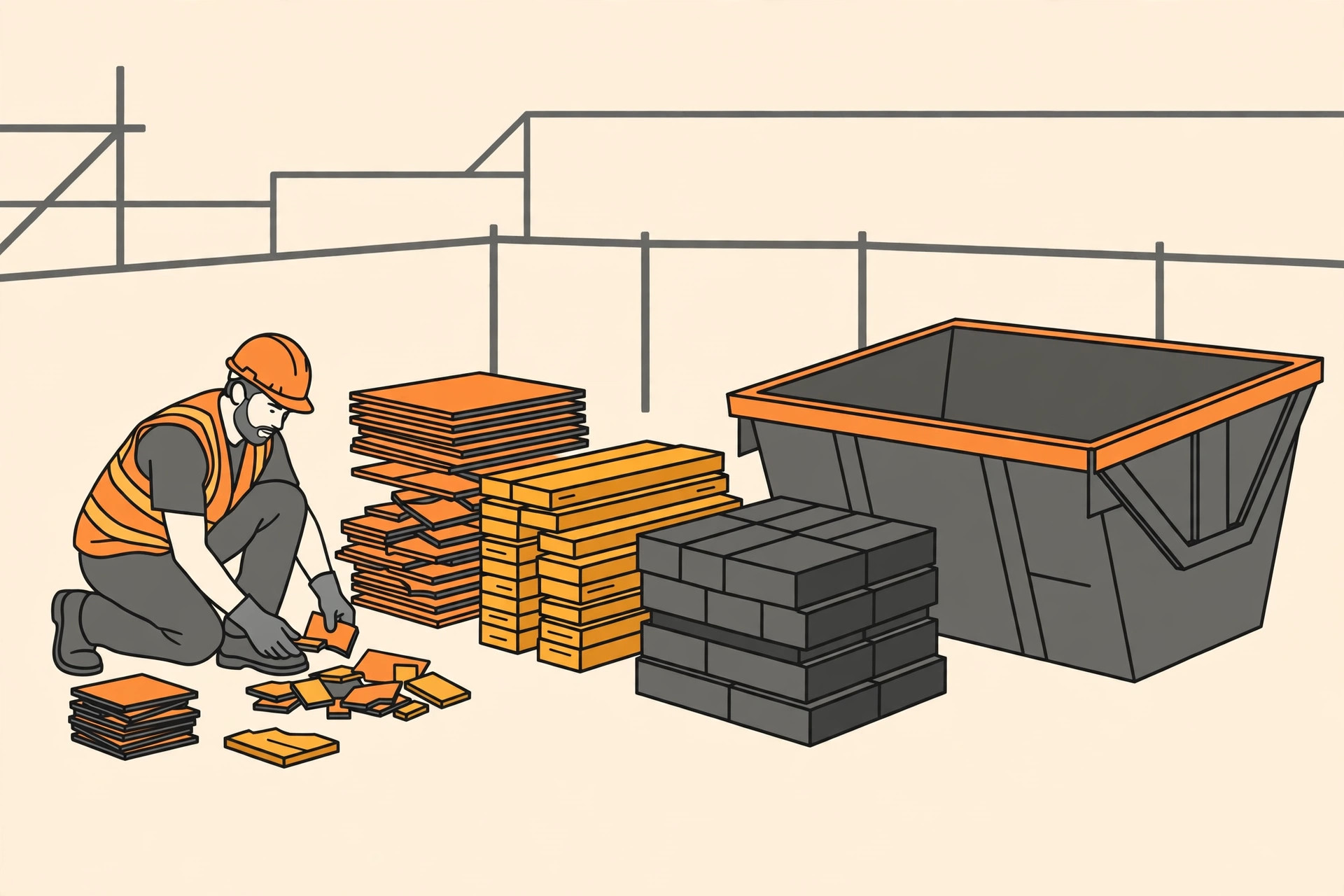
The allowance in an order covers cutting waste, where geometry throws offcuts; damage and defects, the broken tile, the split board, the chipped brick in every pack; and the site losses of spillage, over dig and the barrow that tips. Each material suffers them in its own proportion. Concrete's waste is mostly the ground's fault, uneven excavation and formwork give, so 5 to 10 percent rides on the volume. Bricks break and cut at 5 percent in kind hands and 10 in a cut heavy garden wall. Tiles waste by pattern: 10 straight, 15 diagonal, and large formats by the spare tile rather than the percent. Learning which of the three losses dominates your job is the whole skill, and it is learned by measuring what is left when jobs finish.
Patterns and rooms multiply quietly
Geometry is the silent multiplier. A rectangular room in a straight pattern wastes least; add a diagonal and every wall becomes a row of triangular offcuts that fit nowhere. Herringbone, borders, feature strips and L shaped rooms all tax the order, and small rooms tax more than large ones at the same pattern, because the pattern never reaches its efficient stride. Roofing repeats the lesson: plain gables forgive, hips and valleys collect their percentage at every cut. Decking around posts, stairs with winders, wallpaper with a bold repeat, all live in the same family. The professional response is not a bigger blanket percent but a layout drawn or dry laid before ordering, converting the mystery into a count, which is why the calculators on this site ask for the pattern's inputs separately.
Order the allowance, keep the evidence
Wastage kept is not waste if it becomes the repair stock: the spare box of tiles, the labelled paint, the matching bricks stacked dry in the garage are future savings bought at today's prices and today's batches. Wastage feared twice is waste: an allowance inside the measurement and another on the order doubles the surplus and the bill. Keep a simple record per job: ordered, used, left over, and the reason. Within a few jobs your percentages stop being folklore and become your own trade data, tighter than any table, because they describe your hands, your merchants and your typical work. That notebook is a small asset; estimators have built businesses on less, and it starts with the honesty to write down the leftovers.