Waterproofing Bathrooms: Tanking That Actually Works
Water finds the details, not the field
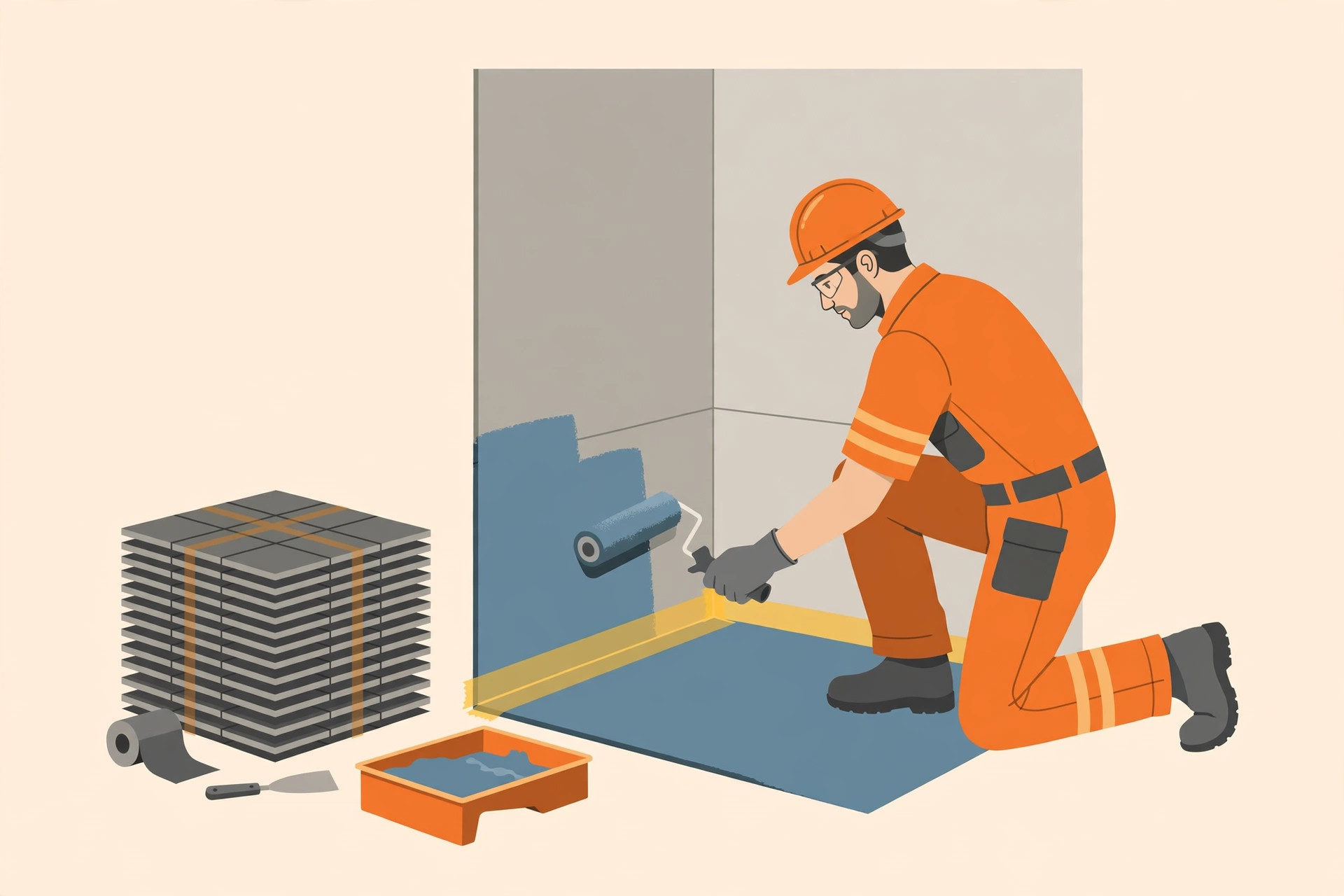
Tiles and grout are a wearing surface, not a waterproof one: grout is porous, silicone perishes, and water that passes a shower's skin meets plasterboard and timber that rot politely out of sight for years. Waterproofing, called tanking in the trade, is the continuous membrane beneath the tiles that assumes water will arrive and gives it a managed path to the drain. The failures are never in the flat middle of a wall; they are at internal corners, at the junction of wall and floor, around pipe penetrations, at shower thresholds and where fixings pierce the system. A tanking job is therefore judged entirely at its details, which is why systems sell corner pieces, collars and tapes rather than just liquid in a bucket.
Systems: liquids, sheets and boards
Liquid membranes are painted on in coats to a stated thickness, embedding tape at every corner and change of plane; they suit small bathrooms and reward patience between coats. Sheet membranes are bonded with adhesive and sealed at laps, giving a guaranteed thickness and immediate tiling in many systems. Cement based slurries serve masonry and concrete substrates, especially below ground and in wet rooms on solid floors. Tile backer boards are water resistant carriers, not waterproofing by themselves; their joints and fixings still need the membrane treatment. Whichever system you choose, use one maker's family throughout, primer, membrane, tape and sealant, because warranties and chemistry both prefer relatives, and photograph every stage before the tiles hide the evidence forever.
Falls, drains and the last details
A shower floor must fall to its drain, about 1 in 60 to 1 in 80, formed in the substrate or the screed, never faked in adhesive beds of heroic thickness. Linear drains move the fall into one plane and suit large tiles; point drains ask for folds in the tiling that small tiles forgive and large tiles resent. Seal the perimeter with flexible sealant over a backing rod, leave movement joints at changes of plane, and never grout a corner rigid. Test before tiling where the system allows: a flood test of a wet room floor for a day is cheap certainty. Waterproofing is invisible in the finished room and decisive in its tenth year, which is precisely why it deserves the best hour of the whole bathroom budget. Spend that hour like insurance, because that is exactly what it is.